Link Copied!
Pauline Kael Quotes (1919-2001)

About Pauline Kael
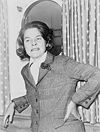
Pauline Kael (June 19, 1919 – September 3, 2001) was an American film critic best remembered for the reviews she wrote for The New Yorker. Collections of her reviews were later published in book form.
Best Pauline Kael Quotes
Shortest
Earliest
Explore our curated collection of the most famous and impactful Pauline Kael quotes.

“If you can't make fun of bad movies on serious subjects, what's the point?”

“In the arts, the critic is the only independent source of information. The rest is advertising.”
“The critical task is necessarily comparative, and younger people do not truly know what is new.”
“Irresponsibility is part of the pleasure of all art; it is the part the schools cannot recognize.”
“If there is any test that can be applied to movies, it's that the good ones never make you feel virtuous.”

“TV executives think that the programs with the highest ratings are what TV viewers want, rather than what they settle for.”
“Moviemaking is so male-dominated now that they think they’re being pro-feminine when they have women punching each other out.”
“Is there something in druggy subjects that encourages directors to make imitation film noir? Film noir itself becomes an addiction.”
“Movies are so rarely great art, that if we cannot appreciate great trash, we have very little reason to be interested in them.”
“Citizen Kane is perhaps the one American talking picture that seems as fresh now as the day it opened. It may seem even fresher.”
“If I never saw another fistfight or car chase or Doberman attack, I wouldn't have any feeling of loss. And that goes for Rottweilers, too.”

“The slender, swift Bruce Lee was the Fred Astaire of martial arts, and many of the fights that could be merely brutal come across as lightning-fast choreography.”
“For some strange reason we don't go to charming, light movies anymore. People expect a movie to be heavy and turgid, like "American Beauty." We've become a heavy-handed society.”
“I live in a rather special world. I only know one person who voted for Nixon. Where they are I don't know. They're outside my ken. But sometimes when I'm in a theater I can feel them.”
“It's as if Brian de Palma were saying, "What is getting older if it isn't learning more ways that you're vulnerable?"”

“Men are now beginning their careers as directors by working on commercials — which, if one cares to speculate on it, may be almost a one-sentence résumé of the future of American motion pictures.”
“Picasso has a volatile, explosive presence. He seems to take art back to an earlier function, before the centuries of museums and masterpieces; he is the artist as clown, as conjurer, as master funmaker.”
“What's disgusting about the Dirty Harry movies is that Eastwood plays this angry tension as righteous indignation.”
Pauline Kael Quotes by Topic
Find exactly what you are looking for by browsing this categorized list of Pauline Kael quotes by topic.
Pauline Kael on Film director 2 quotes
“Men are now beginning their careers as directors by working on commercials — which, if one cares to speculate on it, may be almost a one-sentence résumé of the future of American motion pictures.”
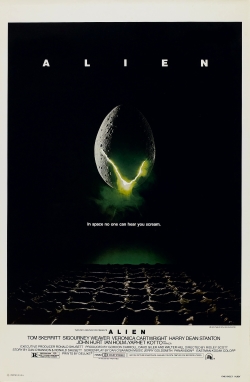
Pauline Kael on Alien (film)
“[Alien] reached out, grabbed you, and squeezed your stomach it was more gripping than entertaining, but a lot of people didn’t mind. They thought it was terrific, because at least they’d felt something: they’d been brutalized.””
Pauline Kael on Film
“The words "Kiss Kiss Bang Bang," which I saw on an Italian movie poster, are perhaps the briefest statement imaginable of the basic appeal of movies. This appeal is what attracts us, and ultimately what makes us despair when we begin to understand how seldom movies are more than this.”
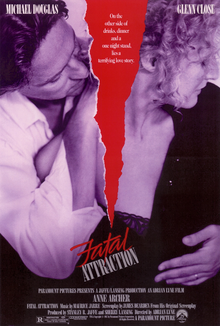
Pauline Kael on Fatal Attraction
“It's about men seeing feminists as witches, and, the way the facts are presented here, the woman is a witch. She terrorizes the lawyer and explains his fear of her by calling him a faggot. This shrewd film also touches on something deeper than men's fear of feminism: their fear of women, their fear of women's emotions, of women's hanging on to them.”
Pauline Kael on Fireplace
“A woman who taught at Berkeley dropped in on me once and saw a book burning in the fireplace. She pointed at it in terror, and I explained that it was a crummy ghostwritten life of a movie star and that it was an act of sanitation to burn it rather than sending it out into the world which was already clogged with too many copies of it. But she said, "You shouldn’t burn books" and began to cry.”

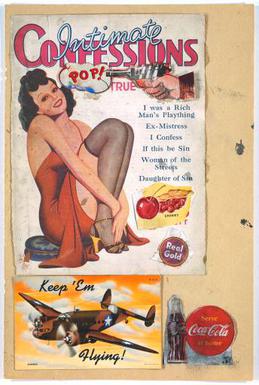
Pauline Kael on Pop art
“In the sixties, the recycling of pop culture — turning it into Pop art and camp — had its own satirical zest. Now we're into a different kind of recycling. Movie-makers give movies of the past an authority that those movies didn't have; they inflate images that may never have compelled belief, images that were no more than shorthand gestures — and they use them not as larger-than-life jokes but as altars.”
Pauline Kael on Fahrenheit 451 (film)
“The movie is so listless we have what we should never have in a gimmicky thriller: time to notice inconsistencies. People know how to read; why are they taught? Why are the book people hiding libraries in town instead of smuggling them to the woods? (Do they have a secret lending library?) Why are we shown the hero revealing his guilt to his co-workers (in scenes like his inability to go up the fire-pole) if it doesn't lead to any consequences? Why are we shown an antagonism between Werner and another fireman (Anton Diffring) which never develops into anything functional in the structure? Why is it so easy to escape to the woods? Couldn't Truffaut or anyone think up a better contrivance to bring the book girl back than the need to retrieve an incriminating list of names (of people who memorize books!)? The actions in this movie don't flow from the theme; O.K. we can accept that if, at least, they're ingenious. But they're not. Still, all the holes in the plot would just make it seem lacy and airy if the movie had rhythm, if it moved purposefully, if the moods surprised us or intrigued us. Why doesn’t it?”
What Pauline Kael Said About Others
Discover personal opinions Pauline Kael shared regarding contemporaries.
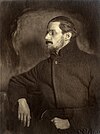
Pauline Kael on James Joyce
“Irresponsibility is part of the pleasure of all art; it is the part the schools cannot recognize.”
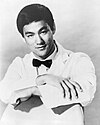
Pauline Kael on Bruce Lee
“The slender, swift Bruce Lee was the Fred Astaire of martial arts, and many of the fights that could be merely brutal come across as lightning-fast choreography.”
Pauline Kael on Jean Simmons
“in Divorce American style, there was the discomfort of seeing one of the beautiful wasted actresses of the screen, Jean Simmons. Her suggestions of sensibility - what she embodies - were too fine for the world of that movie. Her presence made the movie she was trapped in seem uglier.”

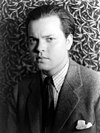
Pauline Kael on Orson Welles
“Like Barrymore and Laughton and Brando, he seemed to be developing an obsession with false noses, false faces. He had once, at least, played a role in his own face, Harry Lime in The Third Man, a role he had written for himself; [B]y the sixties he was encased in make-up and his own fat, like an huge operatic version of W.C. Fields.”
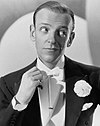
Pauline Kael on Fred Astaire
“I suspect it is this Camelot view that leads Miss Croce to be rather unfair to Gene Kelly...I should say the difference starts with their bodies. If you compare Kelly to Astaire, accepting Astaire's debonair style as perfection then, of course, Kelly looks bad. But in popular dance forms, in which movement is not rigidly codified, as it is in ballet, perfection is a romantic myth or a figure of speech, nothing more. Kelly isn't a winged dancer; he's a hoofer and more earthbound. But he has warmth and range as an actor...Astaire's grasshopper lightness was his limitation as an actor - confining him to perennial gosh-oh-gee adolescence;; he was always and only a light comedian and could function only in fairytale vehicles.”
Pauline Kael on Mary McCarthy
“Mary McCarthy was the cultural heroine of my generation. … I felt how different things were now when I watched Man in the Brooks Brothers Shirt on television. It's very well done. Elizabeth McGovern is hip and smart in the central role. What's missing is the importance the story had when it first appeared. In the 1940s it was wonderfully giddy and daring. It was tonic. It was the story that bright people — women especially — talked about and identified with. This was a feminist heroine who was strong and foolish; it was before feminist writing got bogged down in victimization. She was asinine but she wasn't weak. I looked at the reviews of the television production and the people writing about it didn’t seem to get it at all. It was just a story.”
Pauline Kael on Cary Grant
“Clark Gable is an intensely realistic sexual presence; you don’t fool around with Gable. But with Grant there are no pressures, no demands; he’s the sky that women aspire to. When he and a woman are together, they can laugh at each other and at themselves. He's a slapstick Prince Charming. [. . .] Although Grant is a perfectionist on the set, some of his directors say that he wrecks certain scenes because he won’t do fully articulated passages of dialogue. He wants always to be searching for how he feels; he wants to waffle charmingly. This may be a pain to a scenarist or a director, but in his own terms Grant knows what he’s doing. He's the greatest sexual stooge the screen has ever known; his side steps and delighted stares turn his co-stars into comic goddesses. Nobody else has ever been able to do that.”

Misattributed Quotes
Quotes mistakenly credited to Pauline Kael
“I see little of more importance to the future of our country and of civilization than full recognition of the place of the artist. If art is to nourish the roots of our culture, society must set the artist free to follow his vision wherever it takes him.”
“I am mystified. I know only one person who voted for Nixon.”
About Pauline Kael
Pauline Kael (June 19, 1919 – September 3, 2001) was an American film critic best remembered for the reviews she wrote for The New Yorker. Collections of her reviews were later published in book form.