Link Copied!
Paul Bourget Quotes (1852-1935)
Novelist
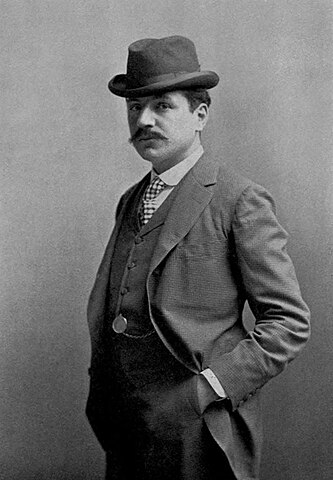

About Paul Bourget
Paul Charles Joseph Bourget (2 September 1852 – 25 December 1935) was a French novelist and critic.
Best Paul Bourget Quotes
Shortest
Earliest
Explore our curated collection of the most famous and impactful Paul Bourget quotes.


“A de certaines minutes, les mots ne sont rien, c’est le ton qui est tout.”
“There are conditions of blindness so voluntary that they become complicity.”


“La plus cruelle vengeance d'une femme est quelquefois de nous rester fidèle.
• Translation: The cruelest revenge of a woman is to remain faithful to a man.”
• Translation: The cruelest revenge of a woman is to remain faithful to a man.”

“There is iconoclasm in the excessively intellectual, and they delight in destroying their dearest moral or sentimental idols, the better to prove their strength.”

“Even after making up one's mind to the sacrifices I had decided upon, there is always left a trace of envy for those who have triumphed in the melancholy struggle for literary supremacy.”
“"There is an intelligent man, who never questions his ideas," said Dorsenne to himself, when the Marquis had left him. "He is like the Socialists. What vigor of mind in that old wornout machine!"”
“Look at Goethe, at Lamartine and at many others! To depict feelings on this high plane, you must give up the process of minute and insignificant observation which is the bane of the artists of to-day.”

“Cet enseignement, c'est qu'il faut vivre comme on pense, sinon, tôt ou tard, on finit par penser comme on a vécu. (This teaching is to live as we think, otherwise, sooner or later, we end up thinking as we lived.)”

“It is vain to try to sacrifice once for all one's youthful ideals. When a man has loved literature as I loved it at twenty, he cannot be satisfied at twenty-six to give up his early passion, even at the bidding of implacable necessity.”


“I remember, the reasoning of a man determined to arrive that I tried to lull to sleep the inward voice that cried, "You have no right to put on paper, to give to the public what this noble writer said to you, supposing that he was receiving a poet, not a reporter." But I heard also the voice of my chief saying, "You will never succeed."”
“I have been thinking about our conversation and about your book, and I am afraid that I expressed myself badly yesterday. When I said that one may love and be loved at any age I ought to have added that sometimes this love comes too late. It comes when one no longer has the right to prove to the loved one how much she is loved, except by love's sacrifice.”

“Could she not obtain from him the promise to discharge his weapon in the air, if the duel was with pistols, or, if it was with swords, simply to disarm his enemy?
Like nearly all persons unversed in the art, she believed in infallible fencers, in marksmen who never missed their aim, and she had also ideas profoundly, absolutely inexact on the relations of one man with another in the matter of an insult.”
Like nearly all persons unversed in the art, she believed in infallible fencers, in marksmen who never missed their aim, and she had also ideas profoundly, absolutely inexact on the relations of one man with another in the matter of an insult.”
“You wished to be only a spectator, the gentleman in the balcony who wipes the glasses of his lorgnette in order to lose none of the comedy. Well, you could not do so. That role is not permitted a man. He must act, and he acts always, even when he thinks he is looking on, even when he washes his hands as Pontius Pilate, that dilettante, too, who uttered the words of your masters and of yourself. What is truth? Truth is that there is always and everywhere a duty to fulfil.”

“When a man has been the lover of a woman as that man had been hers, with the vibrating communion of a voluptuousness unbroken for two years, that woman maintains a sort of physiological, quasi-animal instinct. A gesture, the accent of a word, a sigh, a blush, a pallor, are signs for her that her intuition interprets with infallible certainty. How and why is that instinct accompanied by absolute oblivion of former caresses? It is a particular case of that insoluble and melancholy problem of the birth and death of love.”

“A few hours after this conversation, I found myself once more in the office of the Boulevard, seated in Pascal's den, and he was saying, "Already? Have you accomplished your interview with Pierre Fauchery?"
"He would not even receive me," I replied, boldly.
"What did I tell you?" he sneered, shrugging his big shoulders. "We'll get even with him on his next volume. But you know, Labarthe, as long as you continue to have that innocent look about you, you can't expect to succeed in newspaper work."”
"He would not even receive me," I replied, boldly.
"What did I tell you?" he sneered, shrugging his big shoulders. "We'll get even with him on his next volume. But you know, Labarthe, as long as you continue to have that innocent look about you, you can't expect to succeed in newspaper work."”

“I listened while he thought aloud and had almost forgotten my Machiavellian combination, so keen was my relish of the joyous intimacy of this communion with a mind I had passionately loved in his works. He was the first of the great writers of our day whom I had thus approached on something like terms of intimacy. As we talked I observed the strange similarity between his spoken and his written words. I admired the charming simplicity with which he abandoned himself to the pleasures of imagination, his superabundant intelligence, the liveliness of his impressions and his total absence of arrogance and of pose.”

“I seized the sheet of paper; the lines were written upon it in characters rather larger than usual. How it shook in my hand while I read these words: "Forgive me, Marie. I was suffering too much. I wanted to be done with it." And he had had the strength to affix his signature!
So then, his last thought had been for her. In the brief moments that had elapsed between my blow with the knife, and his death, he had perceived the dreadful truth, that I should be arrested, that I would speak to explain my deed, that my mother would then learn his crime — and he had saved me by compelling me to silence.”
So then, his last thought had been for her. In the brief moments that had elapsed between my blow with the knife, and his death, he had perceived the dreadful truth, that I should be arrested, that I would speak to explain my deed, that my mother would then learn his crime — and he had saved me by compelling me to silence.”

“Here was the worldly environment with which Fauchery is so often reproached. But the books and papers that littered the table bore witness that the present occupant of this charming retreat remained a substantial man of letters. His habit of constant work was still further attested by his face, which I admit, gave me all at once a feeling of remorse for the trick I was about to play him. If I had found him the snobbish pretender whom the weekly newspapers were in the habit of ridiculing, it would have been a delight to outwit his diplomacy. But no! I saw, as he put down his pen to receive me, a man about fifty-seven years old, with a face that bore the marks of reflection, eyes tired from sleeplessness, a brow heavy with thought, who said as he pointed to an easy chair, "You will excuse me, my dear confrère, for keeping you waiting." I, his dear confrère! Ah! if he had known!”
“My friend returned to the gallery, looked once more at the adorable imprint of the most innocent, the most passionate of caresses. A mirror hung near by, where he could compare his present with his former face, the man he was with the man he had been. He never told me and I never asked what his feelings were at that moment. Did he feel that he was too culpable to have inspired a passion in a young girl whom he would have been a fool, almost a criminal, to marry? Did he comprehend that through his age which was so apparent, it was his youth which this child loved? Did he remember, with a keenness that was all too sad, that other, who had never given him a kiss like that at a time when he might have returned it? I only know that he left the same day, determined never again to see one whom he could no longer love as he had loved the other, with the hope, the purity, the soul of a man of twenty.”

Paul Bourget Quotes by Topic
Find exactly what you are looking for by browsing this categorized list of Paul Bourget quotes by topic.
Paul Bourget on Love 2 quotes
View all 2 quotes on Love →Paul Bourget on Singularity
“You, who know better than any one the motley world of cosmopolites, understand why I have confined myself to painting here only a fragment of it. That world, indeed, does not exist, it can have neither defined customs nor a general character. It is composed of exceptions and of singularities.”
What Paul Bourget Said About Others
Discover personal opinions Paul Bourget shared regarding contemporaries.
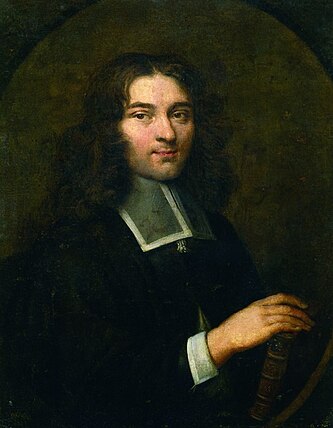
Paul Bourget on Pierre Bayle

Quotes About Paul Bourget
Gain deeper perspective through quotes about Paul Bourget from others.
Jules Lemaître on Paul Bourget
“In fiction, Bourget carries realistic observation beyond the externals (which fixed the attention of Zola and Maupassant) to states of the mind: he unites the method of Stendhal to that of Balzac. He is always interesting and amusing. He takes himself seriously and persists in regarding the art of writing fiction as a science. He has wit, humor, charm, and lightness of touch, and ardently strives after philosophy and intellectuality — qualities that are rarely found in fiction. It may well be said of M. Bourget that he is innocent of the creation of a single stupid character. The men and women we read of in Bourget's novels are so intellectual that their wills never interfere with their hearts.”
Robert Louis Stevenson on Paul Bourget
“I am delighted beyond expression by Bourget's book: he has phrases which affect me almost like Montaigne; I had read ere this a masterly essay of his on Pascal; this book does it; I write for all his essays by this mail, and shall try to meet him when I come to Europe. ... I have just been breakfasting at Baiae and Brindisi, and the charm of Bourget hag-rides me. I wonder if this exquisite fellow, all made of fiddle-strings and scent and intelligence, could bear any of my bald prose. If you think he could, ask Colvin to send him a copy of these last essays of mine when they appear; and tell Bourget they go to him from a South Sea Island as literal homage. I have read no new book for years that gave me the same literary thrill as his Sensations d'Italie. If (as I imagine) my cut-and-dry literature would be death to him, and worse than death — journalism — be silent on the point. For I have a great curiosity to know him, and if he doesn't know my work, I shall have the better chance of making his acquaintance.”
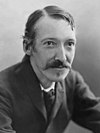
About Paul Bourget
Paul Charles Joseph Bourget (2 September 1852 – 25 December 1935) was a French novelist and critic.