Link Copied!
Parker Palmer Quotes (1939-)
Author, Activist, Leader
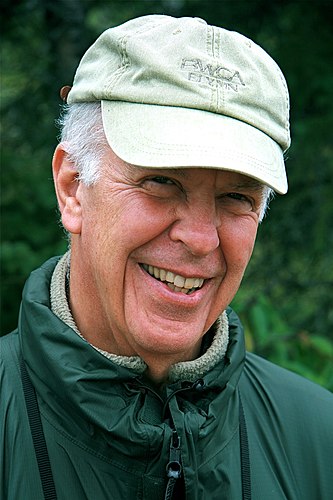

About Parker Palmer
Parker J. Palmer (born 1939 in Chicago, Illinois) is an author, educator, and activist who focuses on issues in education, community, leadership, spirituality and social change.
Best Parker Palmer Quotes
Shortest
Earliest
Explore our curated collection of the most famous and impactful Parker Palmer quotes.

“If we are unfaithful to true self, we will extract the price from others.”
“Reality—including one’s own—is divine, not to be defied but honored.”
“In depression, the built-in bunk detector that we all possess is not only turned on but is set on high.”

“The attempt to live by the reality of our own nature, which means our limits as well as our potentials, is a profoundly moral regimen.”
“One of the hardest things we must sometimes do is to be present to another person's pain without trying to fix it, to simply stand respectfully at the edge of that person’s mystery and misery.”
“The irony, often tragic, is that by embracing the scarcity assumption, we create the very scarcities we fear. … We create scarcity by fearfully accepting it as law and by competing with others for resources.”

“Our strongest gifts are usually those we are barely aware of possessing. They are a part of our God-given nature, with us from the moment we drew first breath, and we are no more conscious of having them than we are of breathing.”
“A scholar is committed to building on knowledge that others have gathered, correcting it, confirming it, enlarging it. But I have always wanted to think my own thoughts about a subject without being overly influenced by what others have thought before me.”
“When I understand this liability as a trade-off for my strengths, something new and liberating arises within me. I no longer want to have my liability “fixed”—by learning how to dance solo, for example, when no one wants to dance with me—for to do that would be to compromise or even destroy my gift.”

“Each time a door closes, the rest of the world opens us. All we need to do is stop pounding on the door that just closed, turn around—which puts the door behind us—and welcome the largeness of life that now lies open to our souls. The door that closed kept us from entering a room, but what now lies before us is the rest of reality.”
“When the gift I give to the other is integral to my own nature, when it comes from a place of organic reality within me, it will renew itself—and me—even as I give it away. Only when I give something that does not grow within me do I deplete myself and harm the other as well, for only harm can come from a gift that is forced, inorganic, unreal.”
“If I try to be or do something noble that has nothing to do with who I am, I may look good to others and to myself for a while. But the fact that I an exceeding my limits will eventually have consequences. I will distort myself, the other, and our relationship—and may end up doing more damage than if I had never set out to do this particular “good.””

“As young people, we are surrounded by expectations that may have little to do with who we really are, expectations held by people who are not trying to discern our selfhood but to fit us into slots. In families, schools, workplaces, and religious communities, we are trained away from true self toward images of acceptability; under social pressures … our original shape is deformed beyond recognition; and we ourselves, driven by fear, too often betray true self to gain the approval of others.”

“If the engineer does not honor the nature of the steel or the wood or the stone, his or her failure will go well beyond aesthetics: the bridge or the building will collapse and put human life in peril.
The human self also has a nature, limits as well as potentials. If you seek vocation without understanding the material you are working with, what you build with your life will be ungainly and may well put lives in peril, your own and some of those around you. “Faking it” in the service of high values is no virtue and has nothing to do with vocation. It is an ignorant, sometimes arrogant, attempt to override one’s nature, and it will always fail.”
The human self also has a nature, limits as well as potentials. If you seek vocation without understanding the material you are working with, what you build with your life will be ungainly and may well put lives in peril, your own and some of those around you. “Faking it” in the service of high values is no virtue and has nothing to do with vocation. It is an ignorant, sometimes arrogant, attempt to override one’s nature, and it will always fail.”

“Over the years I have met people who have made a very human claim on me by making known their need to be loved. For a long time my response was instant and reflexive, born of the "oughts" I had absorbed: "Of course you need to be loved. Everyone does. And I love you."
It took me a long time to understand that although everyone needs to be loved, I cannot be the source of that gift for everyone who asks me for it. There are some relationships in which I am capable of love and otters in which I am not. To pretend otherwise, to put out promissory notes I am unable to honor, is to damage my own integrity and that of the person in need, all in the name of love.”
It took me a long time to understand that although everyone needs to be loved, I cannot be the source of that gift for everyone who asks me for it. There are some relationships in which I am capable of love and otters in which I am not. To pretend otherwise, to put out promissory notes I am unable to honor, is to damage my own integrity and that of the person in need, all in the name of love.”
“The idea of vocation I picked up in those circles created distortion until I grew strong enough to discard it. I mean the idea that vocation, or calling, comes from a voice external to ourselves, a voice of moral demand that asks us to become someone we are not yet—someone different, someone better, someone just beyond our reach.
That concept of vocation is rooted in a deep distrust of selfhood, in the belief that the sinful self will always be “selfish” unless corrected by external forces of virtue. It is a notion that made me feel inadequate to the task of living my own life, creating guilt about the distance between who I was and who I was supposed to be.”
That concept of vocation is rooted in a deep distrust of selfhood, in the belief that the sinful self will always be “selfish” unless corrected by external forces of virtue. It is a notion that made me feel inadequate to the task of living my own life, creating guilt about the distance between who I was and who I was supposed to be.”

“Here is another example of violating one's nature in the name of nobility, an example that shows the larger dangers of false love. Years ago, I heard Dorothy Day speak. Founder of the Catholic Worker movement, her long-term commitment to living among the poor on New York's Lower East Side—not just serving them but sharing their condition—had made her one of my heroes. So it came as a great shock. when in the middle of her talk, I heard her start to ruminate about the "ungrateful poor."
I did not understand how such a dismissive phrase could come from the lips of a saint—until it hit me with the force of a Zen koan. Dorothy Day was saying, "Do not give to the poor expecting to get their gratitude so that you can feel good about yourself. If you do, your giving will be thin and short-lived, and that is not what the poor need; it will only impoverish them further. Give only if you have something you must give; give only if you are someone for whom giving is its own reward."”
I did not understand how such a dismissive phrase could come from the lips of a saint—until it hit me with the force of a Zen koan. Dorothy Day was saying, "Do not give to the poor expecting to get their gratitude so that you can feel good about yourself. If you do, your giving will be thin and short-lived, and that is not what the poor need; it will only impoverish them further. Give only if you have something you must give; give only if you are someone for whom giving is its own reward."”
“I was fired because that job had little to do with who I am, with my true nature and gifts, what I care and do not care about. My resort to adolescent rebellion reflected that simple fact. … I was laughing to keep myself sane. Perhaps the research I was doing was what a good sociologist “ought” to do, but it felt meaningless to me, and I felt fraudulent doing it. Those feelings were harbingers of things to come, things that eventually led me out of the profession altogether. Obviously I should have dealt with my feeling more directly and exercised more self-control. Either I should have quit that job under my own steam or settled in and done the work properly. But sometimes the "shoulds" do not work because the life one is living runs crosswise to the grain of one's soul. At that time of my life, I had no feeling for the grain of my soul and of which way was crosswise. Not knowing what was driving me, I behaved with blind but blissful unconsciousness—and reality responded by giving me a big and hard-to-take clue about who I am.”
Parker Palmer Quotes by Topic
Find exactly what you are looking for by browsing this categorized list of Parker Palmer quotes by topic.
Parker Palmer on Coming of age
“As young people, we are surrounded by expectations that may have little to do with who we really are, expectations held by people who are not trying to discern our selfhood but to fit us into slots. In families, schools, workplaces, and religious communities, we are trained away from true self toward images of acceptability; under social pressures ... our original shape is deformed beyond recognition; and we ourselves, driven by fear, too often betray true self to gain the approval of others.”

About Parker Palmer
Parker J. Palmer (born 1939 in Chicago, Illinois) is an author, educator, and activist who focuses on issues in education, community, leadership, spirituality and social change.