Pablo Neruda Quotes (1904-1973)
Poet, Politician

About Pablo Neruda

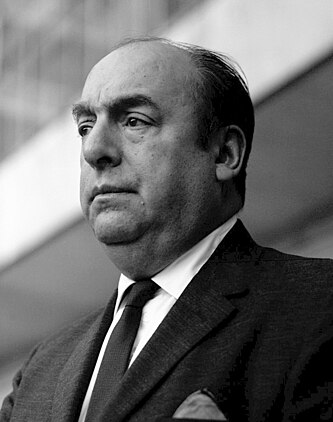
Pablo Neruda (born Ricardo Eliécer Neftalí Reyes Basoalto; 12 July 1904 – 23 September 1973) was a Chilean poet-diplomat and politician who won the 1971 Nobel Prize in Literature. Neruda became known as a poet when he was 13 years old, and wrote in a variety of styles, including surrealist poems, historical epics, overtly political manifestos, a prose autobiography, and passionate love poems such as the ones in his collection Twenty Love Poems and a Song of Despair (1924).

Best Pablo Neruda Quotes

Shortest
Earliest

Explore our curated collection of the most famous and impactful Pablo Neruda quotes.

“Mi amor se nutre de tu amor, amada”
“Debajo de tu piel vive la luna.”
“Es tan corto el amor y tan largo el olvido.”
“Puedo escribir los versos más tristes esta noche.”
“Quiero hacer contigo lo que la primavera hace con los cerezos.”

Pablo Neruda Quotes by Topic

Find exactly what you are looking for by browsing this categorized list of Pablo Neruda quotes by topic.

Pablo Neruda on Clarity

“Will our life not be a tunnel between two vague clarities? Or will it not be a clarity between two dark triangles?”
Pablo Neruda

What Pablo Neruda Said About Others

Discover personal opinions Pablo Neruda shared regarding contemporaries.

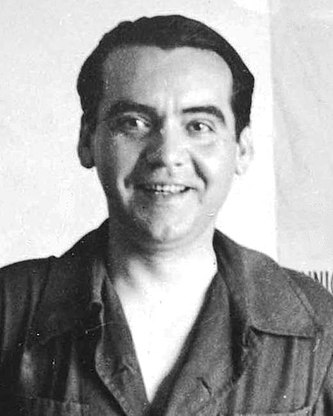
Pablo Neruda on Federico García Lorca
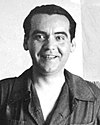
“I remember that Federico García Lorca was always asking me to read my lines, my poetry, and yet in the middle of my reading, he would say, "Stop, stop! Don't go on, lest you influence me!"”
Pablo Neruda

Quotes About Pablo Neruda

Gain deeper perspective through quotes about Pablo Neruda from others.

Isabel Allende on Pablo Neruda

“The influence of Pablo Neruda began to be felt after I left Chile. I took along a suitcase, photographs of my family, a small bag filled with soil and one volume of the complete works of Pablo Neruda. Every time I felt the need to recover my country, I read Neruda because he is Chile, he is the voice of Chile. It is a beautiful metaphor that he died following the military coup. With his death, the voice of the people and the voice of freedom grew silent...Pablo Neruda is a poet of emotion and sensuality. Although he is lacking Gabriela Mistral's mystical bent, I feel very close to his way of approaching, smelling, touching, tasting, and walking the world. I like this very much.”
Pablo Neruda

Ana Castillo on Pablo Neruda

“I'm fairly certain that if you study any poet of any given time, any sex, any class background, the question of searching for identity is there. It's inherent. It is a process of self-understanding, of going through life. Take Pablo Neruda, ambassador for his country, writing poetry reflecting the issues of his life. What I'm saying is that the difference between me and Neruda is that I'm not a man from a middle-class elitist background. My government is not sending me as ambassador so I can go and write poetry in some other place. What is different with women of color is that they are the very last permitted a voice. What we are hearing now is this very unique, silenced, previously censored voice.”
Pablo Neruda

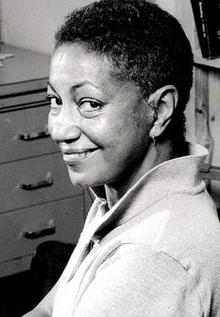
Afua Cooper on Pablo Neruda

“I always wonder why some poets become "international"? I guess they were tremendously good. I think of people like Pablo Neruda. He crossed all sorts of geographical lines. But he was also from that place, located in that place.”

Joy Harjo on Pablo Neruda

“I love Chilean writer Pablo Neruda, for that powerful lyric voice he has, and also the commitment he had for his people.”
Pablo Neruda

Linda Hogan on Pablo Neruda

“I love poets who bring together poetry and life in all its motion: Neruda, Forché, Cardenal, Dugan, Bishop”

June Jordan on Pablo Neruda

“Pablo Neruda is a New World poet whose fate differs from the other Whitman descendants because he was born into a country where the majority of the citizens did not mistake themselves for Englishmen or long to find themselves struggling, at most, with cucumber sandwiches and tea. He was never European. His anguish was not aroused by three piece suits and rolled umbrellas... Specifically, Neruda's self-conscious decision to write in a manner readily comprehensible to the masses of his countrymen, and his self-conscious decision to specify, outright, the United Fruit Company when that was the instigating subject of his become unfortunate moments in an otherwise supposedly sublime, not to mention surrealist, deeply Old World and European but nonetheless Chilean case history. To assure the validity of this perspective, the usual American critic and translator presents you with a smattering of the unfortunate, ostensibly political poetry and, on the other hand, buries you under volumes of Neruda's early work that antedates the Spanish Civil War or, in other words, that antedates Neruda's serious conversion to a political world view.”
Pablo Neruda

Adrienne Rich on Pablo Neruda

“Neruda died on the day that the military junta took power. Even more than in his life, he became a symbol of Chilean resistance. Both in his writings of and for and to his country, and in his countrypeople's response to him, there was a dialogue reaching beyond death. He was internationally famous, of course; of the middle class; a male. It was not the poetry of a dark-skinned mestizo-still less, a mestiza-that so commanded love and respect. Yet he could have betrayed, and did not; could have escaped into the international literary elite, and did not. The fence below his locked and off-limits house became a place for people to continue voicing their hopes and angers, a collective page greater even than the poet's books, a page made possible because of his books, because of the hand that had once crawled over line after line, writing the poems.”
Pablo Neruda

Paul Robeson on Pablo Neruda

“Pablo Neruda of Chile, one of the world’s greatest poets”
Pablo Neruda

Rebecca Solnit on Pablo Neruda
“I also read poetry — from Pablo Neruda to Warsan Shire — fairly regularly, and it keeps my sense of what words can do wide open and my sense of beauty awake.”
Pablo Neruda

Mario Vargas Llosa interview with on Pablo Neruda

“Neruda adored life. He was wild about everything - painting, art in general, books, rare editions, food, drink. Eating and drinking were almost a mystical experience for him. A wonderfully likeable man, full of vitality-if you forget his poems in praise of Stalin, of course. He lived in a near-feudal world, where everything led to his rejoicing, his sweet-toothed exuberance for life. I had the good fortune to spend a weekend on Isla Negra. It was wonderful! A kind of social machinery worked around him: hordes of people who cooked and worked-and always quantities of guests. It was a very funny society, extraordinarily alive, without the slightest trace of intellectualism. Neruda was exactly the opposite of Borges, the man who appeared never to drink, smoke, or eat, who one would have said had never made love, for whom all these things seemed completely secondary, and if he had done them it was out of politeness and nothing more. That's because ideas, reading, reflection, and creation were his life, the purely cerebral life. Neruda comes out of the Jorge Amado and Rafael Alberti tradition that says literature is generated by a sensual experience of life.”

Misattributed Quotes

Quotes mistakenly credited to Pablo Neruda

“Muere lentamente quien no viaja, quien no lee,
quien no oye música,
quien no encuentra gracia en sí mismo.
Muere lentamente
quien destruye su amor propio,
quien no se deja ayudar...
”
“Podrán cortar todas las flores, pero no podrán detener la primavera.”

About Pablo Neruda

Pablo Neruda (born Ricardo Eliécer Neftalí Reyes Basoalto; 12 July 1904 – 23 September 1973) was a Chilean poet-diplomat and politician who won the 1971 Nobel Prize in Literature. Neruda became known as a poet when he was 13 years old, and wrote in a variety of styles, including surrealist poems, historical epics, overtly political manifestos, a prose autobiography, and passionate love poems such as the ones in his collection Twenty Love Poems and a Song of Despair (1924).