Link Copied!
P. L. Travers Quotes (1899-1996)
Author, Writer, Queen





About P. L. Travers
Pamela Lyndon Travers (August 9 1899 – April 23 1996) was a British author, born Helen Lyndon Goff in Maryborough, Queensland, Australia, best known as the creator of the "Mary Poppins" series of stories.
Best P. L. Travers Quotes
Shortest
Earliest
Explore our curated collection of the most famous and impactful P. L. Travers quotes.



“It is only through the ordinary that the extraordinary can make itself perceived.”
“Mary Poppins herself had flown away, but the gifts she had brought would remain for always..”
“A writer is, after all, only half his book. The other half is the reader and from the reader the writer learns.”
“I make a point of writing, if only a little, every day, as a kind of discipline so that it is not a whim but a piece of work.”
“The silky hush of intimate things, fragrant with my fragrance, steal softly down, so loth to rob me of my last dear concealment.”
“When I was a child, love to me was what the sea is to a fish: something you swim in while you are going about the important affairs of life.”

“Mary Poppins is both a joy and a curse to me as a writer ... As a writer, you can feel awfully imprisoned, because people, having had so much of one thing, want you always to go on doing more of the same.”
“For me there are no answers, only questions, and I am grateful that the questions go on and on. I don't look for an answer, because I don't think there is one. I'm very glad to be the bearer of a question.”

“I read myths and fairy tales and books about them a great deal now, but I very seldom read novels. I find modern novels bore me. I can read Tolstoy and the Russians, but mostly I read comparative mythology and comparative religion. I need matter to carry with me.”
“The Sphinx, the Pyramids, the stone temples are, all of them, ultimately, as flimsy as London Bridge; our cities but tents set up in the cosmos. We pass. But what the bee knows, the wisdom that sustains our passing life — however much we deny or ignore it — that for ever remains.”
“The true fairytales … come straight out of myth; they are, as it were, minuscule reaffirmation of myths, or perhaps the myth made accessible to the local folky mind. One might say that fairytales are the myths falling into time and locality … is the same stuff, all the essentials are there, it is small, but perfect. Not minimized, not to be made digestible for children.”
“It may be that to eat and be eaten are the same thing in the end. My wisdom tells me that this is probably so. We are all made of the same stuff, remember, we of the Jungle, you of the City. The same substance composes us — the tree overhead, the stone beneath us, the bird, the beast, the star — we are all one, all moving to the same end. Remember that when you no longer remember me, my child.”
“I think if she comes from anywhere that has a name, it is out of myth. And myth has been my study and joy ever since — oh, the age, I would think . . . of three. I’ve studied it all my life. No culture can satisfactorily move along its forward course without its myths, which are its teachings, its fundamental dealing with the truth of things, and the one reality that underlies everything. ”
“A great friend of mine at the beginning of our friendship (he was himself a poet) said to me very defiantly, "I have to tell you that I loathe children's books." And I said to him, "Well, won't you just read this just for my sake?" And he said grumpily, "Oh, very well, send it to me." I did, and I got a letter back saying: "Why didn't you tell me? Mary Poppins with her cool green core of sex has me enthralled forever."”

“She doesn’t hold back anything from them. When they beg her not to depart, she reminds them that nothing lasts forever. She’s as truthful as the nursery rhymes. Remember that all the King’s horses and all the King’s men couldn’t put Humpty-Dumpty together again. There’s such a tremendous truth in that. It goes into children in some part of them that they don’t know, and indeed perhaps we don’t know. But eventually they realize — and that’s the great truth.”

P. L. Travers Quotes by Topic
Find exactly what you are looking for by browsing this categorized list of P. L. Travers quotes by topic.
P. L. Travers on Mythology 4 quotes
“The true fairytales … come straight out of myth; they are, as it were, minuscule reaffirmation of myths, or perhaps the myth made accessible to the local folky mind. One might say that fairytales are the myths falling into time and locality … is the same stuff, all the essentials are there, it is small, but perfect. Not minimized, not to be made digestible for children.”

P. L. Travers on Substance 3 quotes
“You do not chop off a section of your imaginative substance and make a book specifically for children, for — if you are honest — you have no idea where childhood ends and maturity begins. It is all endless and all one.”

P. L. Travers on Morality
P. L. Travers on Pattern
P. L. Travers on Children
P. L. Travers on Childhood
P. L. Travers on Imagination
P. L. Travers on Heroes
P. L. Travers on Life
P. L. Travers on Jungle
“It may be that to eat and be eaten are the same thing in the end. My wisdom tells me that this is probably so. We are all made of the same stuff, remember, we of the Jungle, you of the City. The same substance composes us — the tree overhead, the stone beneath us, the bird, the beast, the star — we are all one, all moving to the same end. Remember that when you no longer remember me, my child.”

P. L. Travers on Hanuman
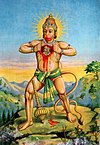
“Indeed, I hadn’t dared to think of that, but yes, indeed, when you read the Ramayana you’ll come across the story of Hanuman on which I built my version of that very old myth...I love Friend Monkey. I love the story of Hanuman. For many years, it remained in my very blood because he’s someone who loves too much and can’t help it. I don’t know where I first heard of him, but the story remained with me and I knew it would come out of me somehow or other. But I didn’t know what shape it would take.”
P. L. Travers on Magic (supernatural)
“It is clear from Gurdjieff's writings that hypnotism, mesmerism and various arcane methods of expanding consciousness must have played a large part in the studies of the Seekers of Truth. None of these processes, however, is to be thought of as having any bearing on what is called Black Magic, which, according to Gurdjieff, "has always one definite characteristic. It is the tendency to use people for some, even the best of aims, without their knowledge and understanding, either by producing in them faith and infatuation or by acting upon them through fear. There is, in fact, neither red, green nor yellow magic. There is 'doing.' Only 'doing' is magic." Properly to realise the scale of what Gurdjieff meant by magic, one has to remember his continually repeated aphorism, "Only he who can be can do," and its corollary that, lacking this fundamental verb, nothing is "done," things simply "happen."”
P. L. Travers on Goddess
“I’ve always been interested in the Mother Goddess. Not long ago, a young person, whom I don’t know very well, sent a message to a mutual friend that said: “I’m an addict of Mary Poppins, and I want you to ask P. L. Travers if Mary Poppins is not really the Mother Goddess.” So, I sent back a message: “Well, I’ve only recently come to see that. She is either the Mother Goddess or one of her creatures — that is, if we’re going to look for mythological or fairy-tale origins of Mary Poppins.” I’ve spent years thinking about it because the questions I’ve been asked, very perceptive questions by readers, have led me to examine what I wrote. The book was entirely spontaneous and not invented, not thought out. I never said, “Well, I’ll write a story about Mother Goddess and call it Mary Poppins.” It didn’t happen like that. I cannot summon up inspiration; I myself am summoned.”

P. L. Travers on Anonymity
“You know C. S. Lewis, whom I greatly admire, said there’s no such thing as creative writing. … He said there is, in fact, only one Creator and we mix. That’s our function, to mix the elements He has given us. See how wonderfully anonymous that leaves us? You can’t say, “I did this; this gross matrix of flesh and blood and sinews and nerves did this.” What nonsense! I’m given these things to make a pattern out of. Something gave it to me. I’ve always loved the idea of the craftsman, the anonymous man. For instance, I’ve always wanted my books to be called the work of Anon, because Anon is my favorite literary character. If you look through an anthology of poems that go from the far past into the present time, you’ll see that all the poems signed “Anon” have a very specific flavor that is one flavor all the way through the centuries. I think, perhaps arrogantly, of myself as “Anon.” I would like to think that Mary Poppins and the other books could be called back to make that change. But I suppose it’s too late for that.”

What P. L. Travers Said About Others
Discover personal opinions P. L. Travers shared regarding contemporaries.
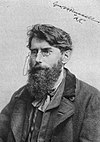
P. L. Travers on George William Russell 2 quotes
“These men — Yeats, James Stephens, and the rest — had aristocratic minds. For them, the world was not fragmented. An idea did not suddenly grow … all alone and separate. For them, all things had long family trees. They saw nothing shameful or silly in myths and fairy stories, nor did they shovel them out of sight and some cupboard marked "Only For Children." They were always willing to concede that there was more things in heaven and earth than philosophy dreamed of. They allowed for the unknown. And, as you can imagine, I took great heart from this. It was Æ who showed me how to look and learn from one's own writing. "Popkins" he said once — he always called her just plain Popkins, whether deliberately mistaking the name or not I never knew. His humor was always subtle — "Popkins had she lived in another age, in the old times to which she certainly belongs, she would undoubtedly have had long golden tresses, a wreath of flowers in one hand, and perhaps a spear in the other. Her eyes would have been like the sea, her nose comely, and on her feet winged sandals. But, this age being the Kali Yuga, as the Indus call it — in our terms, the Iron Age — she comes in habiliments suited to it."”
P. L. Travers on Laura Ingalls Wilder
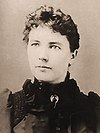
“If you look at other so-called children’s authors, you’ll see they never wrote directly for children. Though Lewis Carroll dedicated his book to Alice, I feel it was an afterthought once the whole was already committed to paper. Beatrix Potter declared, “I write to please myself!” And I think the same can be said of Milne or Tolkien or Laura Ingalls Wilder.”
P. L. Travers on C. S. Lewis
“You know C. S. Lewis, whom I greatly admire, said there's no such thing as creative writing. I've always agreed with that and always refuse to teach it when given the opportunity. He said there is, in fact, only one Creator and we mix. That's our function, to mix the elements He has given us. See how wonderfully anonymous that leaves us? You can't say, “I did this; this gross matrix of flesh and blood and sinews and nerves did this.” '''What nonsense! I'm given these things to make a pattern out of. Something gave it to me.”

P. L. Travers on G. I. Gurdjieff
“It is clear from Gurdjieff's writings that hypnotism, mesmerism and various arcane methods of expanding consciousness must have played a large part in the studies of the Seekers of Truth. None of these processes, however, is to be thought of as having any bearing on what is called Black Magic, which, according to Gurdjieff, "has always one definite characteristic. It is the tendency to use people for some, even the best of aims, without their knowledge and understanding, either by producing in them faith and infatuation or by acting upon them through fear. There is, in fact, neither red, green nor yellow magic. There is "doing." Only "doing" is magic." Properly to realise the scale of what Gurdjieff meant by magic, one has to remember his continually repeated aphorism, "Only he who can be can do," and its corollary that, lacking this fundamental verb, nothing is "done," things simply "happen."”

P. L. Travers on Mothers
“I’ve always been interested in the Mother Goddess. Not long ago, a young person, whom I don’t know very well, sent a message to a mutual friend that said: “I’m an addict of Mary Poppins, and I want you to ask P. L. Travers if Mary Poppins is not really the Mother Goddess.” So, I sent back a message: “Well, I’ve only recently come to see that. She is either the Mother Goddess or one of her creatures — that is, if we’re going to look for mythological or fairy-tale origins of Mary Poppins.” I’ve spent years thinking about it because the questions I’ve been asked, very perceptive questions by readers, have led me to examine what I wrote. The book was entirely spontaneous and not invented, not thought out. I never said, “Well, I’ll write a story about Mother Goddess and call it Mary Poppins.” It didn’t happen like that. I cannot summon up inspiration; I myself am summoned.”

P. L. Travers on Guy Fawkes
“The Fifth of November is Guy Fawkes' Day in England. In peacetime it is celebrated with bonfires on the greens, fireworks in the parks and the carrying of "guys" through the streets. "Guys" are stuffed, straw figures of unpopular persons; and after they have been shown to everybody they are burnt in the bonfires amid great acclamation. The children black their faces and put on comical clothes, and go about begging for a Penny for the Guy. Only the very meanest people refuse to give pennies and these are always visited by Extreme Bad Luck. The Original Guy Fawkes was one of the men who took part in the Gunpowder Plot. This was a conspiracy for blowing up King James I and the Houses of Parliament on November 5th, 1605. The plot was discovered, however, before any damage was done. The only result was that King James and his Parliament went on living but Guy Fawkes, poor man, did not. He was executed with the other conspirators. Nevertheless, it is Guy Fawkes who is remembered today and King James who is forgotten. For since that time, the Fifth of November in England, like the Fourth of July in America, has been devoted to Fireworks. From 1605 till 1939 every village green in the shires had a bonfire on Guy Fawkes' Day. … Since 1939, however, there have been no bonfires on the village greens. No fireworks gleam in the blackened parks and the streets are dark and silent. But this darkness will not last forever. There will some day come a Fifth of November — or another date, it doesn't matter — when fires will burn in a chain of brightness from Land's End to John O' Groats. The children will dance and leap about them as they did in the times before. They will take each other by the hand and watch the rockets breaking, and afterwards they will go home singing to the houses full of light...”

Quotes About P. L. Travers
Gain deeper perspective through quotes about P. L. Travers from others.
Mark Bostridge on P. L. Travers
“Mary Poppins arrives with the wind, and intervenes in the lives of ordinary humans, making magic, but never admitting that it has taken place. She understands the language of animals and birds, and between her visits to mortals returns to some secret source. Although the Poppins books have much in common with other works of children's literature — all the way back to the early 19th century and ETA Hoffmann's inspiration of making toys come alive — Travers was adamant that she didn't write specifically for children, and that there was no such thing as children's books. Poppins, she said, "had come up of the same well of nothingness as the poetry, myths and legends that had absorbed me all my writing life." This was something else that connected Travers to Disney, who maintained that his films were not directed at children, but at the innocence within us all.”
Catherine L. Elick on P. L. Travers
“Throughout their children's novels, Lewis and Travers bring together heterogeneous collections of characters from all orders of being — humanity, mythology (Greek, Norse, Christian), the animal world (both talking and nontalking beasts), and other fictional sources (for example, nursery rhyme and fairytale figures) — and have them mingle in festival-like gatherings reminiscent of medieval carnival celebrations. ... the interaction among these disparate characters often results in the suspension of hierarchical barriers...”
Caitlin Flanagan on P. L. Travers
“Mary Poppins advocates the kind of family life that Walt Disney had spent his career both chronicling and helping to foster on a national level: father at work, mother at home, children flourishing. It is tempting to imagine that in Travers he found a like-minded person, someone who embodied the virtues of conformity and traditionalism. Nothing could be further from the truth. Travers was a woman who never married, wore trousers when she felt like it, had a transformative and emotionally charged relationship with an older married man, and entered into a long-term live-in relationship with another woman. As she approached forty, she decided that she wanted a child. After a bizarre incident in which she attempted to adopt the seventeen-year-old girl who cleaned her house, she travelled to Ireland and adopted an infant, one of a pair of twins, and raised him as a single mother Her reverence for the delights of family life was perhaps as intense as Disney's, but her opinion about the shape such a life might assume was far more nuanced. Children's authors are not known for their happy childhoods, and Helen Goff — the little girl who at twenty-one changed her name to Pamela Travers and never looked back — endured one that was almost archetypal in its sadness and its privations. She was born in Australia in 1899, the eldest daughter in a household of girls. Her father, Travers Goff, was a bank manager and a drinker, and he died when she was seven.... Her mother, Margaret, who was pretty and feckless, soldiered on for a few years, and then, when Helen was ten, she did what a mother is never supposed to do. She gave up. One night, in the middle of a thunderstorm, Margaret left Helen in charge of the two younger children, telling her that she was going to drown herself in a nearby creek. As an old woman, Travers wrote about the terrifying experience: "Large-eyed, the little ones looked at me — she and I called them the little ones, both of us aware that an eldest child, no matter how young, can never experience the heart's ease that little ones enjoy." Helen stirred the fire and then they all lay down on the hearth rug and she told them a story about a magical flying horse, with the small ones asking excited questions ("Could he carry us to the shiny land, all three on his back?"). As she tried to distract her siblings, she worried about the future. ... Margaret came back that night, having been unsuccessful in her suicide attempt, but Helen's mind was made up. She no longer cleaved to her unreliable, dithering mother but, rather, to a formidable maiden great-aunt, Helen Morehead. Aunt Ellie, as she was called, bossed everyone around, but her fierceness disguised a kindness she would have been embarrassed to admit. ... Obviously, Travers did not write her books to commemorate a happy childhood, but she did seem interested in rewriting her bad one. The Banks family is a reformed version of the Goffs, their charming features magnified and their failures burnished away. Father is a banker, although not a drunk; mother is a flibbertigibbet, although not a suicidal one. And Mary Poppins, like Aunt Ellie, is the great deflater, the enemy of any attempt at whimsy or sentiment.”
Neil Gaiman on P. L. Travers
“Travers's Mary Poppins was a natural phenomena, ancient as mountain ranges, on first-name terms with the primal powers of the universe, adored and respected by everything that saw the world as it was. And she was a mystery. … philosophically, I suspect now, the universe of Mary Poppins underpins all my writing …”

Jerry Griswold on P. L. Travers
“Since the dead can’t set the record straight, I hope you will excuse me for feeling a duty to honor Travers and her fierce honesty. The Travers given us in Saving Mr. Banks is a one-trick pony. Emma Thompson does a wonderful job in presenting a character who is peremptory, stiff, unkind, and unfriendly. On a plane trip across the Atlantic, she loudly objects to spending eleven hours in the company of a fussing baby. She complains about California’s endless sunshine. She is rude to Disney’s staff. She demands that tea be prepared properly. She is, in short, the Curmudgeon and over the course of the movie it will be the task of Walt and Co. to loosen up this English harridan with America’s folksy friendliness and, darn it, melt the Curmudgeon’s heart! Call Emma Thompson’s character anybody else, and I have no problem. But associate her with P.L. Travers — a generous and kind woman, albeit with the no-nonsense manner of a Zen master — and I have to cry foul. Travers, herself, was the most impressive woman I ever met. In her youth, she was part of the Celtic Twilight and good friends with William Butler Yeats and George Russell, the Irish poet and mystic known as “AE.” She lived with the Navahos during World War II. She was part of Gurdjieff’s inner circle, and she was the second Western woman to go to Japan to study Zen. She was wise and, when I knew her in New York, she was a teacher who took on students interested in the spiritual life. In a similar way, her book Mary Poppins is profound — though let me tell you from experience, it’s hard to persuade people to sample it because of the Disney movie, even though the two are as different as Jesus Christ Superstar and its source. Travers’ other writings are equally impressive, especially her novel Friend Monkey. A good introduction to her and her mythological way of thinking is What the Bee Knows, a collection of her essays that does Joseph Campbell one better and treats the path of women’s lives as seen in fairy tales, the deep meanings of “Humpty Dumpty,” the sacredness of names in aboriginal cultures, and new ways of understanding the story of the Prodigal Son. Saving Mr. Banks, then, is off the mark in two major ways. The first is the suggestion that Travers was little else than a difficult person and hard to please, but she finally came around and liked the Disney film. That's just untrue. The film’s other misdirection comes in a series of flashbacks to Travers’ childhood in the outback of Australia and glimpses of her father Travers Goff (played by Colin Farrell) who drank himself to death. In a bit of penny-ante Freud, the great secret behind Mary Poppins, we’re told, was Travers’ troubled relationship with her father. As Mary Poppins herself might say, “Stuff and nonsense!””
Massimo Introvigne on P. L. Travers 2 quotes
“On September 6, 1995 La Stampa, Turin's daily newspaper, titled at full page "Is Mary Poppins really Satan?". Many readers were, understandably, surprised but no reader was more astonished than the undersigned. In fact I learned from the article that I had accused Mary Poppins to have "clear links with the esoteric and satanic thought". I was credited for having discovered that "under the gentle mask of the extraordinary nanny a dangerous creature was hidden, with features no less than satanic". The same journalist, appropriately, interviewed an exorcist who complained that "Introvigne normally minimizes the presence of Satan in our life" (a reference to my book on Satanism, where I argue that the number of real Satanists is minimum compared to the number of those who promote Satanism scares). But this, for the exorcist, amounted to still more convincing evidence that Mary Poppins was really satanic: "If someone like Massimo Introvigne has written such a thing, this could only mean that the danger is really there". The problem was, however, that I had never written such a thing.”

Valerie Lawson on P. L. Travers 3 quotes
“Mary Poppins seems the epitome of the punishing governess, the bullying woman who has an apt saying for every occasion, and who subdues children as they were subdued in the Victorian age, when they were seen and not heard. ... She carefully hides her compassion. Almost sadistic at times, Mary is never really nasty but often very sharp. She is a controlling force, making order from disorder, making magic, and then never admitting magic took place. ... Mary Poppins threatens to leave at a point of time which only she controls. She tells her charges she will be with them until the wind changes or until her necklace breaks. She never tells them where she has come from, where she intends to go or who she really is. But she leaves many clues. Like Francis of Assisi, she is close to animals and birds, with whom she can talk. Like Jesus she helps the poor and weak. She understands the universe and seems to take part in its creation and renewal. She is known as the Great Expectation, the Oddity, the Misfit.”
Brian Sibley on P. L. Travers
“I actually believe she liked the film a lot more than she let on publicly ... You have to remember that she was, above all, a great storyteller. And in the long line of storytellers who have faith in an oral tradition, who believe that for a great book or books to survive, they have to be retold or reinvented for each generation”
About P. L. Travers
Pamela Lyndon Travers (August 9 1899 – April 23 1996) was a British author, born Helen Lyndon Goff in Maryborough, Queensland, Australia, best known as the creator of the "Mary Poppins" series of stories.