Link Copied!
Pāṇini Quotes (-700--500)

About Pāṇini
Pāṇini (fl. 7th-5th century BCE) (Sanskrit: पाणिनि, IPA: pɑːɳin̪i; a patronymic meaning "descendant of Paṇi"), or Panini, was a Sanskrit grammarian from ancient India. He was born in Pushkalavati, GandharGandhara - on the outskirts of modern-day Charsadda - a city in the Khyber Pakhtunkhwa province of Pakistan. Pāṇini is known for his Sanskrit grammar, particularly for his formulation of the 3,959 rules of Sanskrit morphology, syntax and semantics in the grammar known as Ashtadhyayi (अष्टाध्यायी Aṣṭādhyāyī, meaning "eight chapters"), the foundational text of the grammatical branch of the Vedanga, the auxiliary scholarly disciplines of Vedic religion (Hinduism).
Best Pāṇini Quotes
Shortest
Earliest
Explore our curated collection of the most famous and impactful Pāṇini quotes.
“English translation:
A lion took the dear life of Panini, author of the grammatical treatise.”
A lion took the dear life of Panini, author of the grammatical treatise.”
“The medicine of Sushruta is considerably older than the ninth century; and the grammar of Panini probably precedes Christianity.”

“Among the earliest attempts to explain Pāṇini was the formulation of rules of interpretation or paribhāshās; a collection of these was made in the last century by Nāgojibhaṭṭa in his Paribhāshenduçekhara.”
“For example, the great linguist Panini gave the concept for meta-language-and constructed one-thousands of years before computer scientists began exploring the same idea. No one has been able to match him to this day.”
“His teacher was Varsa, and he was a contemporary of Katyayana, Vyadi, and Indradatta. Panini is said to have secured the favour of Shiva and obtained from him the alphabet in the form of fourteen pratyadhara sutras.”
“The most interesting non-Western grammatical tradition—and the most original and independent—is that of India, which dates back at least two and one-half millennia and which culminates with the grammar of Panini, of the 5th century BCE. There are three major ways in which the Sanskrit tradition has had an impact on modern linguistic scholarship.”
“Though its fame is much restricted by its specialized nature, there is no doubt that Panini's grammar is one of the greatest intellectual achievements of any ancient civilization, and the most detailed and scientific grammar composed before the 19th century in any part of the world.”
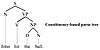
“The accepted cultivated speech of the contemporary language that Pāṇini describes in his Aṣṭādhyāyī must have coexisted with more vernacular varieties of speech in which there were features belonging to the Middle Indo-Aryan division of the language group. Several facts support this view.”

“We pass at once into the magnificent edifice which bears the name of Panini as its architect and which justly commands the wonder and admiration of everyone who enters, and which, by the very fact of its sufficing for all the phenomenon which language presents, bespeaks at once the marvelous ingenuity of its inventor and his profound penetration of the entire material of the language.”
“Next we have the Vārttikas or "Notes" of Kātyāyana (probably third century B.C.) on 1245 of Pāṇini's rules, and, somewhat later, numerous grammatical Kārikās or comments in metrical form: all this critical work was collected by Patanjali in his Mahābhāshya or "Great Commentary," with supplementary comments of his own. He deals with 1713 rules of Pāṇini.”
“Pāṇini's grammar defines Classical Sanskrit, so Pāṇini by definition lived at the end of the Vedic period. He notes a few special rules, marked chandasi ("in the hymns") to account for forms in the Vedic scriptures that had fallen out of use in the spoken language of his time. These indicate that Vedic Sanskrit was already archaic, but still a comprehensible dialect.”
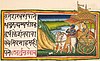
“Panini was a Sanskrit grammarian who gave a comprehensive and scientific theory of phonetics, phonology, and morphology. Sanskrit was the classical literary language of the Indian Hindus and Panini is considered the founder of the language and literature. It is interesting to note that the word "Sanskrit" means "complete" or "perfect" and it was thought of as the divine language, or language of the gods.”
“The most successful, hence most prominent amongst these grammarians was Panini. His grammar, surpassing all others in tightness and precision, became the standard and remained so undisputedly until today. Panini was able to joint the original devanagari language into an exact framework of rules, thus preserving it for the posterity. Since his time, this language is called Sanskrit, “joined together, refined”.”
“Classical Sanskrit theatre flourished during the first nine centuries CE. Aphorisms on acting appear in the writings of Panini, the Sanskrit grammarian of the 5th century BCE, and references to actors, dancers, mummers, theatrical companies, and academies are found in Kautilya’s book on statesmanship, the Artha-shastra (4th century BCE).”
“While Pāṇini's work is purely grammatical and lexicographic, cultural and geographical inferences can be drawn from the vocabulary he uses in examples, and from his references to fellow grammarians, which show he was a northwestern person. New deities referred to in his work include Vasudeva (4.3.98). The concept of dharma is attested in his example sentence dharmam carati "he observes the law" (cf. Taittiriya Upanishad 1.11).”
“Sanskrit is constructed like geometry and follows a rigorous logic. It is theoretically possible to explain the meaning of the words according to the combined sense of the relative letters, syllables and roots. Sanskrit has no meanings by connotations and consequently does not age. Panini's language is in no way different from that of Hindu scholars conferring in Sanskrit today.”
“Ashtadhyayi Sanskrit treatise on grammar was written in the 6th to 5th century BCE by the Indian grammarian Panini. This work set the linguistic standards for Classical Sanskrit. It sums up in 4,000 sutras the science of phonetics and grammar that had evolved in the Vedic religion. Panini divided his work into eight chapters, each of which is further divided into quarter chapters, beyond defining the morphology and syntax of Sanskrit language.”
“The current language Pāṇini describes is very close in structure to the late Vedic found in certain Brāhmaṇa texts. As noted earlier, scholars have recognized other varieties of Sanskrit. Epic Sanskrit is so called because it is represented principally in the two epics, Mahābhārata (“Great Epic of the Bhārata Dynasty”) and Rāmāyaṇa (“Romance of Rāma”). In the latter the term saṃskṛta ‘adorned, cultivated, purified (by grammar)’ is encountered, possibly for the first time with reference to the language. The date of composition for the core of early Epic Sanskrit is considered to be in the centuries just preceding the Common Era.”
“Panini’s grammar is the earliest scientific grammar in the world, the earliest extant grammar of any language, and one of the greatest ever written. It was the discovery of Sanskrit by the West, at the end of the 18th century, and the study of Indian methods of analyzing language that revolutionized our study of language and grammar, and gave rise to our science of comparative philology … The study of language in India was much more objective and scientific than in Greece or Rome. The interest was in empirical investigation of language, rather than philosophical and syntactical. Indian study of language was as objective as the dissection of a body by an anatomist.”
“Ashtadhyayi distinguishes between usage in the spoken language and usage that is proper to the language of the sacred texts. The Ashtadhyayi is generative as well as descriptive. With its complex use of metarules, transformations, and recursions, the grammar in Ashtadhyayi has been likened to the Turing machine, an idealized mathematical model that reduces the logical structure of any computing device to its essentials.”
“The issue of theism vis-à-vis atheism, in the ordinary senses of the English words, played an important role in Indian thought. The ancient Indian tradition, however, classified the classical systems (darshanas) into orthodox (astika) and unorthodox (nastika). Astika does not mean “theistic,” nor does nastika mean “atheistic.” Panini, a 5th-century-BCE grammarian, stated that the former is one who believes in a transcendent world (asti paralokah) and the latter is one who does not believe in it (nasti paralokah).”
Quotes About Pāṇini
Gain deeper perspective through quotes about Pāṇini from others.
Will Durant on Pāṇini
“At a very early date India began to trace the roots, history, relations and combinations of words. By the fourth century B.C. she had created for herself the science of grammar, and produced probably the greatest of all known grammarians, Panini. The studies of Panini, Patanjali (ca. 150 A.D.) and Bhartrihari (ca. 650) laid the foundations of philology; and that fascinating science of verbal genetics owed almost its life in modern times to the rediscovery of Sanskrit.”
Elst on Pāṇini
“Linguistics is an Indian science par excellence, and the entire modern discipline of modern linguistics in indebted to the Indian grammarians of the 1st millennium BCE. In India, it has briefly missed out on the recent innovation of comparison between seriously different languages (as opposed to dialectal differences, well-known among Indian scholars). But here too, Indians should take some pride in the official birth of IE linguistics in Kolkata 1786... Linguistics started in Takṣaśĭla university, where Pāṇini taught 26 (or so) centuries ago. Indo-European linguistics started at the feet of Brahmin informers in Kolkata (as shown on a freeze in Oxford showing William Jones learning from Hindu Pandits).”
Bod on Pāṇini
“His formalism even served in the twentieth century as the basis for the first high-level programming languages, as ALGOL60, which also work on the basis of a fully specified system of rules. Virtually all programming languages are written in formalism that uses Pāṇini’s linguistic notion of grammar... Compared with Pāṇini, the other linguistics from antiquity appears to be from a different world. No other work from Chinese, Greek or Roman literature comes close to Pāṇini’s grammar in terms of complexity of precision.... Western linguistics continued to be dominated by the taxonomic study of words after Priscian, and this situation did not change until the later Middle ages.”
About Pāṇini
Pāṇini (fl. 7th-5th century BCE) (Sanskrit: पाणिनि, IPA: pɑːɳin̪i; a patronymic meaning "descendant of Paṇi"), or Panini, was a Sanskrit grammarian from ancient India. He was born in Pushkalavati, GandharGandhara - on the outskirts of modern-day Charsadda - a city in the Khyber Pakhtunkhwa province of Pakistan. Pāṇini is known for his Sanskrit grammar, particularly for his formulation of the 3,959 rules of Sanskrit morphology, syntax and semantics in the grammar known as Ashtadhyayi (अष्टाध्यायी Aṣṭādhyāyī, meaning "eight chapters"), the foundational text of the grammatical branch of the Vedanga, the auxiliary scholarly disciplines of Vedic religion (Hinduism).