Link Copied!
Otto von Bismarck Quotes (1815-1898)
President








-100px.jpg)
About Otto von Bismarck
Prince Otto Eduard Leopold von Bismarck, Duke of Lauenburg (1 April 1815 – 30 July 1898), was a German aristocrat and statesman; he was Minister President of Prussia (1862–1890), and the first Chancellor of Germany (1871–1890). Nicknamed the Iron Chancellor, he is noted for his laconic remarks.
Best Otto von Bismarck Quotes
Shortest
Earliest
Explore our curated collection of the most famous and impactful Otto von Bismarck quotes.

“A conquering army on the border will not be stopped by eloquence.”

“The social insecurity of the worker is the real cause of their being a peril to the state.”
“Setzen wir Deutschland, so zu sagen, in den Sattel! Reiten wird es schon können.”
“I have never judged international disputes by the standards which prevail at a student's duel.”
“The politician has not to revenge what has happened but to ensure that it does not happen again.”

“Faust complains of having two souls in his breast. I have a whole squabbling crowd. It goes on as in a republic.”

“I grant that I am full of prejudices; I sucked them in with my mother's milk, and I cannot possibly argue them away.”

“Struggle is everywhere, without struggle no life, and if we want to go on living, we must be ready for further struggles.”
“In the domain of political economy the abstract doctrines of science leave me perfectly cold, my only standard of judgment being experience.”

“Wir Deutsche fürchten Gott, aber sonst nichts in der Welt - und die Gottesfurcht ist es schon, die uns den Frieden lieben und pflegen lässt.”
“I have always found the word Europe on the lips of those politicians who wanted something from other Powers which they dared not demand in their own names.”


“I am not antagonistic to the rightful claims of capital; I am far from wanting to flourish a hostile flag; but I am of opinion that the masses, too, have rights which should be considered.”
“In the development of our tariff I am determined to oppose any modification in the direction of Free Trade, and to use my influence in favour of greater protection and of a higher revenue from frontier duties.”
“Concerning the blunders which had been made in our foreign policy public opinion is, as a rule, first enlightened when it is in a position to look back upon the history of a generation, and the Achivi qui plectuntur are not always immediately contemporary with the mistaken actions.”
“If we really came to a position in which we could no longer produce the grain which we must necessarily consume, then in what state would we be if in wartime we had no Russian grain imports and perhaps simultaneously were blockaded along our coasts – in other words, if we had no grain at all?”

“Haut doch die Polen, daß sie am Leben verzagen; ich habe alles Mitgefühl für ihre Lage, aber wir können, wenn wir bestehn wollen, nichts andres tun, als sie ausrotten; der Wolf kann auch nicht dafür, daß er von Gott geschaffen ist, wie er ist, und man schießt ihn doch dafür totd, wenn man kann.”
“I should like to see the State, which for the most part consists of Christians—although you reject the name Christian State—penetrated to some extent by the principles of the religion it professes; especially as concerns the help one gives to his neighbour, and sympathy with the lot of old and suffering people.”

“Mein lieber Professor, ein solcher Krieg hätte uns wenigstens 30,000 Mann brave Soldaten gekostet, und uns im besten Falle keinen Gewinn gebracht. Wer aber nur ein Mal in das brechende Auge eines sterbenden Kriegers auf dem Schlachtfeld geblickt hat, der besinnt sich, bevor er einen Krieg anfängt.
• Variant translation:”
• Variant translation:”
“It was not then possible to forecast with certainty whether and how long the Czar's friendship would remain a realisable political asset. In any case, however, simple common sense enjoined us not to let it fall into the possession of our enemies, whom we might discern in the Poles, the philo-Polish Russians, and, ultimately, probably in the French.”

“I will further every endeavour which positively aims at improving the condition of the working classes. ... As soon as a positive proposal came from the Socialists for fashioning the future in a sensible way, in order that the lot of the working-man might be improved, I would not at any rate refuse to examine it favourably, and I would not even shrink from the idea of State help for the people who would help themselves.”
“There is no doubt, however, that I have caused unhappiness to great numbers. But for me three great wars would not have taken place, eighty thousand men would not have been killed and would not now be mourned by parents, brothers, sisters, and widows. [...] I have settled that with God, however. But I have had little if any pleasure from all that I have done, while on the other hand I have had a great deal of worry, anxiety, and trouble.”
“An agreement between Russia and the German foe of Pan-Slavism for joint action, military and political, against the Polish ‘Bruderstamm’ movement was a decisive blow to the views of the philo-Polish party at the Russian court. ... The convention said ‘checkmate’ in the game which anti-Polish monarchism was then playing against philo-Polish Panslavism within the Russian cabinet.”
“I am of opinion that the idea of the Christian State is as old as the ci-devant Holy Roman Empire, as old as all the European States, that it is the soil in which these States have taken root, and that a State, if it would have an assured permanence, if it would only justify its existence, when it is disputed, must stand on a religious foundation. ... I believe I am right in calling that State a Christian State which seeks to realise the teaching of Christianity.”

“Only a country's most vital interests justify its embarking on war. ... Aye, I made the war of 1866, fulfilling my harsh duty with a heavy heart, because without it the nation would have bogged down politically, soon to fall prey to avaricious neighbors; and if we stood in the same place where then we stood, I should resolutely make war again. Never, you may be sure, shall I counsel His Majesty to wage war unless the innermost interests of the fatherland request it.”
“I shall soon be compelled to undertake the conduct of the Prussian Government. My first care will be to reorganise the army, with or without the help of the Landtag. ... As soon as the army shall have been brought into such a condition as to inspire respect, I shall seize the first best pretext to declare war against Austria, dissolve the German Diet, subdue the minor States, and give national unity to Germany under Prussian leadership. I have come here to say this to the Queen's Ministers.”
“Give the working-man the right to work as long as he is healthy, assure him care when he is sick; assure him maintenance when he is old. If you do that, and do not fear the sacrifice, or cry out at State Socialism directly the words “provision for old age” are uttered,—if the State will show a little more Christian solicitude for the working-man, then I believe that the gentlemen of the Wyden (Social-Democratic) programme will sound their bird-call in vain, and that the thronging to them will cease as soon as working-men see that the Government and legislative bodies are earnestly concerned for their welfare.”
“For me there has been but one compass, one pole-star, after which I have steered: Salus publica. Since I entered public life I have often, perhaps, acted rashly and imprudently. But when I have had time for reflection I have always been guided by the question,—what is most beneficial, most expedient, and proper for my dynasty so long as I was only in Prussia, and nowadays for the German nation? I have never in my life been doctrinaire. All systems by which parties are divided and bound together are of secondary moment to me. My first thought is of the nation, its position abroad, its independence, our organisation in such a way that we may breathe freely in the world.”

“I went the round of the villages and found the peasants already eager to march to the help of the King in Berlin. Especially enthusiastic was an old dyke-surveyor named Krause of Neuermark, who had been a sergeant in my father's regiment of carabineers. Only my next-door neighbour sympathised with the Berlin movement, accused me of hurling a firebrand into the country, and declared that if the peasants really prepared to march off, he would come forward and dissuade them. I replied, “You know that I am a quiet man, but if you do that I shall shoot you.” “I am sure you won't,” said he. “I give you my word of honour that I will,” I replied, “and you know that I keep my word: so drop that.””

“Let us close our doors and erect somewhat higher barriers and let us thus take care to preserve at least the German market to German industry. The chances of a large export trade are nowadays exceedingly precarious. There are now no more great countries to discover. The globe is circumnavigated, and we can no longer find any large purchasing nations. Commercial treaties, it is true, are under certain circumstances favourable to foreign trade; but whenever a treaty is concluded, it is a question of Qui trompe-t-on ici?—who is taken in? As a rule one of the parties is, but only after a number of years is it known which one.”

“I do not comprehend with what right we acknowledge the commands of Christianity as binding upon our private dealings, and yet in the most important sphere of our duty—participation in the legislation of a country having a population of forty-five million people—push them into the background and say, here we need not trouble. For my part I confess openly that my belief in the consequence of our revealed religion, in the form of moral law, is sufficient for me, and certainly for the position taken up on this question by the Emperor, and that the question of the Christian or non-Christian State has nothing to do with the matter. I, the minister of the State, am a Christian, and as such I am determined to act as I believe I am justified before God.”

“If an establishment employing twenty thousand or more workpeople were to be ruined...we could not allow these men to hunger. We should have to resort to real State Socialism and find work for them, and this is what we do in every case of distress. If the objection were right that we should shun State Socialism as we would an infectious disease, how do we come to organise works in one province and another in case of distress—works which we should not undertake if the labourers had employment and wages? In such cases we build railways whose profitableness is questionable; we carry out improvements which otherwise would be left to private initiative. If that is Communism, I have no objection at all to it; though with such catchwords we really get no further.”

“The interests of the state alone have guided me, and it has been a calumny when publicists, even well-meaning, have accused me of having ever advocated an aristocratic system. I have never regarded birth as a substitute for want of ability; whenever I have come forward on behalf of landed property, it has not been in the interests of proprietors of my own class, but because I see in the decline of agriculture one of the greatest dangers to our permanence as a state. The ideal that has always floated before me has been a monarchy which should be so far controlled by an independent national representation—according to my notion, representing classes or callings—that monarch or parliament would not be able to alter the existing statutory position before the law separately but only communi consensu; with publicity, and public criticism, by press and Diet, of all political proceedings.”
“Even in 1864 it certainly cost us much trouble to loosen the threads by which the King, with the co-operation of the Liberalising influence of his consort, remained attached to that camp. Without having investigated the complicated legal questions of the succession, he stuck to his motto: “I have no right to Holstein.” ... At that time, however, the acquisition of the duchies by Prussia was regarded as an act of profligacy by all those who, since 1848, had set up to play the part of representatives of national views. My respect for so-called public opinion—or, in other words, the clamour of orators and newspapers—has never been very great, but was still further materially lowered as regards foreign policy in the two cases compared above. How strangely, up to this time, the King's way of looking at things was impregnated with vagabond Liberalism through the influence of his consort and of the pushing Bethmann-Hollweg clique.”
“A decision, memorable in the world's history, of the secular struggle between the two neighbouring peoples [France and Germany] was at stake [in 1870], and in danger of being ruined, through personal and predominantly female influences with no historical justification, influences which owed their efficacy, not to political considerations but to feelings which the terms humanity and civilisation, imported to us from England, still rouse in German natures. ... [I]f the conclusion of the French war had been a little less favourable to Germany, then would this mighty war, with its victories and its enthusiasm, have remained without the effect it produced on our national unification. I never doubted that the victory over France must precede the restoration of the German kingdom, and if we did not succeed in bringing it this time to a perfect conclusion, further wars without the preliminary security of our perfect unification were full in view.”
“I ask you what right had I to close the way to the throne against these people? The kings of Prussia have never been by preference kings of the rich. Frederick the Great said when Crown Prince: “Quand je serai roi, je serai un vrai roi des gueux.” He undertook to be the protector of the poor, and this principle has been followed by our later kings. At their throne suffering has always found a refuge and a hearing. ... Our kings have secured the emancipation of the serfs, they have created a thriving peasantry, and they may possibly be successful—the earnest endeavour exists, at any rate—in improving the condition of the working classes somewhat. To have refused access to the throne to the complaints of these operatives would not have been the right course to pursue, and it was, moreover, not my business to do it. The question would afterwards have been asked: “How rich must a deputation be in order to its reception by the King?””
“The whole matter centres in the question, Is it the duty of the State, or is it not, to provide for its helpless citizens? I maintain that it is its duty, that it is the duty not only of the “Christian State,” as I ventured once to call it when speaking of “practical Christianity,” but of every State. It would be foolish for a corporation to undertake matters which the individual can attend to alone; and similarly the purposes which the parish can fulfil with justice and with advantage are left to the parish. But there are purposes which only the State as a whole can fulfil. To these belong national defence, the general system of communications, and, indeed, everything spoken of in article 4 of the constitution. To these, too, belong the help of the necessitous and the removal of those just complaints which provide Social Democracy with really effective material for agitation. This is a duty of the State, a duty which the State cannot permanently disregard.”
“Peasants and large landed proprietors recognise more and more that they form one and the same class, the class of land-owners, and follow one and the same industry of agriculture. ... The land-owners are, on the whole, a support of the monarchy, and their entire disposition is favourable to the existing Government; and you try to sow discord amongst them because you are displeased that the unification is proceeding gradually and unceasingly. This is the salutary effect of legislation which at first was painfully felt by many of the privileged class: the abolition of all the legal and axiomatic prerogatives of the greatest land proprietors, and especially of the earlier knighthood. We larger land-owners are in our industry to-day nothing more than the largest peasants, and the peasant is nothing more than the smaller land-owner. Indeed, most peasants call themselves land-owners, while some call themselves husbandmen and others countrymen.”
“I leave undecided the question whether complete mutual freedom of international commerce, such as is contemplated by the theory of Free Trade, would not serve the interests of Germany. But as long as most of the countries with which our trade is carried on surround themselves with customs barriers...it does not seem to me justifiable, or to the economic interest of the nation, that we should allow ourselves to be restricted in the satisfaction of our financial wants by the apprehension that German products will thereby be slightly preferred to foreign ones. ... The minority of the population, which does not produce at all, but exclusively consumes, will apparently be injured by a customs system favouring the entire national production. Yet if by means of such a system the aggregate sum of the values produced in the country increase, and thus the national wealth be on the whole enhanced, the non-producing parts of the population...will eventually be benefited.”
“In all these questions [of economics] I pay as little regard to science as I do in any other judgment of organic institutions. Our surgery has made splendid progress during the last two thousand years; but medical science has made no progress in regard to the internal conditions of the body, into which the human eye cannot see, and here we stand face to face with the same riddles as before. So it is with the organic formation of States. In this respect the abstract doctrines of science do not influence me: I judge according to the experience which we have. I see that the countries which protect themselves prosper, that the countries which are open are declining, and that great and powerful England, that strong combatant, who, after strengthening her muscles, entered the market and said: “Who will contest with me? I am ready for any one,” is gradually going back to protective duties, and will in a few years adopt them so far as is necessary to preserving at least the English market.”

“The German who is still free from all Slav or Celtic alloy has a distinctive character and vies with all his equals. When he is allied with other races, provided he has the necessary patience and endurance he always succeeds in becoming, the chief, the directing will, as the husband must be in a household. I have no desire to offend the Slavs, but it is very necessary to recognise that their character has much of the feminine in it: they have charm, intelligence, artifice, address, and often the Germans appear heavy and clumsy beside them. But we always carry the day, and that is why I would like to say to you: when you are doing business with your Slav rivals, even at moments of the most violent anger and in the most critical situations, always retain the profound conviction, the most profound but secret conviction, that you are fundamentally their superiors, and that you always will be so.”
“I received the first intelligence of the events of March 18 and 19, 1848, while staying with my neighbour, Count Wartensleben, at Karow. ... I thought the King would soon be master of the situation if only he were free; I saw that the first thing to be done was to liberate him, as he was said to be in the power of the insurgents. On the 20th I was told by the peasants at Schönhausen that a deputation had arrived from Tangermünde with a demand that the black, red, and gold flag should be hoisted on the tower, as had already been done in the above-named town; threatening, in case of refusal, to visit us again with reinforcements. I asked the peasants if they were willing to defend themselves. They replied with a unanimous and brisk “Yes,” and I advised them to drive the townspeople out of the village; which was attended to, the women zealously co-operating. I then had a white banner with a black cross in the shape of the Iron Cross, which happened to be in the church, hoisted on the tower, and ascertained what supply of weapons and ammunition was available in the village.”
“Many measures which we have adopted to the great blessing of the country are Socialistic, and the State will have to accustom itself to a little more Socialism yet. ... I am glad that this Socialism was adopted, for we have as a consequence secured a free and very well-to-do peasantry, and I hope that we shall in time do something of the sort for the labouring classes. ... The establishment of the freedom of the peasantry was Socialistic; Socialistic, too, is every expropriation in favour of railways; Socialistic to the utmost extent is the aggregation of estates—the law exists in many provinces—taking from one and giving to another, simply because this other can cultivate the land more conveniently; Socialistic is expropriation under the Water Legislation, on account of irrigation, etc., where a man's land is taken away from him because another can farm it better; Socialistic is our entire poor relief, compulsory school attendance, compulsory construction of roads, so that I am bound to maintain a road upon my lands for travellers. That is all Socialistic, and I could extend the register further; but if you believe that you can frighten any one or call up spectres with the word “Socialism,” you take a standpoint which I abandoned long ago, and the abandonment of which is absolutely necessary for our entire imperial legislation.”
“I immediately went quite alone to Potsdam, where, in the railway station, I saw Herr von Bodelschwingh. ... It was plain that he had no desire to be seen in conversation with me, the reactionary. He returned my greeting in French, with the words, “Do not speak to me.” “The peasants are rising in our part,” I replied. “For the King?” “Yes.” “That rope-dancer!” said he, pressing his hands to his eyes while the tears stood in them. ... I [then] visited in the ‘Deutsches Haus’ General von Mollendorf, whom I found still stiff from the treatment he had suffered when negotiating with the insurgents, and General von Prittwitz, who had been in command in Berlin. I described to them the present temper of the country people. ... Prittwitz, who was older than I, and judged more calmly, said: “Send us none of your peasants, we don't want them. We have quite enough soldiers. Either send us potatoes and corn, perhaps money too, for I do not know whether the maintenance and pay of the troops will be sufficiently provided for. If auxiliaries came up I should receive, and should have to carry out, an order from Berlin to drive them back.” “Then fetch the King away,” I said. He replied: “There will be no great difficulty about that; I am strong enough to take Berlin, but that means more fighting. What can we do after the King has commanded us to play the part of the vanquished? I cannot attack without orders.””
Otto von Bismarck Quotes by Topic
Find exactly what you are looking for by browsing this categorized list of Otto von Bismarck quotes by topic.
Otto von Bismarck on Europe 2 quotes
“Whoever speaks of Europe is wrong: it is a geographical expression.”

Otto von Bismarck on Politics 2 quotes
“Politics is not an exact science.
(Die Politik ist keine exakte Wissenschaft.)”

Otto von Bismarck on Economy of Germany 2 quotes
“I leave undecided the question whether complete mutual freedom of international commerce, such as is contemplated by the theory of Free Trade, would not serve the interests of Germany. But as long as most of the countries with which our trade is carried on surround themselves with customs barriers...it does not seem to me justifiable, or to the economic interest of the nation, that we should allow ourselves to be restricted in the satisfaction of our financial wants by the apprehension that German products will thereby be slightly preferred to foreign ones. ... The minority of the population, which does not produce at all, but exclusively consumes, will apparently be injured by a customs system favouring the entire national production. Yet if by means of such a system the aggregate sum of the values produced in the country increase, and thus the national wealth be on the whole enhanced, the non-producing parts of the population...will eventually be benefited.”

What Otto von Bismarck Said About Others
Discover personal opinions Otto von Bismarck shared regarding contemporaries.
Otto von Bismarck on Politicians
“The politician has not to revenge what has happened but to ensure that it does not happen again.”
Otto von Bismarck on Alfred von Waldersee
“Waldersee was a muddle-headed politician on whom no reliance was to be placed. He wanted war because he felt that he would be too old if peace lasted longer. His remark was of no importance. It was particularly stupid to believe that Waldersee could become Imperial Chancellor. Even as Chief of Staff he was unsatisfactory and Moltke had only preferred him to Caprivi and Häseler because he could do what he wanted with him. That was a bad turn which old Moltke had done the Army.”

Otto von Bismarck on Thomas Carlyle
“As you introduced Schiller to your countrymen, so you have placed before the Germans our great Prussian King in his full figure; like a living statue. What you said long years ago of the "Hero as Man of Letters"—that he is under the noble obligation to be true,—has been fulfilled in yourself; but, more fortunate than those of whom you then spoke, you may rejoice in what you have accomplished, and continue your work in full vigour, which may God long preserve to you. Accept with my cordial congratulations the assurance of my sincere respect.”

Otto von Bismarck on Napoleon III
“I recognize the principle of the fight against the revolution as my own, but I do not believe it right to depict Louis Napoleon as the sole or just κατ’ ἐξοχήν representative of the revolution ... how many existences are there in the current political world that are not rooted in revolutionary soil? Take Spain, Portugal, Brazil, all American republics, Belgium, Holland, Switzerland, Greece, Sweden, the England that is still footed in the consciousness of the 'glorious revolution' of 1866 ... Bonapartism is not the father of the revolution.”

Quotes About Otto von Bismarck
Gain deeper perspective through quotes about Otto von Bismarck from others.
Lady Cynthia Asquith on Otto von Bismarck
“Mr Balfour was very interesting on what he considers the great gulf between Bismarck and the present rulers of Germany, not only in strategy but ambition. Bismarck, he is certain, would never have staked his country on the chances of this war—even though they may have been five to four at the outset—and in his opinion Bismarck would never have hankered after "world empire". All he wanted was the unity of the German Empire and commercial prosperity which they were peacefully enjoying before this desperate sort of "double or quits" gamble.”
George Louis Beer on Otto von Bismarck
“When asked what was the greatest political fact of modern times, Bismarck is reported to have responded, that it was "the inherited and permanent fact that North America speaks English." Whether the saying be authentic or not, the remark is certainly worthy of its reputed author's keen insight into political fundamentals.”
E. H. Carr on Otto von Bismarck
“The great European figures of the later nineteenth century were Disraeli and Bismarck, who strove to weld together the "two nations" into one through the agencies of the social service state, popular education and imperialism, refuted the taunt that "the worker has no country", and paved the way for "national labour", "national socialism" and even "national communism".”
Benjamin Disraeli on Otto von Bismarck 2 quotes
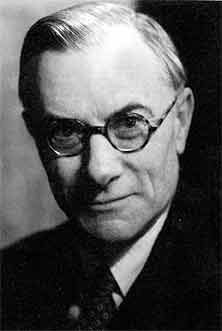
“Bismarck soars above all: he is six foot four I shd. think, proportionately stout; with a sweet and gentle voice, and with a peculiarly refined enunciation, wh. singularly and strangely contrasts with the awful things he says: appalling from their frankness and their audacity. He is a complete despot here, and from the highest to the lowest of the Prussians, and all the permanent foreign diplomacy, tremble at his frown and court most sedulously his smile. He loads me with kindnesses, and, tho' often preoccupied, with an immediate dissolution of Parliament on his hands, an internecine war with the Socialists, 100's of whom he puts daily into prison in defiance of all law, he yesterday exacted from me a promise that, before I depart, I will once more dine with him quite alone. His palace has large and beautiful gardens. He has never been out since I came here, except the memorable day when he called on me to ascertain whe[the]r my policy was an ultimatum. I convinced him it was, and the Russians surrendered a few hours afterwards.”

Richard J. Evans on Otto von Bismarck
“Is it wrong to begin with Bismarck? On several levels, he was a key figure in the coming of the Third Reich. For one thing, the cult of his memory in the years after his death encouraged many Germans to long for the return of the strong leadership his name represented. For another, his actions and policies in the mid-to-late nineteenth century helped create an ominous legacy for the German future. Yet in many ways he was a complex and contradictory figure, as much European as German, as much modern as traditional. Here, too, his example pointed forwards to the tangled mixture of the new and the old that was so characteristic of the Third Reich. It is worth calling to mind that a mere fifty years separated Bismarck's foundation of the German Empire in 1871 from the electoral triumphs of the Nazis in 1930-32. That there was a connection between the two seems impossible to deny. It was here, rather than in the remote religious cultures and hierarchical polities of the Reformation or the 'Enlightened Absolutism' of the eighteenth century, that we find the first real moment in German history which it is possible to relate directly to the coming of the Third Reich in 1933.”






Disputed Quotes
Quotes attributed to Otto von Bismarck that are questionable.
“Europe today is a powder keg and the leaders are like men smoking in an arsenal … A single spark will set off an explosion that will consume us all … I cannot tell you when that explosion will occur, but I can tell you where … Some damned foolish thing in the Balkans will set it off.”
Misattributed Quotes
Quotes mistakenly credited to Otto von Bismarck
“There is a special providence for drunkards, fools, and the United States of America.”
“Laws, like sausages, cease to inspire respect in proportion as we know how they are made (Gesetze sind wie Würste, man sollte besser nicht dabei sein, wenn sie gemacht werden).”
“Put all the Dutch people in Ireland, and Ireland would be the garden of Europe. Put all the Irish people in the Netherlands, and it would sink.”
About Otto von Bismarck
Prince Otto Eduard Leopold von Bismarck, Duke of Lauenburg (1 April 1815 – 30 July 1898), was a German aristocrat and statesman; he was Minister President of Prussia (1862–1890), and the first Chancellor of Germany (1871–1890). Nicknamed the Iron Chancellor, he is noted for his laconic remarks.