Hans Morgenthau on Otto von Bismarck
← Back to Otto von Bismarck Profile
“The prototype of localized imperialism is to be found in the monarchical policies of the eighteenth and nineteenth centuries... In the nineteenth century, Bismarck was the master of this imperialistic policy which seeks to overthrow the status quo and to establish political preponderance within self-chosen limits. The difference between such a localized imperialistic policy, continental imperialism, and unlimited imperialism is the difference between the foreign policies of Bismarck, William II, and Hitler. Bismarck wanted to establish Germany's preponderance in Central Europe; William II, in all of Europe; Hitler, in the whole world.”
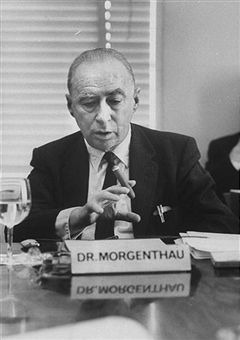
“In the nineteenth century, the element of choice characteristic of the policy of localized imperialism is paramount in the history of Bismarck's foreign policy. First, he had to overcome the opposition of the Prussian conservatives who favored a policy of the status quo for Prussia over Bismarck's policy of localized imperialism aiming at hegemony within Germany. When victorious wars had made Bismarck's policy feasible, it had to be defended against those who now wanted to go beyond the limits which Bismarck had set for Prussian and later German hegemony. The dismissal of Bismarck by William II in 1890 marked the end of localized and the beginning of at least a tendency toward continental imperialism as the foreign policy of Germany.”