Oswald Spengler Quotes (1880-1936)
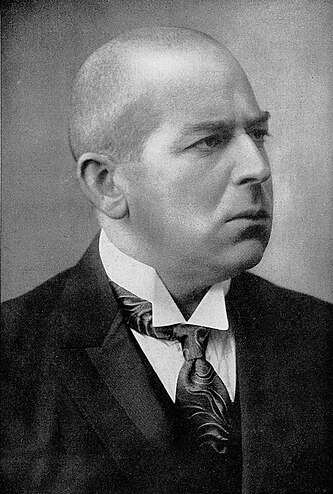















About Oswald Spengler
Best Oswald Spengler Quotes
Explore our curated collection of the most famous and impactful Oswald Spengler quotes.



We are socialists. Let us hope that it will not have been in vain.”



Romanticism is no sign of powerful instincts, but, on the contrary, of a weak, self-detesting intellect. They are all infantile, these Romantics; men who remain children too long (or for ever), without the strength to criticize themselves, but with perpetual inhibitions arising from the obscure awareness of their own personal weakness; who are impelled by the morbid idea of reforming society, which is to them too masculine, too healthy, too sober. ...
And these same everlasting "Youths" are with us again today, immature, destitute of the slightest experience or even real desire for experience, but writing and talking away about politics, fired by uniforms and badges, and clinging fantastically to some theory or other. There is a social Romanticism of sentimental Communists, a political Romanticism which regards election figures and the intoxication of mass-meeting oratory as deeds, and an economic Romanticism which trickles out from behind the gold theories of sick minds that know nothing of the inner forms of modern economics. They can only feel in the mass, where they can deaden the dull sense of their weakness by multiplying themselves. And this they call the Overcoming of Individualism.
”
Marx wished to deprive capital of the right to private profit, but the only thing he could think of as a substitute was the worker's right to private profit. That is unsocialistic, but it is typically English. Marx became an Englishman on one other score as well: in his mind the state does not exist. He thought statelessly, in terms of "society". Like parliamentary practice in England, his economic world functions as a two-party system with nothing above the parties. Within his scheme there can be only combat and no arbitration, only victory or defeat, only the dictatorship of one of the two parties. The Communist Manifesto calls for a dictatorship of the "good" proletarian party over the "evil" capitalist party. Marx saw no alternatives.
The Prussian socialist state exists beyond this "good" and "evil". It is the whole people, and in the face of its absolute authority the two Marxian parties are simply parties—minorities that serve the general weal. From a strictly technical viewpoint, socialism is the principle of public service. In the final analysis every worker has the status not of a businessman, but of a public servant, as does every employer. There are public servants of industry, commerce, traffic, and the military. This system was realized in the grandest style in Egyptian culture and again, though quite differently, in China.”
The principle of inorganic equality was for them crucial. Men of the stamp of Jahn and Arndt had no notion that it was Equality that had first sounded the cry of "Vive la nation" in the September massacres of 1792.
They forgot, too, one basic fact. The Romanticism of their Volkslieder sang only the heroism of the common soldier, but the inner worth of these armies (at first amateurs in the calling of arms), their spirit, their discipline, and their training, depended upon the quality of the officer‑corps, whose adequacy was due entirely to eighteenth-century traditions. With the Jacobins also a body of soldiers was morally worth precisely as much as its officer, who had trained it by his example. Napoleon confessed at St. Helena that he would not have been beaten had he had for his superb fighting material a corps of officers like the Austrian, a corps in which chivalrous traditions of loyalty, honour, and silent self-discipline still survived. Once the command wavers in its intentions and its attitude—or itself abdicates, as in 1918—the bravest regiment becomes on the spot a cowardly and helpless herd. ...
All young sects are at bottom hostile to State and property, class and rank, and are attracted to universal equality.”


It is the heritage of anguished centuries, and it distinguishes us from all other people—us, the youngest and last people of our culture. ...
At the end of the [eighteenth] century Spain had long ceased to be a great power, and France was on the way to following her example. Both were old and exhausted nations, proud but weary, looking towards the past, but lacking the true ambition—which is to be strictly differentiated from jealousy—to continue to play a creative part in the future. [The end of the eighteenth century is the time of the French Revolution, which was all about equal rights.] ... "Equal rights" are contrary to nature, are an indication of the departure from type of ageing societies, are the beginning of their irrevocable decline. It is a piece of intellectual stupidity to want to substitute something else for the social structure that has grown up through the centuries and is fortified by tradition. There is no substituting anything else for Life. After Life there is only Death.
And that, at bottom, is the intention. We do not seek to alter and improve, but to destroy. In every society degenerate elements sink constantly to the bottom: exhausted families, downfallen members of generations of high breed, spiritual and physical failures and inferiors. ...
There is but one end to all the conflict, and that is death—the death of individuals, of peoples, of cultures. Our own death still lies far ahead of us in the murky darkness of the next thousand years. We Germans, situated as we are in this century, bound by our inborn instincts to the destiny of Faustian civilization, have within ourselves rich and untapped resources, but immense obligations as well. ... The true International is imperialism, domination of Faustian civilization, i.e., of the whole earth, by a single formative principle, not by appeasement and compromise but by conquest and annihilation.”


The concepts "bourgeoisie" and "proletariat" reflect the typically English preference for business rather than manual work. (But of course not over mental work. Just as the English intellectual was by choice either a Tory or a Whig, he has had to choose between the two new economic parties. Being a "gentleman", he has naturally opted for big business.) The former is a blessing, the latter a calamity; the one is noble, the other base. But with their hatred the misfortunate ones say, "Business is the evil occupation, manual labor the good." This is the explanation for the mental attitude which gave rise to Marx's social criticism and which has made him so catastrophic for true socialism. He knew the nature of work only from the English viewpoint, as a means of getting rich, as a means lacking in all moral depth. Only success and money, the visible and tangible signs of God’s grace, were of ethical import. The Englishman has no inkling of the dignity of hard work. For him, work is a debasing thing, an ugly necessity. Pity the poor soul who has nothing but work, who owns nothing without more and more work, but who above all will never have wealth in the future! Had Marx understood the meaning of Prussian work, of activity for its own sake, of service in the name of the totality, for "all together" and not for oneself, of duty that ennobles regardless of the kind of work performed—had he been able to comprehend these things, his Manifesto would probably never have been written.
On this matter he was aided by his Jewish instinct, which he himself characterized in his essay on the Jewish question. The curse on physical labor pronounced in the beginning of Genesis, the prohibition against defiling the Sabbath by work—these things made him receptive to the Old Testament pathos of the English sensibility. Hence his hatred of those who do not need to work. The socialism of a Fichte would accuse such people of sloth, it would brand them as irresponsible, dispensable shirkers and parasites. But Marxian instinct envies them. They are too well-off, and therefore they should be revolted against. Marx has inoculated his proletariat with a contempt for work. His fanatical disciples wish to destroy all culture in order to decrease the amount of indispensable work.”
To the new International that is now in the irreversible process of preparation we can contribute the ideas of worldwide organization and the world state; the English can suggest the idea of worldwide exploitation and trusts; the French can offer nothing. ...
Thus we find two great economic principles opposed to each other in the modern world. The Viking has become a free-tradesman; the Teutonic knight is now an administrative official. There can be no reconciliation. Each of these principles is proclaimed by a German people, Faustian men par excellence. Neither can accept a restriction of its will, and neither can be satisfied until the whole world has succumbed to its particular idea. This being the case, war will be waged until one side gains final victory. Is world economy to be worldwide exploitation, or worldwide organization? Are the Caesars of the coming empire to be billionaires or universal administrators? Shall the population of the earth, so long as this empire of Faustian civilization holds together, be subjected to cartels and trusts, or to men such as those envisioned in the closing pages of Goethe’s Faust, Part II? Truly, the destiny of the world is at stake. ...
This brings us to the political aspects of the English-Prussian antithesis. Politics is the highest and most powerful dimension of all historical existence. World history is the history of states; the history of states is the history of wars. Ideas, when they press for decisions, assume the form of political units: countries, peoples, or parties. They must be fought over not with words but with weapons. Economic warfare becomes military warfare between countries or within countries. Religious associations such as Jewry and Islam, Huguenots and Mormons, constitute themselves as countries when it becomes a matter of their continued existence or their success. Everything that proceeds from the innermost soul to become flesh or fleshly creation demands a sacrifice of flesh in return. Ideas that have become blood demand blood. War is the eternal pattern of higher human existence, and countries exist for war’s sake; they are signs of readiness for war. And even if a tired and blood-drained humanity desired to do away with war, like the citizens of the Classical world during its final centuries, like the Indians and Chinese of today, it would merely exchange its role of war-wager for that of the object about and with which others would wage war. Even if a Faustian universal harmony could be attained, masterful types on the order of late Roman, late Chinese, or late Egyptian Caesars would battle each other for this Empire—for the possession of it, if its final form were capitalistic; or for the highest rank in it, if it should become socialistic.”

At this level all civilizations enter upon a stage, which lasts for centuries, of appalling depopulation. The whole pyramid of cultural man vanishes. It crumbles from the summit, first the world-cities, then the provincial forms, and finally the land itself, whose best blood has incontinently poured into the towns, merely to bolster them up awhile. At the last, only the primitive blood remains, alive, but robbed of its strongest and most promising elements. This residue is the fellah type.
If anything has demonstrated the fact that causality has nothing to do with history, it is the familiar "decline" of the classical, which accomplished itself long before the irruption of Germanic migrants. The Imperium enjoyed the completest peace; it was rich and highly developed; it was well organized; and it possessed in its emperors from Nerva to Marcus Aurelius a series of rulers such as the Caesarism of no other civilization can show. And yet the population dwindled, quickly and wholesale. The desperate marriage-and-children laws of Augustus—amongst them the Lex de maritandis ordinibus, which dismayed Roman society more than the destruction of Varus's legions—the wholesale adoptions, the incessant plantation of soldiers of barbarian origin to fill the depleted country-side, the immense food-charities of Nerva and Trajan for the children of poor parents—nothing availed to check the process.”

Oswald Spengler Quotes by Topic
Find exactly what you are looking for by browsing this categorized list of Oswald Spengler quotes by topic.
Oswald Spengler on Democracy 2 quotes

Oswald Spengler on Capitalism

Oswald Spengler on Marxism

Oswald Spengler on Working class

What Oswald Spengler Said About Others
Discover personal opinions Oswald Spengler shared regarding contemporaries.
Oswald Spengler on Persians

Oswald Spengler on Georges Sorel
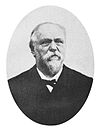
Quotes About Oswald Spengler
Gain deeper perspective through quotes about Oswald Spengler from others.
Richard J. Evans on Oswald Spengler

Lewis Mumford on Oswald Spengler

Rudolf Steiner on Oswald Spengler
