Link Copied!
Olivier Blanchard Quotes (1948-)
About Olivier Blanchard
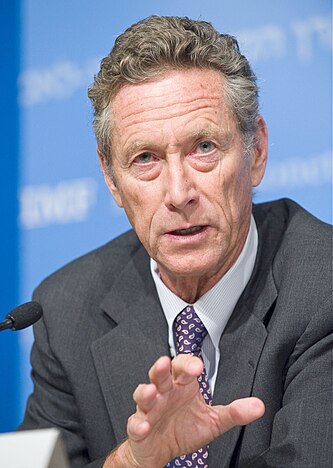
Olivier Jean Blanchard (born December 27, 1948) is a French economist, and the chief economist at the International Monetary Fund between 2008 and 2015.
Best Olivier Blanchard Quotes
Shortest
Earliest
Explore our curated collection of the most famous and impactful Olivier Blanchard quotes.
“Crises feed uncertainty. And uncertainty affects behaviour, which feeds the crisis.”


“Using the popular macroeconomic models of the time, Lucas and Sargent showed how replacing traditional assumptions about expectations formation by the assumption of rational expectations could fundamentally alter the results.... Most macroeconomists today use rational expectations as a working assumption in their models and analyses of policy. This is not because they believe that people always have rational expectations. Surely there are times when people, firms, or financial market participants lose sight of reality and become too optimistic or too pessimistic... But these are more the exception than the rule, and it is not clear that economists can say much about those times anyway. When thinking about the likely effects of a particular economic policy, the best assumption to make seems to be that financial markets, people, and firms will do the best they can to work out the implications of that policy. Designing a policy on the assumption that people will make systematic mistakes in responding to it is unwise.”

“Lucas and Sargent’s main argument was that Keynesian economics had ignored the full implications of the effect of expectations on behavior. The way to proceed, they argued, was to assume that people formed expectations as rationally as they could, based on the information they had. Thinking of people as having rational expectations had three major implications, all highly damaging to Keynesian macroeconomics. ...
The first implication was that existing macroeconomic models could not be used to help design policy. … The second implication was that when rational expectations were introduced in Keynesian models, these models actually delivered very un-Keynesian conclusions. … The third implication was that if people and firms had rational expectations, it was wrong to think of policy as the control of a complicated but passive system. Rather, the right way was to think of policy as a game between policy makers and the economy. …
To summarize: When rational expectations were introduced, Keynesian models could not be used to determine policy; Keynesian models could not explain long-lasting deviations of output from the natural level of output; the theory of policy had to be redesigned, using the tools of game theory.”
Olivier Blanchard Quotes by Topic
Find exactly what you are looking for by browsing this categorized list of Olivier Blanchard quotes by topic.
Olivier Blanchard on Macroeconomic model 2 quotes
“The different classes of models have a lot to learn from each other, but the goal of full integration has proven counterproductive. No model can be all things to all people.”
Olivier Blanchard on IS–LM model
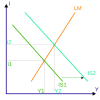
“The IS-LM model appears to describe well the behavior of the economy in the short run. In particular, the effects of monetary policy appear to be similar to those implied by the IS-LM model once dynamics are introduced in the model. An increase in the interest rate due to a monetary contraction leads to a steady decrease in output, with the maximum effect taking place after about eight quarters.”
Olivier Blanchard on New Keynesian economics
“The term new Keynesians denotes a loosely connected group of researchers who shared a common belief that the synthesis that emerged in response to the rational-expectations critique was basically correct. But they also shared the belief that much remained to be learned about the nature of imperfections in different markets and about the implications of those imperfections for macroeconomic fluctuations.”
Olivier Blanchard on Rational expectations
“Using the popular macroeconomic models of the time, Lucas and Sargent showed how replacing traditional assumptions about expectations formation by the assumption of rational expectations could fundamentally alter the results. … Most macroeconomists today use rational expectations as a working assumption in their models and analyses of policy. This is not because they believe that people always have rational expectations. Surely there are times when people, firms, or financial market participants lose sight of reality and become too optimistic or too pessimistic. … But these are more the exception than the rule, and it is not clear that economists can say much about those times anyway. When thinking about the likely effects of a particular economic policy, the best assumption to make seems to be that financial markets, people, and firms will do the best they can to work out the implications of that policy. Designing a policy on the assumption that people will make systematic mistakes in responding to it is unwise.”

What Olivier Blanchard Said About Others
Discover personal opinions Olivier Blanchard shared regarding contemporaries.
Olivier Blanchard on Thomas J. Sargent
“Using the popular macroeconomic models of the time, Lucas and Sargent showed how replacing traditional assumptions about expectations formation by the assumption of rational expectations could fundamentally alter the results. … Most macroeconomists today use rational expectations as a working assumption in their models and analyses of policy. This is not because they believe that people always have rational expectations. Surely there are times when people, firms, or financial market participants lose sight of reality and become too optimistic or too pessimistic. … But these are more the exception than the rule, and it is not clear that economists can say much about those times anyway. When thinking about the likely effects of a particular economic policy, the best assumption to make seems to be that financial markets, people, and firms will do the best they can to work out the implications of that policy. Designing a policy on the assumption that people will make systematic mistakes in responding to it is unwise.”
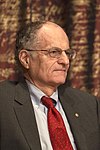
About Olivier Blanchard
Olivier Jean Blanchard (born December 27, 1948) is a French economist, and the chief economist at the International Monetary Fund between 2008 and 2015.