Link Copied!
Oliver Sacks Quotes (1933-2015)
Author
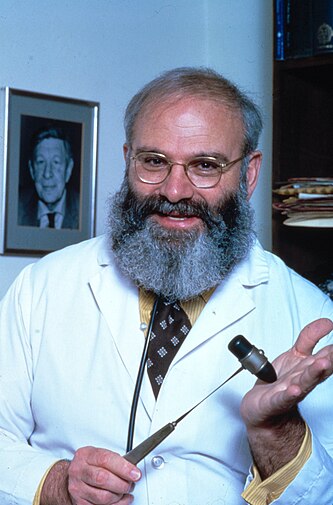

About Oliver Sacks
Oliver W. Sacks (9 July 1933 - 30 August 2015) was a British-born neurologist and author living in New York City.
Best Oliver Sacks Quotes
Shortest
Earliest
Explore our curated collection of the most famous and impactful Oliver Sacks quotes.
“When I was five, I am told, and asked what my favorite things in the world were, I answered, “smoked salmon and Bach.” (Now, sixty years later, my answer would be the same.)”
“Hydrogen selenide, I decided, was perhaps the worst smell in the world. But hydrogen telluride came close, was also a smell from hell. An up-to-date hell, I decided, would have not just rivers of fiery brimstone, but lakes of boiling selenium and tellurium, too.”
“Lemurs are close to the ancestral stock from which all primates arose, and I am happy to think that one of my own ancestors, 50 million years ago, was a little tree-dwelling creature not so dissimilar to the lemurs of today. I love their leaping vitality, their inquisitive nature.”
“My own first love was biology. I spent a great part of my adolescence in the Natural History museum in London (and I still go to the Botanic Garden almost every day, and to the Zoo every Monday). The sense of diversity—of the wonder of innumerable forms of life—has always thrilled me beyond anything else.”
“Temple is an intensely moral creature. She has a passionate sense of right and wrong, for example, in regard to the treatment of animals; and law, for her, is clearly not just the law of the land but, in some far deeper sense, a divine or cosmic law, whose violation can have disastrous effects—seeming breakdowns in the course of nature itself.”

“And I often dream of chemistry at night, dreams that conflate the past and the present, the grid of the periodic table transformed to the grid of Manhattan. […] Sometimes, too, I dream of the indecipherable language of tin (a confused memory, perhaps, of its plaintive “cry”). But my favorite dream is of going to the opera (I am Hafnium), sharing a box at the Met with the other heavy transition metals—my old and valued friends—Tantalum, Rhenium, Osmium, Iridium, Platinum, Gold, and Tungsten.”
“While autism is a developmental disorder, sometimes a devastating one, there is always within the autism a unique and sometimes strangely gifted individual. The great psychoanalyst Winicott used to feel that there was something like a tulip in every person and this was their essence and that this internal part of them was inaccessible to the person themselves and should not be meddled with or touched by psychoanalysis or anything else and one wonders if there is not some autistic essence like this tulip which needs to be respected and not meddled with.”
“Temple, who was driving, suddenly faltered and wept. “I’ve read that libraries are where immortality lies. . . . I don’t want my thoughts to die with me. . . . I want to have done something. . . . I’m not interested in power, or piles of money. I want to leave something behind. I want to make a positive contribution—know that my life has meaning. Right now, I’m talking about things at the very core of my existence.” I was stunned. As I stepped out of the car to say goodbye, I said, “I’m going to hug you. I hope you don’t mind.” I hugged her—and (I think) she hugged me back.”
“On one occasion—it was an oppressive Saturday in the tense summer of 1939—I decided to ride my tricycle up and down Exeter Road near the house, but there was a sudden downpour and I got completely soaked. [Aunt] Annie wagged a finger at me, and shook her heavy head: “Riding on shabbas? You can't get away with it,” she said. “He sees everything, He is watching all the time!” I disliked Saturdays from this time on, disliked God, too (or at least the vindictive, punitive God that Annie's warning had evoked) and developed an uncomfortable, anxious, watched feeling about Saturdays (which persists, a little, to this day).”

“It came upon me sometime in my fifteenth year that I no longer woke up with sudden excitements—“Today I will get the Clerici solution! Today I will read about Humphry Davy and electric fish! Today I will finally understand diamagnetism, perhaps!” I no longer seemed to get these sudden illuminations, these epiphanies, these excitements which Flaubert (whom I was now reading) called “erections of the mind.” Erections of the body, yes, this was a new, exotic part of life—but those sudden raptures of the mind, those sudden landscapes of glory and illumination, seemed to have deserted or abandoned me. Or had I, in fact, abandoned them?”
“When I was fourteen or fifteen […] the Yom Kippur service ended in an unforgettable way, for Schechter, who always put great effort into the blowing of the shofar—he would go red in the face with exertion—produced a long, seemingly endless note of unearthly beauty, and then dropped dead before us on the bema, the raised platform where he would sing. I had the feeling that God had killed Schechter, sent a thunderbolt, stricken him. The shock of this for everyone was tempered by the reflection that if there was ever a moment in which a soul was pure, forgiven, relieved of all sin, it was at this moment, when the shofar was blown in conclusion of the fast […].”

“During the war the congregation was largely broken up […] and it was never really reconstituted after the war. […] Before the war my parents (I, too) had known almost every shop and shopkeeper in Cricklewood […] and I would see them all in their places in shul. But all this was shattered with the impact of the war, and then with the rapid postwar social changes in our corner of London. I myself, traumatized at Braefield, had lost touch with, lost interest in, the religion of my childhood. I regret that I was to lose it as early and as abruptly as I did, and this feeling of sadness or nostalgia was strangely admixed with a raging atheism, a sort of fury with God for not existing, not taking care, not preventing the war, but allowing it, and all its horrors, to occur.”

“I never heard [my parents] talk between themselves about Palestine or Zionism, and I suspected they had no strong convictions on the subject, at least until after the war, when the horror of the Holocaust made them feel there should be a “National Home.” I felt they were bullied by the organizers of these meetings, and by the gangsterlike evangelists who would pound at the front door and demand large sums for yeshivas or “schools in Israel.” My parents, clearheaded and independent in most other ways, seemed to become soft and helpless in the face of these demands, perhaps driven by a sense of obligation or anxiety. My own feelings […] were passionately negative: I came to hate Zionism and evangelism and politicking of every sort, which I regarded as noisy and intrusive and bullying.”

“We had a large old-fashioned battery, a wet cell, in the kitchen, hooked up to an electric bell. The bell was too complicated to understand at first, and the battery, to my mind, was more immediately attractive, for it contained an earthenware tube with a massive, gleaming copper cylinder in the middle, immersed in a bluish liquid, all this inside an outer glass casing, also filled with fluid, and containing a slimmer bar of zinc. It looked like a miniature chemical factory of sorts, and I thought I saw little bubbles of gas, at times, coming off the zinc. The Daniell cell (as it was called) had a thoroughly nineteenth-century, Victorian look about it, and this extraordinary object was making electricity all by itself—not by rubbing or friction, but just by the virtue of its own chemical reactions.”
“This new quantum mechanics promised to explain all of chemistry. And though I felt an exuberance at this, I felt a certain threat, too. “Chemistry,” wrote Crookes, “will be established upon an entirely new basis…. We shall be set free from the need for experiment, knowing a priori what the result of each and every experiment must be.” I was not sure I liked the sound of this. Did this mean that chemists of the future (if they existed) would never actually need to handle a chemical; might never see the colors of vanadium salts, never smell a hydrogen selenide, never admire the form of a crystal; might live in a colorless, scentless, mathematical world? This, for me, seemed and awful prospect, for I, at least, needed to smell and touch and feel, to place myself, my senses, in the middle of the perceptual world.”
“The beauty of the forest is extraordinary — but “beauty” is too simple a word, for being here is not just an aesthetic experience, but one steeped with mystery, with awe. ... [The forest] has to do with the ancient, the aboriginal, the beginning of all things. The primeval, the sublime, are much better words here — for they indicate realms remote from the moral or the human, realms which force us to gaze into immense vistas of space and time, where the beginnings and originations of all things lie hidden. Now, as I wandered in the cycad forest on Rota, it seemed as if my senses were actually enlarging, as if a new sense, a time sense, was opening within me, something which might allow me to appreciate millennia or aeons as directly as I had experienced seconds or minutes. ... Standing here in the jungle, I feel part of a larger, calmer identity; I feel a profound sense of being at home, a sort of companionship with the earth.”
“Some employees in slaughterhouses, she notes, rapidly develop a protective hardness and start killing animals in a purely mechanical way: “The person doing the killing approaches his job as if he was stapling boxes moving along a conveyor belt. He has no emotions about his act.” Others, she reveals, “start to enjoy killing and . . . torment the animals on purpose.” Speaking of these attitudes turned Temple’s mind to a parallel: “I find a very high correlation,” she said, “between the way animals are treated and the handicapped. . . . Georgia is a snake pit—they treat [handicapped people] worse than animals. . . . Capital-punishment states are the worst animal states and the worst for the handicapped.” All this makes Temple passionately angry, and passionately concerned for humane reform: she wants to reform the treatment of the handicapped, especially the autistic, as she wants to reform the treatment of cattle in the meat industry.”
“A spectacular anomaly came up with the hydrides of the nonmetals—an ugly bunch, about as inimical to life as one could get. Arsenic and antimony hydrides were very poisonous and smelly; silicon and phosphorous hydrides were spontaneously inflammable. I had made in my lab the hydrides of sulfur (H2S), selenium (H2Se), and tellurium (H2Te), all Group VI elements, all dangerous and vile-smelling gases. The hydride of oxygen, the first Group VI element, one might predict by analogy, would be a foul-smelling, poisonous, inflammable gas, too, condensing to a nasty liquid around −100°C. And instead it was water, H2O—stable, potable, odorless, benign, and with a host of special, indeed unique properties (its expansion when frozen, its great heat capacity, its capacity as an ionizing solvent, etc.) which made it indispensable to our watery planet, indispensable to life itself. What made it such an anomaly? […] (This question, I found, had only been resolved recently, in the 1930s, with Linus Pauling's delineation of the hydrogen bond.)”
Oliver Sacks Quotes by Topic
Find exactly what you are looking for by browsing this categorized list of Oliver Sacks quotes by topic.
Oliver Sacks on Parkinson's disease 2 quotes
“All patients with Parkinson's disease learn tricks of various sorts—to "unfreeze" themselves, to initiate and control motion, to transfer tremor and rigidity from limb to another, etc, etc. Such tricks or strategies, were analysed in detail by A R Luria in the 1920s and by James Pardon Martin (especially in his 1967 book, The Basal Ganglia and Posture), but these analyses would not have been possible without the aid of patients.”
Oliver Sacks on Hallucination
“The simplest migraine hallucinations, as we have said, are phosphenes—simple, almost structureless, moving lights in the visual field. Phosphenes virtually identical to these are readily elicited by direct electrical stimulation of the visual cortex, either in the primary area (Brodmann area 17) or the surrounding visual association cortex.”
Oliver Sacks on Autism
“While autism is a developmental disorder, sometimes a devastating one, there is always within the autism a unique and sometimes strangely gifted individual. The great psychoanalyst Winicott used to feel that there was something like a tulip in every person and this was their essence and that this internal part of them was inaccessible to the person themselves and should not be meddled with or touched by psychoanalysis or anything else and one wonders if there is not some autistic essence like this tulip which needs to be respected and not meddled with.”
Oliver Sacks on Zionism
“I never heard [my parents] talk between themselves about Palestine or Zionism, and I suspected they had no strong convictions on the subject, at least until after the war, when the horror of the Holocaust made them feel there should be a "National Home." I felt they were bullied by the organizers of these meetings, and by the gangsterlike evangelists who would pound at the front door and demand large sums for yeshivas or “schools in Israel.” My parents, clearheaded and independent in most other ways, seemed to become soft and helpless in the face of these demands, perhaps driven by a sense of obligation or anxiety. My own feelings […] were passionately negative: I came to hate Zionism and evangelism and politicking of every sort, which I regarded as noisy and intrusive and bullying.”
Oliver Sacks on Miniature
“We had a large old-fashioned battery, a wet cell, in the kitchen, hooked up to an electric bell. The bell was too complicated to understand at first, and the battery, to my mind, was more immediately attractive, for it contained an earthenware tube with a massive, gleaming copper cylinder in the middle, immersed in a bluish liquid, all this inside an outer glass casing, also filled with fluid, and containing a slimmer bar of zinc. It looked like a miniature chemical factory of sorts, and I thought I saw little bubbles of gas, at times, coming off the zinc. The Daniell cell (as it was called) had a thoroughly nineteenth-century, Victorian look about it, and this extraordinary object was making electricity all by itself—not by rubbing or friction, but just by the virtue of its own chemical reactions.”

Oliver Sacks on Chemistry
“This new quantum mechanics promised to explain all of chemistry. And though I felt an exuberance at this, I felt a certain threat, too. “Chemistry,” wrote Crookes, “will be established upon an entirely new basis…. We shall be set free from the need for experiment, knowing a priori what the result of each and every experiment must be.” I was not sure I liked the sound of this. Did this mean that chemists of the future (if they existed) would never actually need to handle a chemical; might never see the colors of vanadium salts, never smell a hydrogen selenide, never admire the form of a crystal; might live in a colorless, scentless, mathematical world? This, for me, seemed and awful prospect, for I, at least, needed to smell and touch and feel, to place myself, my senses, in the middle of the perceptual world.”

What Oliver Sacks Said About Others
Discover personal opinions Oliver Sacks shared regarding contemporaries.
Oliver Sacks on J. B. S. Haldane
Oliver Sacks on Steve Silberman
“He has portrayed the remarkable shifting of attitudes toward autism and Asperger's over the past few decades. NeuroTribes is a sweeping and penetrating history of all this, presented with a rare sympathy and sensitivity. It is fascinating reading; it will change how you think of autism, and it belongs alongside the works of Temple Grandin and Clara Claiborne Park, on the bookshelf of anyone interested in autism and the workings of the human brain.”
Oliver Sacks on Francis Crick
“It was not until May of 1986 that I met Francis Crick, at a conference in San Diego. There was a big crowd, full of neuroscientists, but when it was time to sit down for dinner, Crick singled me out, seized me by the shoulders, sat me down next to him, and said, “Tell me stories!” I have no memory of what we ate, or anything else about the dinner, only that I told him stories about many of my patients, and that each one set off bursts of hypotheses, theories, suggestions for investigation in his mind. Writing to Crick a few days later, I said that the experience was “a little like sitting next to an intellectual nuclear reactor…. I never had a feeling of such incandescence.””

Oliver Sacks on Stanislao Cannizzaro
“Cannizzaro felt very passionately that the history of chemistry needed to be in the minds of his students. In a beautiful essay on the teaching of chemistry, he described how he introduced his pupils to its study by 'endeavouring to place them…on the same level with the contemporaries of Lavoisier,' so that they might experience, as Lavoisier's contemporaries did, the full revolutionary force, the wonder of his thought; and then a few years ahead, so that they could experience the sudden, blinding illumination of Dalton.
'It often happens,' Cannizzaro concluded, 'that the mind of a person who is learning a new science, has to pass through all the phases which the science itself has exhibited in its historical evolution.' Cannizarro's words had a powerful resonance for me, because I, too, in a way, was living through, recapitulating, the history of chemistry in myself, rediscovering all the phases through which it had passed.”
Oliver Sacks on Stephen Jay Gould
“My introduction to Stephen Jay Gould's work came in the 1970s, when I avidly read all his articles in Natural History (as I still do today). In 1990, when I was asked by a London newspaper to name my favorite book, I selected Wonderful Life; this led to my receiving a letter from Stephen and to the beginning of a frequent and voluminous correspondence between us. Many subjects close to both our hearts have been discussed in letters: from the place of contingency (in evolution but also in the often unpredictable reactions of patients to illnesses and drugs) to our shared love for museums (especially the old "cabinet" type—we both spoke out for the preservation of the Mutter Museum in Philadelphia). In 1993 I wrote of ways of joining particulars with generalities—in my own case, clinical narratives with neuroscience—and he replied: "I have long experienced exactly the same tension, trying to assuage my delight in individual things through my essays and my interest in generality through my more technical writing. I loved the Burgess Shale work so much because it allowed me to integrate the two." I often wrote excited letters to Stephen the moment I had read his columns: in 1995, about his article on Sacculina, a meditation on whether such a life-form could be called degenerate; and in 1996, about some just-published research of his on microevolutionary processes and hybridization effects. I was especially fascinated by his 1998 article on Buffon's trajectory from his early Platonic thinking to a historical viewpoint—partly because of a similar evolution in my own thinking. Stephen is now a good friend as well as a colleague—we dine together, walk the streets together (only someone as intensely sensitive to architecture as he is would introduce spandrels as an evolutionary metaphor), celebrate birthdays together (when Stephen often exercises his talent for composing verses on the spot), go to museums and botanical gardens together. He is an enchanting companion as well as a major intellectual force, and both aspects of him come together in his unique essays.”
Quotes About Oliver Sacks
Gain deeper perspective through quotes about Oliver Sacks from others.

About Oliver Sacks
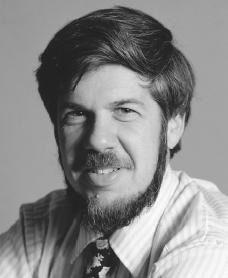
Oliver W. Sacks (9 July 1933 - 30 August 2015) was a British-born neurologist and author living in New York City.