Link Copied!
Northrop Frye Quotes (1912-1991)



About Northrop Frye
Herman Northrop Frye (14 July 1912 – 23 January 1991) was a Canadian literary critic and literary theorist, considered one of the most influential of the 20th century.
Best Northrop Frye Quotes
Shortest
Earliest
Explore our curated collection of the most famous and impactful Northrop Frye quotes.
“A community`s art is its spiritual vision. (p. 206)”
“Posterity is the laziest and most incompetent of critics.”
“Literature is not a subject of study, but an object of study.”

“A literary critic of experience never defines anything. (p. 4)”

“Teaching literature is impossible; that is why it is difficult.”
“Yesterday's kook book becomes tomorrow's standard text. (2:495)”
“The apocalypse is the way the world looks after the ego has disappeared.”
“The total simultaneous pattern always extend from alpha to omega. (21.190)”
“Metaphor is the language of immanence; metonymy of transcendence. (11C.21)”
“My greater simplicity came from a deeper level than the labyrinth of the brain. (1:61-2)”

“One should have bigger & better conversions everyday, like a mechanized phoenix. (21.495)”

“The world of literature is a world where there is no reality except that of the human imagination.”

“A person who knows nothing about literature may be an ignoramus, but many people don't mind being that.”
“If you haven't got an excremental vision you have no business setting up as a major satirist. (2:578-9)”

“The poet...is an identifier: everything he sees in nature he identifies with human life.”
“The primary and literal meaning of the Bible, then, is its centripetal or poetic meaning.”
“Writers don't seem to benefit much by the advance of science, although they thrive on superstitions of all kinds.”
“Man is constantly building anxiety-structures, like geodesic domes, around his social and religious institutions.”
“This story of loss and regaining of identity is, I think, the framework of all literature.(pg.18)”
“The real Bible is a sealed book, an apocryphon, a book not to be opened (mentally) until its time has come. (2:568)”
“We have revolutionary thought whenever the feeling "life is a dream" becomes geared to an impulse to awaken from it.”
“Literature does not reflect life, but it doesn't escape or withdraw from life either: it swallows it.”

“Man creates what he calls history as a screen to conceal the workings of the apocalypse from himself.”
“Metaphors of unity and integration take us only so far, because they are derived from the finiteness of the human mind.”
“The operations of the human mind are also controlled by words of power, formulas that become a focus of mental activity.”
“Every human society possesses a mythology which is inherited, transmitted and diversified by literature.”
“The mark of a great writer: who sees his own time, but with a detachment that makes him communicable to other ages. (2:579)”
“The supremacy of the verbal over the monumental has something about it of the supremacy of life over death.”
“We read (experience) a text linearly, forgetting most of it while we read; then we study it as a simultaneous unit. (p. 325)”
“One of the major activities of art consists in sharpening the edge of platitudes to make them enter the soul as realities. (p. 7)”
“Even the biggest book is fragmentary: to finish anything, you have to cut your losses. Nobody ever writes his dream book. (33.54)”

“I see a sequence of seven main phases: creation,revolution or exodus (Israel in Egypt), law, wisdom, prophecy, gospel, and apocalypse.”
“One doesn't bother to believe the credible: the credible is believed already, by definition. There's no adventure of the mind. (1:313)”

“It is of the essence of imaginative culture that is transcends the limits both of the naturally possible and of the morally acceptable.”
“I don`t want the reduction of religion to aesthetics, but the abolition of aesthetics & incorporating of art with the Word of God. (p. 7)”
“Belief has nothing to do with knowledge, & credo ut intelligam [I believe in order that I might understand] is horseshit. (p. 209)”

“The disinterested imaginative core of mythology is what develops into literature, science, philosophy. Religion is applied mythology. (21.101)”

“The only way to forestall the work of criticism is through censorship, which has the same relation to criticism that lynching has to justice.'''”

“The pursuit of beauty is much more dangerous nonsense than the pursuit of truth or goodness, because it affords a stronger temptation to the ego.”
“The first thing that confronts us in studying verbal structures is that they are arranged sequentially, and have to be read or listened to in time.”
“It seems clear that the Bible belongs to an area of language in which metaphor is functional, and where we have to surrender precision for flexibility.”
“I give the impression of elusiveness sometimes, and rightly, because I really do have an inner chamber in my temple I'm not mature enough to open. (2:618)”
“The fundamental job of the imagination in ordinary life...is to produce, out of the society we have to live in, a vision of the society we want to live in.”

“Under the stimulation of a "great age" or certain period of clarity in art a wider diffusion of genius becomes actual suggests to me that it is always potential. (p. 8)”

“The Book of Revelation, difficult as it may be for "literalists," becomes much simpler when we read it typologically, as a mosiac of allusions to Old Testament prophecy.”

“The bedrock of doubt is the total nothingness of death. Death is a leveler, not because everybody dies, but because nobody understands what death means.”

“Art is not simply an identity of illusion and reality, but a counter-illusion: its world is a material world, but the material of an intelligible spiritual world. (1:73)”
“Education is something that affects the whole person, not bits and pieces of him. It doesn't just train the mind: it's a social and moral development too.”
“All texts are incarnational, and the climax of the entire Christian Bible, "the Word was made flesh, and dwelt among us," is the most logocentric sentence ever written.(1:154)”
“The objective world is the order of nature, thinking or reflection follows the suggestions of sense experience, and words are the servomechanisms of reflection.”
“What if criticism is a science as well as an art? Not a "pure" or "exact" science, of course, but these phrases belong to a nineteenth-century cosmology which is no longer with us.”
“In our day the conventional element in literature is elaborately disguised by a law of copyright pretending that every work of art is an invention distinctive enough to be patented.”
“The kind of problem that literature raises is not the kind that you ever 'solve'. Whether my answers are any good or not, they represent a fair amount of thinking about the questions.”
“Finnegans Wake is a kind of hypnagogic structure, words reverberating on themselves without pointing to objects...This may be the hallucinatory verbal world within which God speaks. (1:399)”
“Man lives, not directly or nakedly in nature like the animals, but within a mythological universe, a body of assumptions and beliefs developed from his existential concerns.”
“An aphorism is not a cliche: it penetrates & bites. It has wit, and consequently an affinity with satire...Christ speaks in aphorisms, not because they are alive, but because he is. (p. 108)”
“A reader who quarrels with postulates, who dislikes Hamlet because he does not believe that there are ghosts or that people speak in pentameters, clearly has no business in literature. (p. 70)”
“Nothing is more remarkable in the Bible than the absence of argument...Argument is internal continuity. So is logical sequence in narrative: in the Bible the connectives are just "and." (p. 200)”
“[Students] have to learn that ideas do not exist until they have been incorporated into words. Until that point you don’t know whether you are pregnant or just have gas on the stomach. (p. 746)”

“In imaginative thought there is no real knowledge of anything but similarities (ultimately identities): knowledge of differences is merely a transition to a new knowledge of similarities. (p. 215)”
“The "flow of information," which is mostly misinformation, is actually a presentation of myths. And people are increasingly rejecting the prescribed myths & developing their own counter-myths. (p. 97)”


“The written word is far more powerful than simply a reminder: it re-creates the past in the present, and gives us, not the familiar remembered thing, but the glittering intensity of the summoned-up hallucination.”
“Physics is an organized body of knowledge about nature, and a student of it says that he is learning physics, not nature. Art, like nature, has to be distinguished from the systematic study of it, which is criticism.”

“In literature you don't just read one poem or novel after another, but enter into a complete world of which every work of literature forms part. This affects the writer as much as it does the reader.”
“There is a curious law of art...that even the attempt to reproduce the act of seeing, when carried out with sufficient energy, tends to lose its realism and take on the unnatural glittering intensity of hallucination.”
“The soul is an immaculate virgin...Then it goes out and gets fucked by the world all day long & staggers back a baggy-eyed old whore, still hoping that after a sleep the Moment of purification will come again. (p. 27)”
“I have a notion that a prolonged period of solitude & fasting would produce hallucinations, & that these would be mandalas and such: they would be the essential forms in which "outer" perceptions are organized. (18.23)”
“Culture's essential service to a religion is to destroy intellectual idolatry, the recurrent tendency in religion to replace the object of its worship with its present understanding and forms of approach to that object.”

“I'm a Blakean, a visionary disciple...But I'm always torn between feeling that the cock crows because he has a vision of the dawn, or because he feels stimulated by standing on top of a pile horseshit. (1942, entry #24)”
“What’s transcendental in Blake is not the statically geometrical, but the sense of arrested energy: the wriggling vines & snakes, flames & the like...It’s an expression of the belief that every object is an event. (p. 14)”
“No human society is too primitive to have some kind of literature. The only thing is that primitive literature hasn't yet become distinguished from other aspects of life: it's still embedded in religion, magic and social ceremonies.”
“Experience is nearly always commonplace; the present is not romantic in the way the past is, and ideals and great visions have a way of becoming shoddy and squalid in practical life. Literature reverses this process.”
“The entire Bible, viewed as a "divine comedy," is contained within a U-shaped story of this sort, one in which man, as explained, loses the tree and water of life at the beginning of Genesis and gets them back at the end of Revelation.”
“When you stop to think about it, you soon realize that our imagination is what our whole social life is really based on....In practically everything we do it's the combination of emotion and intellect we call imagination that goes to work.”
“We relate the poems and plays and novels we read and see, not to the men who wrote them, nor even directly to ourselves; we relate them to each other. Literature is a world that we try to build up and enter at the same time.”
“Those who are concerned with the arts are often asked questions, not always sympathetic ones, about the use or value of what they are doing. It is probably impossible to answer such questions directly, or at any rate to answer the people who ask them.”
“Nobody seriously thinks of television as a viewer's mode of perception...No matter how much he wants people to look at his product, the advertiser doesn't realize that television is [the viewer's] way of looking at him, & not his way of reaching them. (p. 95-6)”

“A public that tries to do without criticism, and asserts that it knows what it wants or likes, brutalizes the arts and loses its cultural memory. Art for art's sake is a retreat from criticism which ends in an impoverishment of civilized life itself.”
“Just as a new scientific discovery manifests sometimes that was already latent in the order of nature, and at the same time is logically related to the total structure of the existing science, so the new poem manifests something that was already latent in the order of words.”
“No matter how much experience we may gather in life, we can never in life get the dimension of experience that the imagination gives us. Only the arts and sciences can do that, and of these, only literature gives us the whole sweep and range of human imagination as it sees itself.”
“Continuous prose suggests complete identification with the representing, observing, immersing-in-object self. Aphorisms suggest a richer & varied personality made up more of internal conflicts and decisions. An epiphanic sequence suggests the highest mystery of personality. (33.47)”

“No matter what direction we start off in, the signposts of literature always keep pointing the same way, to a world where nothing is outside the imagination. If even time, the enemy of all living things, and to poets, the most hated and feared of all tyrants, can be broken down by the imagination, anything can be.”
“A purely individualized myth is an obsession, sometimes a psychosis. A purely socialized myth is an ideology, which sooner or later also becomes obsessive or psychotic. A myth that has either the direct current of transcendence or the alternating current of imagination rises clear of this grisly antithesis. (2:716)”
“The human mind is [a poet's] individual mind at first, but as soon as he writes a poem it becomes our [the readers'] minds too. There is no self-expression in [a poet's] poem, because once the poem is there the individual [poet] has disappeared. ...there is really no such thing as self-expression in literature.”
“Popular art is normally decried as vulgar by the cultivated people of its time; then it loses favour with its original audience as a new generation up; then it begins to merge into the softer lighting of "quaint" and cultivated people become interested in it, and finally it begins to take on the archaic dignity of the primitive.”
“Freedom has nothing to do with lack of training; it can only be the product of training. You're not free to move unless you've learned to walk, and not free to play the piano unless you practise. Nobody is capable of free speech unless he knows how to use the language, and such knowledge is not a gift: it has to be learned and worked at.”
“Jargon or gobbledygook, or what people who live in Washington or Ottawa call "federal prose," [is] the gabble of abstractions and vague words which avoids any simple or direct statement....Direct and simple language always has some force behind it, and the writers of gobbledygook don't want to be forceful; they want to be soothing and reassuring.”
“As civilization develops, we become more preoccupied with human life, and less conscious of our relation to non-human nature. Literature reflects this, and the more advanced the civilization, the more literature seems to concern itself with purely human problems and conflicts. The gods and heroes of the old myths fade away and give place to people like ourselves.”

“Literally, the Bible is a gigantic myth, a narrative extending over the whole of time from creation to apocalypse, unified by a body of recurring imagery that "freezes" into a single metaphor cluster, the metaphors all being identified with the body of the Messiah, the man who is all men, the totality logoi who is one Logos, the grain of sand that is the world.”
“It is clear that all verbal structures with meaning are verbal imitations of that elusive psychological and physiological process known as thought, a process stumbling through emotional entanglements, sudden irrational convictions, involuntary gleams of insight, rationalized prejudices, and blocks of panic and inertia, finally to reach a completely incommunicable intuition.”
“The use of cliché [is] the use of ready-made, prefabricated formulas designed to give those who are too lazy think the illusion of thinking...If our aim is only to say what gets by in society, our reactions will become almost completely mechanical. That's the direction cliché takes us in...it's no more a product of a conscious mind than the bark of a dog.”
“The twentieth century saw an amazing development of scholarship and criticism in the humanities, carried out by people who were more intelligent, better trained, had more languages, had a better sense of proportion, and were infinitely more accurate scholars and competent professional men than I. I had genius. No one else in the field known to me had quite that.”

“There's something in all of us that wants to drift toward a mob, where we can all say the same thing without having to think about it, because everybody is all alike except people that we can hate or persecute. Every time we use words, we're either righting against this tendency or giving in to it. When we fight against it, we're taking the side of genuine and permanent human civilization.”
“...there is something about time and space that is not real, and something about us that is. However man may have tumbled into this world of indefinite space, he does not belong to it at all. Real space for him is the eternal here; where we are is always the center of the universe, and the circumference of the universe, just as real time is the 'eternal Now' of our personal experience. (p. 46)”
“One of the most obvious uses [of literature], I think, is its encouragement of tolerance. In the imagination our own beliefs are also only possibilities, but we can also see the possibilities in the beliefs of others. Bigots and fanatics seldom have any use for the arts, because they're so preoccupied with their beliefs and actions that they can't see them as also possibilities.”
“The fundamental act of criticism is a disinterested response to a work of literature in which all one's beliefs, engagements, commitments, prejudices, stampedings of pity and terror, are ordered to be quiet. We are now dealing with the imaginative, not the existential, with the "let this be," not with "this is," and no work of literature is better by virtue of what it says than any other work.”
“The fact that creative powers come from an area of the mind that seems to be independent of the conscious will, and often emerge with a good deal of emotional disturbance in their wake, provides the chief analogy between prophecy and the arts...Some people pursue wholeness and integration, others get smashed up, and fragments are rescued from the smash of an intensity that the wholeness and integration people do not reach.”
“All writers are conventional, because all writers have the same problem of transferring their language from direct speech to the imagination. For the serious mediocre writer convention makes him sound like a lot of other people; for the popular writer it gives him a formula he can exploit; for the serious good writer it releases his experiences or emotions from himself and incorporates them into literature, where they belong.”
“Man is born lost in a forest. If he is obsessed by the thereness of the forest, he stays lost and goes in circles; if he assumes the forest is not there, he keeps bumping into trees. '''The wise man looks for the invisible line between the "is" and the "is not" which is the way ''through'''''. The street in the city, the highway in the desert, the pathway of the planets through the labyrinth of the stars, are parallel forms. (1:111)”
“At the level of ordinary consciousness the individual man is the centre of everything, surrounded on all sides by what he isn't. At the level of practical sense, or civilization, there's a human circumference, a little cultivated world with a human shape, fenced off from the jungle and inside the sea and the sky. But in the imagination anything goes that can be imagined, and the limit of the imagination is a totally human world.”

“I have never had the sort of experience the mystics talk about, never felt a revelation of reality through or beyond nature, never felt like Adam in Paradise, never felt, in direct experience, that the world is wholly other than it seems...The nearest I have come to such experiences are glimpses of my own creative powers...and these are moments or intervals of inspiration rather than vision. I’m not sure that I want it unless I can have clarity about other things with it. (p. 60–1)”
“I think that everybody tries to produce what Marshall McLuhan called a ‘counter environment.’ That is, you set yourself in opposition to the kind of mass tendencies which the media set up. That’s what’s so important about the humanities in the university...There’s something of a personal dialogue between one human being and another. And the fact that this dialogue is being carried out in the teeth of all the mass emotion techniques of the electronic media is a very important side of the humanities.”
“The simple point is that literature belongs to the world man constructs, not to the world he sees; to his home, not his environment. Literature's world is a concrete human world of immediate experience...The world of literature is human in shape, a world where the sun rises in the east and sets in the west over the edge of a flat earth in three dimensions, where the primary realities are not atoms or electrons but bodies, and the primary forces not energy or gravitation but love and death and passion and joy.”
“[What Poets Say:]
They say that everything is everywhere at once.
They say that all nature is alive.
They say that creation is dialectic, separating heaven & hell.
They say that the material world neither is nor isn't, but disappears.
They say that the created world neither is nor isn't, but appears.
They say that the containing form of real experience is myth.
They say that time & space are disappearing categories.
They say that men are Man, as gods are God. (18.121)”
“[L]iterature not only leads us toward the regaining of identity, but it also separates this state from its opposite, the world we don't like and want to get away from...We have to look at the figures of speech a writer uses, his images and symbols, to realize that underneath all the complexity of human life that uneasy stare at an alien nature is still haunting us, and the problem of surmounting it is still with us. ...Literature is still doing the same job that mythology did earlier, but filling in its huge cloudy shapes with sharper lights and deeper shadows.”
“I wrote Fearful Symmetry during the Second World War, and hideous as the time was, it provided some parallels with Blake's time which were useful for understanding Blake's attitude to the world. Today, now that reactionary and radical forces alike are once more in the grip of the nihilistic psychosis that Blake described so powerful in Jerusalem, one of the most hopeful signs is the immensely increased sense of the urgency and immediacy of what Blake had to say.”
“The objective world is only “material”: it’s there, but it could be there in a great many different forms and aspects...Even here there [are] still possibilities: it can’t be just anything. But perhaps extracting a finite schema from the variety of mythologies, literatures, or religions might contribute something to the understanding of what some of these possibilities could be. The individual can’t create his own world, except in art or fantasy: society can only create a myth of concern. What fun if one could get just a peep at what some of the other worlds are that a new humanity could create–no, live in. (p. 287-8)”
“The particular myth that's been organizing this talk, and in a way the whole series, is the story of the Tower of Babel in the Bible. The civilization we live in at present is a gigantic technological structure, a skyscraper almost high enough to reach the moon. It looks like a single world-wide effort, but it's really a deadlock of rivalries; it looks very impressive, except that it has no genuine human dignity. For all its wonderful machinery, we know it's really a crazy ramshackle building, and at any time may crash around our ears. What the myth tells us is that the Tower of Babel is a work of human imagination, that its main elements are words, and that what will make it collapse is a confusion of tongues. All had originally one language, the myth says. That language is not English or Russian or Chinese or any common ancestor, if there was one. It is the language of human nature, the language that makes both Shakespeare and Pushkin authentic poets, that gives a social vision to both Lincoln and Gandhi. It never speaks unless we take the time to listen in leisure, and it speaks only in a voice too quiet for panic to hear. And then all it has to tell us, when we look over the edge of our leaning tower, is that we are not getting any nearer [to] heaven, and that it is time to return to the earth.”

Northrop Frye Quotes by Topic
Find exactly what you are looking for by browsing this categorized list of Northrop Frye quotes by topic.
Northrop Frye on Mythology 2 quotes
“The disinterested imaginative core of mythology is what develops into literature, science, philosophy. Religion is applied mythology.”
Northrop Frye on Apocalypse
“The apocalypse is the way the world looks after the ego has disappeared.”
Northrop Frye on Identity
“This story of loss and regaining of identity is, I think, the framework of all literature.”

Northrop Frye on Beauty
“The pursuit of beauty is much more dangerous nonsense than the pursuit of truth or goodness, because it affords a greater temptation to the ego.”
Northrop Frye on Mystery fiction
“In the melodrama of the brutal thriller we come as close as it is normally possible for art to come to the pure self-righteousness of the lynching mobs.”

What Northrop Frye Said About Others
Discover personal opinions Northrop Frye shared regarding contemporaries.
Northrop Frye on Jean-Paul Sartre
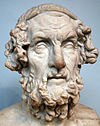
Northrop Frye on Homer
“It is hardly possible to overestimate the importance for Western Literature of the Iliad'''s demonstration that the fall of an enemy, no less than of a friend or leader, is tragic and not comic. With the Iliad, once for all, an objective and disinterested element enters into the poet's vision of human life. Without this element, poetry is merely instrumental to various social aims, to propaganda, to amusement, to devotion, to instruction: with it, it acquires the authority that since the Iliad'' it has never lost, an authority based, like the authority of science, on the vision of nature as an impersonal order.”
Quotes About Northrop Frye
Gain deeper perspective through quotes about Northrop Frye from others.
Terry Eagleton on Northrop Frye
“What was needed was a literary theory which, while preserving the formalist bent of New Criticism, its dogged attention to literature as aesthetic object rather than social practice, would make something a good deal more systematic and 'scientific' out of all this. The answer arrived in 1957, in the shape of the Canadian Northrop Fryes mighty 'totalization' of all literary genres, Anatomy of Criticism.”

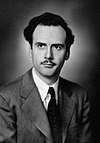
Marshall McLuhan on Northrop Frye
“Norrie is not struggling for his place in the sun. He is the sun.”
The New on Northrop Frye
“Giving further impetus to literary study of the Bible was the work of several scholars of English and comparative literature, who extended their expertise in the analysis of literature to biblical texts. Most prominent were Northrop Frye ( The Great Code: The Bible and Literature), Robert Alter (The Art of Biblical Poetry), and Frank Kermode (The Genesis of Secrecy, a study of the Gospel of Mark).”

About Northrop Frye
Herman Northrop Frye (14 July 1912 – 23 January 1991) was a Canadian literary critic and literary theorist, considered one of the most influential of the 20th century.