Link Copied!
Norbert Wiener Quotes (1894-1964)
King, Mathematician, Scientist

About Norbert Wiener
Norbert Wiener (26 November 1894 – 18 March 1964) was a U.S. mathematician, and a pioneer in the study of stochastic processes and noise especially in the field of electronic communication and control systems. He coined the term "cybernetics" in his book Cybernetics or Control and Communication in the Animal and the Machine (1948).
Best Norbert Wiener Quotes
Shortest
Earliest
Explore our curated collection of the most famous and impactful Norbert Wiener quotes.
“To live effectively is to live with adequate information.”
“There are no answers, only cross-references.”
“[T]he best material model of a cat is another, or preferably the same cat.”
“Any labor which competes with slave labor must accept the economic conditions of slave labor.”
“A significant idea of organization cannot be obtained in a world in which everything is necessary and nothing is contingent'”

“I do not expect to publish any future work of mine which may do damage in the hands of irresponsible militarists...”
“We are but whirlpools in a river of ever-flowing water. We are not the stuff that abides, but patterns that perpetuate themselves.”
“The most fruitful areas for the growth of the sciences were those which had been neglected as a no-man's land between the various established fields.”
“What most experimenters take for granted before they begin their experiments is infinitely more interesting than any results to which their experiments lead.”


“The experience of the scientists who have worked on the atomic bomb has indicated that in any investigation of this kind the scientist ends by putting unlimited powers in the hands of the people whom he is least inclined to trust with their use.”


“The sense of tragedy is that the world is not a pleasant little nest made for our protection, but a vast and largely hostile environment, in which we can achieve great things only by defying the gods; and that this defiance inevitably brings its own punishment.”


“We are in the position of the man who has only two ambitions in life. One is to invent the universal solvent which will dissolve any solid substance, and the second is to invent the universal container which will hold any liquid. Whatever this inventor does, he will be frustrated.”
“Scientific discovery consists in the interpretation for our own convenience of a system of existence which has been made with no eye to our convenience at all.
One of the chief duties of a mathematician in acting as an advisor to scientists is to discourage them from expecting too much of mathematicians.”
One of the chief duties of a mathematician in acting as an advisor to scientists is to discourage them from expecting too much of mathematicians.”

“It is the thesis of this book that society can only be understood through a study of the messages and the communication facilities which belong to it; and that in the future development of these messages and communication facilities, messages between man and machines, between machines and man, and between machine and machine, are destined to play an ever-increasing part”

“What sometimes enrages me and always disappoints and grieves me is the preference of great schools of learning for the derivative as opposed to the original, for the conventional and thin which can be duplicated in many copies rather than the new and powerful, and for arid correctness and limitation of scope and method rather than for universal newness and beauty, wherever it may be seen.”
“Physics is at present a mass of partial theories which no man has yet been able to render truly and clearly consistent. It has been well said that the modern physicist is a quantum theorist on Monday, Wednesday, and Friday and a student of gravitational relativity theory on Tuesday, Thursday, and Saturday. On Sunday he is praying. . . that someone will find the reconciliation between the two views.”
“}|Information is information|
The mechanical brain does not secrete thought "as the liver does bile," as the earlier materialists claimed, nor does it put it out in the form of energy, as the muscle puts out its activity. Information is information, not matter or energy. No materialism which does not admit this can survive at the present day. }} ”
“[T]he future offers very little hope for those who expect that our new mechanical slaves will offer us a world in which we may rest from thinking. Help us they may, but at the cost of supreme demands upon our honesty and our intelligence. The world of the future will be an ever more demanding struggle against the limitations of our intelligence, not a comfortable hammock in which we can lie down to be waited upon by our robot slaves.”

“The Advantage is that mathematics is a field in which one's blunders tend to show very clearly and can be corrected or erased with a stroke of the pencil. It is a field which has often been compared with chess, but differs from the latter in that it is only one's best moments that count and not one's worst. A single inattention may lose a chess game, whereas a single successful approach to a problem, among many which have been relegated to the wastebasket, will make a mathematician's reputation.”
“The measures taken during the war by our military agencies, in restricting the free intercourse among scientists on related projects or even on the same project have gone so far that it is clear that if continued in time of peace, this policy will lead to the total irresponsibility of the scientist, and, ultimately, to the death of science. ...The interchange of ideas, which is one of the greatest traditions of science, must of course receive certain limitations when the scientist becomes an arbiter of life and death. ...”

“In the past, the community of scholars has made it a custom to furnish scientific information to any person seriously seeking it. However, we must face these facts: The policy of the government itself during and after the war, say in the bombing of Hiroshima and Nagasaki, has made it clear that to provide scientific information is not a necessarily innocent act, and may entail the gravest consequences. One therefore cannot escape reconsidering the established custom of the scientist to give information to every person who may inquire of him.”
Norbert Wiener Quotes by Topic
Find exactly what you are looking for by browsing this categorized list of Norbert Wiener quotes by topic.
Norbert Wiener on Cybernetics 3 quotes
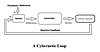
“Cybernetics: or Control and Communication in the Animal and the Machine”
Norbert Wiener on Entropy (thermodynamics) 2 quotes
“Progress imposes not only new possibilities for the future but new restrictions. It seems almost as if progress itself and our fight against the increase of entropy intrinsically must end in the downhill path from which we are trying to escape.”

Norbert Wiener on Nuclear weapons
“The experience of the scientists who have worked on the atomic bomb has indicated that in any investigation of this kind the scientist ends by putting unlimited powers in the hands of the people whom he is least inclined to trust with their use.”

Norbert Wiener on Science
“In the past, the community of scholars has made it a custom to furnish scientific information to any person seriously seeking it. However, we must face these facts: The policy of the government itself during and after the war, say in the bombing of Hiroshima and Nagasaki, has made it clear that to provide scientific information is not a necessarily innocent act, and may entail the gravest consequences. One therefore cannot escape reconsidering the established custom of the scientist to give information to every person who may inquire of him.”
Norbert Wiener on Probability
“Since the end of World War II, I have been working on the many ramifications of the theory of messages. Besides the electrical engineering theory of the transmission of messages, there is a larger field which includes not only the study of language but the study of messages as a means of controlling machinery and society, the development of computing machines and other such automata, certain reflections upon psychology and the nervous system, and a tentative new theory of scientific method. This larger theory of messages is a probabilistic theory, an intrinsic part of the movement that owes its origin to Willard Gibbs and which I have described in the introduction.”

Norbert Wiener on Information
“Information is a name for the content of what is exchanged with the outer world as we adjust to it, and make our adjustment felt upon it. The process of receiving and of using information is the process of our adjusting to the contingencies of the outer environment, and of our living effectively within that environment. The needs and the complexity of modern life make greater demands on this process of information than ever before, and our press, our museums, our scientific laboratories, our universities, our libraries and textbooks, are obliged to meet the needs of this process or fail in their purpose. To live effectively is to live with adequate information. Thus, communication and control belong to the essence of man's inner life, even as they belong to his life in society.”
Norbert Wiener on Artist
“Mathematics is too arduous and uninviting a field to appeal to those to whom it does not give great rewards. These rewards are of exactly the same character as those of the artist. To see a difficult uncompromising material take living shape and meaning is to be Pygmalion, whether the material is stone or hard, stonelike logic. To see meaning and understanding come where there has been no meaning and no understanding is to share the work of a demiurge. No amount of technical correctness and no amount of labour can replace this creative moment, whether in the life of a mathematician or of a painter or musician. Bound up with it is a judgement of values, quite parallel to the judgement of values that belongs to the painter or the musician. Neither the artist nor the mathematician may be able to tell you what constitutes the difference between a significant piece of work and an inflated trifle; but if he is not able to recognise this in his own heart, he is no artist and no mathematician.”

What Norbert Wiener Said About Others
Discover personal opinions Norbert Wiener shared regarding contemporaries.
Norbert Wiener on Warren S. McCulloch
Norbert Wiener on John von Neumann
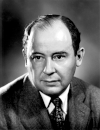
“Neumann is one of the two or three top mathematicians in the world, is totally without national or race prejudice, and has an enormously great gift for inspiring younger men and getting them to do research.”
Norbert Wiener on Oliver Heaviside
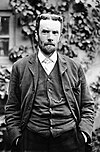
“... the present time is the age of communication ... communication engineering began with Gauss, Wheatstone, and the first telegraphers. It received its first reasonably scientific treatment at the hands of Lord Kelvin, after the failure of the first transatlantic cable in the middle of the last century, and from the eighties on, it was perhaps Heaviside who did the most to bring into a modern shape.”
Norbert Wiener on Josiah Willard Gibbs
“Many men have had intuitions well ahead of their time; and this is not least true in mathematical physics. Gibbs' introduction of probability into physics occurred well before there was an adequate theory of the sort of probability he needed. But for all these gaps it is, I am convinced, Gibbs rather than Einstein or Heisenberg or Planck to whom we must attribute the first great revolution of twentieth century physics.”
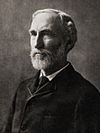
Norbert Wiener on Gottfried Leibniz
“Leibnitz, dominated by ideas of communication, is, in more than one way, the intellectual ancestor of the ideas of this book, for he was also interested in machine computation and in automata. My views in this book are very far from being Leibnitzian, but the problems with which I am concerned are most certainly Leibnitzian. Leibnitz's computing machines were only an offshoot of his interest in a computing language, a reasoning calculus which again was in his mind, merely an extention of his idea of a complete artificial language. Thus, even in his computing machine, Leibnitz's preoccupations were mostly linguistic and communicational.”

Quotes About Norbert Wiener
Gain deeper perspective through quotes about Norbert Wiener from others.
Phyllis L. Block on Norbert Wiener
“His office was a few doors down the hall from mine. He often visited my office to talk to me. When my office was moved after a few years, he came in to introduce himself. He didn't realize I was the same person he had frequently visited; I was in a new office so he thought I was someone else.”
Gene B. Chase on Norbert Wiener 2 quotes
“He wrote a very complicated integral on the blackboard, and then wrote '=6' with no intermediate steps. An intrepid student challenged him: Can you do that another way? He left the room for about 20 minutes. He returned, erased the '=6' and wrote '=6' saying that yes indeed he could.”
Anecdote as recounted by on Norbert Wiener 2 quotes
“He went to a conference and parked his car in the big lot. When the conference was over, he went to the lot but forgot where he parked his car. He even forgot what his car looked like. So he waited until all the other cars were driven away, then took the car that was left.”
Hans Freudenthal on Norbert Wiener
“In appearance and behaviour, Norbert Wiener was a baroque figure, short, rotund, and myopic, combining these and many qualities in extreme degree. His conversation was a curious mixture of pomposity and wantonness. He was a poor listener. His self-praise was playful, convincing and never offensive. He spoke many languages but was not easy to understand in any of them. He was a famously bad lecturer.”
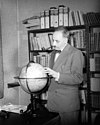
C.K. Jen on Norbert Wiener
“As I near the end of my personal recollections of life at M.I.T., it is impossible to refrain from relating my eye-witness stories about a brilliant man, Norbert Wiener, and his lovable eccentricities. I took two semester courses under Professor Wiener: one was Fourier Series and Fourier Integrals, and the other was, I believe, Operational Calculus. It is vivid in my memory that Professor Wiener would always come to class without any lecture notes. He would first take out his big handkerchief and blow his nose very vigorously and noisily. He would pay very little attention to his class and would seldom announce the subject of his lecture. He would face the blackboard, standing very close to it because he was extremely near-sighted. Although I usually sat in the front row, I had difficulty seeing what he wrote. Most of the other students could not see anything at all. It was most amusing to the class to hear Professor Wiener saying to himself, "This was very wrong, definitely." He would quickly erase all he had written down. He would then start all over again, and sometimes murmur to himself, "This looks all right so far." Minutes later, "This cannot be right either," and he would rub it all out again. This on- again, off-again process continued until the bell signaled the end of the hour. Then Professor Wiener would leave the room without even looking at his audience.”
David George Kendall on Norbert Wiener
“As a human being Wiener was above all stimulating. I have known some who found the stimulus unwelcome. He could offend publicly by snoring through a lecture and then asking an awkward question in the discussion, and also privately by proffering information and advice on some field remote from his own to an august dinner companion. I like to remember Wiener as I once saw him late at night in Magdalen College, Oxford, surrounded by a spellbound group of undergraduates, talking, endlessly talking. We are all the poorer that he now talks no more.”
David F. Noble on Norbert Wiener
“He was horrified by Hiroshima and the prominent role of scientists in the development of atomic weapons. The tremendous expense of the Manhattan Project, he argued, necessitated the use of bombs to justify the investment. But that was not the only compulsion, nor was it patriotism. "The pressure to use the bomb, with its full killing power," he wrote later, "was not merely great from a patriotic point of view but was quite as great from the point of view of the personal fortunes of people involved in its development." Wiener did not think that the use of the bomb on Japan, on Orientals, was without significance. "I was acquainted with more than one of these popes and cardinals of applied science, and I knew very well how they underrated aliens of all sorts, particularly those not of the European race."”
About Norbert Wiener
Norbert Wiener (26 November 1894 – 18 March 1964) was a U.S. mathematician, and a pioneer in the study of stochastic processes and noise especially in the field of electronic communication and control systems. He coined the term "cybernetics" in his book Cybernetics or Control and Communication in the Animal and the Machine (1948).