Nikolai Berdyaev on Jakob Böhme
← Back to Nikolai Berdyaev Profile
“Jacob Boehme has to be termed the greatest of Christian gnostics. The word gnosis I employ here not in the sense of the heresies of the first centuries of Christianity, but in the sense of knowledge basic to revelation and dealing not with concepts, but with symbols and myths; contemplative knowledge, and not discursive knowledge. This is also a religious philosophy or theosophy. Characteristic for J. Boehme is that he had a great simplicity of heart, a child-like purity of soul.”
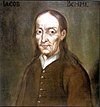
“The mystery of God's creation, the creative mystery of the creature involves not only the being saved from sin, but also of bearing within it the imprint of the Creator and being pervaded with Divine energies, this has remained hidden over time. Upon this mystery have touched only a few Christian mystics and genuine theosophists, gnostics, ahead of their time. The greatest of them was J. Boehme. But the thought of modern times has tended to naturalise Boehme's intuition about the mystery of the world-creation, the mystery of the creature, and it has become bereft, of what Boehme revealed.”
“Boehme's teachings present the challenging tasks of a new Christian anthropology, of the surmounting of the slavery subjection of man under the Old Testament consciousness, in a bold attempt at discerning the mysteries of the creation within the light of Christ. Boehme is not a theologian, he is — a theosophist in the finest sense of the word, and his contemplations are not easily to be carried over into the traditional theological language. Least of all was Boehme an "heretic" as regards the condition of his heart, as regards his spiritual disposition, and the final resolution of this question does not belong to the academic school theological teachings. … Many of us, as Orthodox Russians of the XX Century, think otherwise, than might a German craftsman of genius from the late XVI and early XVII Centuries, but we can sense in him a brother after the spirit, his thought resonates for us, and we can find common issue with it beyond all the separate faith-confessions and nationalities, beyond all the separate times and places, just as we ought to find common cause with everything spiritually genuine that is lofty and high, even though it appear a foreign world for us.”