Link Copied!
Niklas Luhmann Quotes (1927-1998)

About Niklas Luhmann
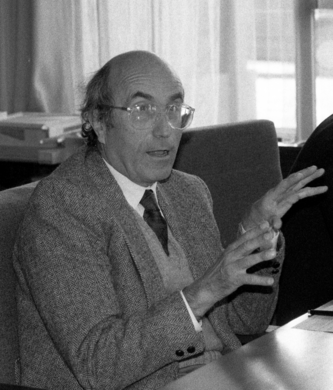
Niklas Luhmann (December 8, 1927 – November 6, 1998) was a German sociologist, and a prominent thinker in sociological systems theory.
Best Niklas Luhmann Quotes
Shortest
Earliest
Explore our curated collection of the most famous and impactful Niklas Luhmann quotes.
“Humans cannot communicate; not even their brains can communicate; not even their conscious minds can communicate. Only communication can communicate.”

“Die folgenden Untersuchungen wagen diesen Übergang zu einem radikal antihumanistischen, einem radikal antiregionalistischen und einem radikal konstruktivistischen Gesellschaftsbegriff.”

“The effect if not the function of the mass media seems to lie, therefore, in the reproduction of non- transparency through transparency, in the reproduction of non-transparency of effects through transparency of knowledge.”
“It had always been clear to me that a thoroughly constructed conceptual theory of society would be much more radical and much more discomforting in its effects than narrowly focused criticisms—criticisms of capitalism for instance— could ever imagine.”

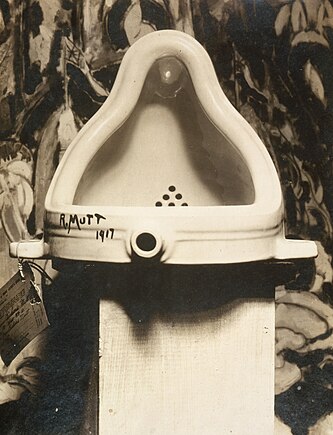
“In the twentieth century, one encounters artworks that seek to cancel the difference between a real and an imagined reality by presenting themselves in ways that make them indistinguishable from real objects. Should we take this trend as an internal reaction of art against itself?”
“By representing themselves as a system [the mass media ] generates boundaries with an inside and an outside that is inaccessible to them. They too reflect [or represent] their outside as public life, so long as specific external relationships, such as to politics or to the advertisers, are not in question.”
“Does knowledge rest on construction in the sense that it only functions because the knowing system is operatively closed, therefore: because it can maintain no operative contact with the outside world; and because it therefore remains dependent, for everything that it constructs, on its own distinction between self-reference and allo-reference?”
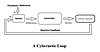
“The second-order cybernetics worked out by Heinz von Foerster is rightly held to be a constructivist theory, if not an a manifesto for operational constructivism. The reverse doesn't apply, however. Constructivist epistemologies do not necessarily have the rigor of a cybernetics of cybernetics. One can observe cognitions as constructions of an observer, without linking with this the theory that the observing observer observes himself or herself as an observer.”
“We are still spellbound by a tradition that arranged psychological faculties hierarchically, relegating ‘sensuousness’ — that is, perception — to a lower position in comparison to higher, reflective functions of reason and understanding. The most advanced versions of ‘conceptual art’ still follow this tradition. By refusing to base themselves in sensuously perceptible distinctions between works of art and other objects, these works seek to avoid reducing art to the realm of sense perception.”

“Unlike philosophy, art does not search for islands of security from which other experiences can be expelled as fantastic or imaginary, or rejected as a world of secondary qualities or enjoyment, of pleasure or common sense. Art radicalizes the difference between the real and the merely possible in order to show through works of its own that even in the realm of possibility there is order after all. Art opposes, to use a Hegelian formulation, “the prose of the world,” but for precisely this reason it needs this contrast.”
“The activity of observing establishes a distinction in a space that remains unmarked, the space from which the observer executes the distinction. The observer must employ a distinction in order to generate the difference between unmarked and marked space, and between himself and what he indicates. The whole point of this distinction (its intention) is to mark something as distinct from something else. At the same time, the observer — in drawing a distinction - makes himself visable to others. He betrays his presence - even if a further distinction is required to distinguish him.”
Niklas Luhmann Quotes by Topic
Find exactly what you are looking for by browsing this categorized list of Niklas Luhmann quotes by topic.
Niklas Luhmann on Social system

Niklas Luhmann on Perception
“Whatever may have been written or thought about perception in literate cultures, it remains a special competency of consciousness, its essential faculty. Day by day, minute by minute, consciousness is preoccupied with perception. Through perception it is captivated by an external world. Without perception it would have to terminate its autopoiesis, and even dreams can occur only by suggesting perceptions.”

Niklas Luhmann on Conceptual art
“We are still spellbound by a tradition that arranged psychological faculties hierarchically, relegating ‘sensuousness’ — that is, perception — to a lower position in comparison to higher, reflective functions of reason and understanding. The most advanced versions of ‘conceptual art’ still follow this tradition. By refusing to base themselves in sensuously perceptible distinctions between works of art and other objects, these works seek to avoid reducing art to the realm of sense perception.”

What Niklas Luhmann Said About Others
Discover personal opinions Niklas Luhmann shared regarding contemporaries.
Niklas Luhmann on Friedrich Kittler
“Riding together in a taxi from some airport Kittler tried to explain to Luhmann that in contrast to social systems, switching circuits cannot exist without input and output. "Herr Kittler, it was like that already in Babylonia. A messenger rides through the city gate. Some [like me] ask, what kind of message he brings. Others [like you] ask what kind of horse he rides."”

Quotes About Niklas Luhmann
Gain deeper perspective through quotes about Niklas Luhmann from others.
Gotthard Bechmann on Niklas Luhmann
“Niklas Luhmann is remembered as the most important social theorist of the 20th century. Yet in much of the Anglo-Saxon world he is virtually unknown among professional social scientists.”
Hans-Goerg Moeller on Niklas Luhmann
“On Amazon.com, a reader of my book Luhmann Explained wrote "... if your teenager is bad, don’t ground him; make him write an essay on the sociological theory of Niklas Luhmann.” I sympathize with this reader’s point of view. Having read texts by Luhmann for about twenty years, I have increasingly asked myself why, even though I find the theory very appealing, its inventor did not manage to express it in a reasonably enjoyable manner. Sometimes, particularly in his later works, Luhmann’s irony and humor interrupt his otherwise extremely dry, unnecessarily convoluted, poorly structured, highly repetitive, overly long, and aesthetically unpleasing texts.”
About Niklas Luhmann
Niklas Luhmann (December 8, 1927 – November 6, 1998) was a German sociologist, and a prominent thinker in sociological systems theory.