Niall Ferguson on Marc Bloch
← Back to Niall Ferguson Profile
“Marc Bloch agreed that the débâcle was due at least in part to the abysmal quality of French generalship. A decisive factor was the German decision to switch the direction of their main attack from Luxembourg and the Low Countries, as Hitler had originally planned, to the line running between Liège and Namur, through the supposedly impenetrable forests of the Ardennes. The French would have fared better against the original strategy; they were wholly taken by surprise when five panzer divisions thrust their way through the Ardennes and captured the bridges over the River Meuse. Thereafter, their reactions were culpably slow or inept. Yet what happened in 1940 was more than just a military failure. At root, as Bloch argued, it was a collapse of morale.”
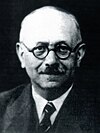
“The Poles had fought courageously, but they were outnumbered and outgunned. The most striking thing about the war in the West the following year was that the opposite was true. It was perhaps predictable that the Dutch and Belgians would succumb to superior German forces, but the fall of France within a matter of just six weeks was, as the historian Marc Bloch said, a 'strange defeat'. Even without the support of the British Expeditionary Force, the French forces were superior on paper, an advantage that ought to have been magnified by their fighting a defensive campaign. They had twice the number of wheeled vehicles and 4,638 tanks to the German 4,060. Moreover, French tanks had thicker armour and bigger guns. Yet when the German offensive was launched on May 10, 1940, many units put up only token resistance.”