Link Copied!
Muna Lee (writer) Quotes (1895-1965)
Author, Writer, Poet
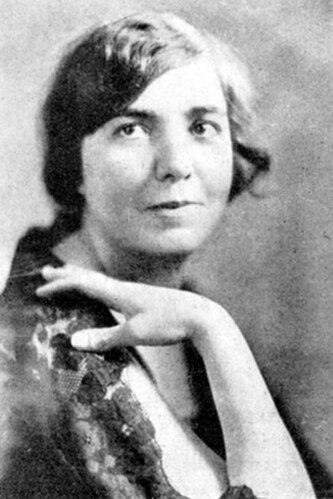

About Muna Lee (writer)
Muna Lee (January 29, 1895 – April 3, 1965) was an American poet, author, and activist, who first became known and widely published as a lyric poet in the early 20th century. She also was known for her writings that promoted Pan-Americanism and feminism. She translated and published in Poetry a 1925 landmark anthology of Latin American poets, and continued to translate from poetry in Spanish.
Best Muna Lee (writer) Quotes
Shortest
Earliest
Explore our curated collection of the most famous and impactful Muna Lee (writer) quotes.
“It is poetry to express an entire philosophy in simple words”
“Another's estimate has never the rich completeness of the sudden word from the inner self.”

“Puerto Rico is Spanish American in its past, Anglo-Saxon in its present, and, I trust, in the deepest sense Pan-American in its future”
“The lack of understanding that comes from actual ignorance is notorious. Most North Americans know nothing even of Puerto Rico, which has been under the Stars and Stripes for thirty years; so it is hardly surprising that they are apt to confuse Uruguay with Uganda.”
“Translators, again-the most abused and patient lot of folk on earth-are helpful in making us better acquainted; though we hope the time will soon come when citizens of the twenty-one republics will no longer need translators. There is no reason for our not speaking each other's language.”
“For the world, which seems so various, is made up to a large extent of a few patterns used over and over again in innumerable combinations. We need not falsify in order to find the identities. We need only to look with comprehending eyes. Poetry is this recognition, and expression, of identities. The common words of our language, and of the language of every other people, is full of such poetry...”

“This working partnership of facts and imagination gives us reality, which I think is another word of poetry. I do not believe that poetry can ever be anything but truth. When poetry speaks in parables, or in metaphors or in similes, it is not to lead you away from what is real to what is unreal, but rather to lead you by the quickest path to the very core of reality. Poetry does not give us fanciful falsehood instead of truth: poetry is a shorthand for truth itself. When we depart from truth, we depart from poetry.”

“There is nothing to be afraid of in the name of poetry, though it is in all languages and in all ages a name for wisdom and beauty. Whether we know it or not, poetry is a part of the everyday life of all of us. It is about us, and inside us, all the time. More often than not, we do not recognize it. Even when it is most present, we may not realize that what we are seeing or hearing or even saying is poetry. But we can learn to recognize and realize it: and to the extent to which we may do so, we ourselves become poets. In an essay familiar to most high-school students, Carlyle declared that everyone who reads a poem understandingly becomes a co-creator of the poem, and so a poet. We are creators in greater degree; and, therefore, poets the more, when we open our eyes and ears and minds to the innumerable little things as well as the big things that make life.”
“Our petition as women, amongst you free citizens of Pan America, is like the petition of my Puerto Rico in the community of American States. We have everything done for us and given us but sovereignty. We are treated with every consideration save the one great consideration of being regarded as responsible beings. We, like Puerto Rico, are dependents. We are anomalies before the law. We, the women of the Americas, ask for a treaty granting us equal rights before the law. We ask this not for one woman, not for one country, not for one race, but for the women of Pan America, for the women who are proving to you here today by their solidarity and mutual trust that Pan-Americanism is a fact. We offer you a new definition: Pan-Americanism is the deep desire of every country for the common good of all, favoring none and slighting none. It is the oneness of purpose that makes of us all responsible citizens of the spiritual commonwealth of Pan America. We offer you a definition and we offer you an opportunity; the opportunity of acting with unparalleled generosity and vision. We, the women of America, ask of you, the men of America, a treaty guaranteeing us our equal human rights.”
“Many temples have been built to shelter Pan-Americanism. Some of them have been built with marble, some with words. But deep and true friendship is no less than beautiful. It does not come even to temples merely because it is summoned, nor even because each country of our continents may sincerely desire its coming. International friendship to be real must be unselfish, and complete unselfishness is hard of attainment when interests differ; as hard for nations as for individuals. But here, today, you have before your eyes a concrete demonstration of that very thing: a Pan-Americanism that includes all, that excludes none, that makes not the slightest difference between one and another. The women of all the Americas have one need. Every enlightened woman of this hemisphere desires for her sister of another country, the same good which she craves for herself. The woman of no country of our Americas believes that equal rights for herself will in any way give her or her country an advantage over her sisters to the north or to the south. She does not wish such advantage. She does not ask for one thing and pay with another; she is not carrying on a barter of power, of friendship, of advantage. She asks for herself and for every other woman in all of our countries, one thing, for the good of all-and for the good of those countries which we women have helped upbuild and are helping uphold.”
Muna Lee (writer) Quotes by Topic
Find exactly what you are looking for by browsing this categorized list of Muna Lee (writer) quotes by topic.
Muna Lee (writer) on Cuba
Muna Lee (writer) on Puerto Rico
“Our petition as women, amongst you free citizens of Pan America, is like the petition of my Puerto Rico in the community of American States. We have everything done for us and given us but sovereignty. We are treated with every consideration save the one great consideration of being regarded as responsible beings. We, like Puerto Rico, are dependents. We are anomalies before the law.”

What Muna Lee (writer) Said About Others
Discover personal opinions Muna Lee (writer) shared regarding contemporaries.
Muna Lee (writer) on Alice Stone Blackwell
“Translators, again-the most abused and patient lot of folk on earth-are helpful in making us better acquainted; though we hope the time will soon come when citizens of the twenty-one republics will no longer need translators. There is no reason for our not speaking each other's language. Among these translators we may mention Alice Stone Blackwell, Isaac Goldberg, the late Thomas Walsh...”
Muna Lee (writer) on Harriet Monroe
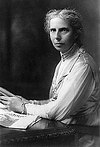
“Translators, again-the most abused and patient lot of folk on earth-are helpful in making us better acquainted; though we hope the time will soon come when citizens of the twenty-one republics will no longer need translators. There is no reason for our not speaking each other's language...We may recall also such friendly gestures as that of Harriet Monroe, who dedicated an entire number of her magazine, Poetry, to poets of Spanish America...”
Muna Lee (writer) on Carl Sandburg
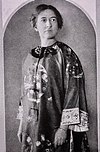
“Translators, again-the most abused and patient lot of folk on earth-are helpful in making us better acquainted; though we hope the time will soon come when citizens of the twenty-one republics will no longer need translators. There is no reason for our not speaking each other's language...Ernesto Montenegro, on the other hand, has introduced Sandburg, Frost, Robinson, Masters, and many other North American poets to the Spanish reading public.”

Muna Lee (writer) on Franklin D. Roosevelt
“"Today, science has brought all the different quarters of the globe so close together that it is impossible to isolate them one from another," Franklin D. Roosevelt wrote the night before he died, in an address which was to be his last message. "Today we are faced with the pre-eminent fact that, if civilization is to survive, we must cultivate the science of human relationships-the ability of all peoples, of all kinds, to live together and work together in the same world, at peace."”

Muna Lee (writer) on José Martí
“José Martí, fulcrum of the revolution that made Cuba free, died in the struggle, but not before he had bequeathed the country which in so large part owes him its independent existence a record in poetry and in prose which is testimony to one of earth's no- blest spirits. Federico de Onís has said of him that his life is among the purest in the history of mankind. Martí's poetry has the seemingly effortless spontaneity of the born lyrist. His prose, as P. Henríquez Ureña has pointed out, was always written either to promote the liberation of Cuba, or earn him enough to live on so that he might continue promoting the liberation of Cuba, and "is thus journalism, but journalism raised to an artistic level that has never been equaled in Spanish, nor probably in any other language."”

Muna Lee (writer) on Anne Bradstreet
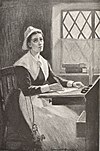
“Anne Bradstreet wrote seven thousand lines of verse and most of it is derivative, unremarkable, sometimes even soporific, although her best is very good indeed; and her real achievements in poetry have not been duly recognized for almost three hundred years. But in greatness of spirit, generosity of outlook, love for learning as a path toward truth; in their quick responsive delight in the everyday wonder of the world and their deeply devout faith in the goodness of God, Anne Bradstreet and Juana Inés de la Cruz-the one a Puritan, the other a Roman Catholic-were very close akin. Remarking upon the brevity of human life, Anne Bradstreet wrote, "And though thus short, we shorten many ways, / Living so little while we are alive"; and Sor Juana said, "Angels are higher than men because they understand more."”
Muna Lee (writer) on Alice Paul
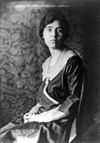
“Miss Alice Paul, Ph.D., D.C.L., author of the Equal Rights Treaty, and a founder of the National Woman's Party of the United States, is chairman of the committee on nationality of the Inter-American Commission of Women, and to her indefatigable labor in research and the compilation of material is due the commission's monumental report now ready for presentation at the first plenary session. This report covers the nationality of women throughout the world. In every case, it gives actual excerpts from the law in the original language, with translation. This applies even to laws in Japanese, Greek, Siamese, Bulgarian, Russian, etc., with the original text in the original script facing the translation on the opposite page. Synopses of the laws are included also with important original chapters by Miss Paul so that the juridical information is made easily understandable to all readers, whether familiar with legal terms or not. Comprehensive tables on nationality prepared by Miss Stevens and Miss Paul are another novel and important feature of this report which is as plain as daylight, as thrilling as an air race, and as fascinatingly involved as a detective story.”
Muna Lee (writer) on Edgar Allan Poe
“Poe, who was fortunate in little else, was almost without exception fortunate in his foreign interpreters-the rarest good luck to befall poets. That the French acclaimed his genius long before it was recognized by his fellow countrymen-if, indeed, we may say we have ever recognized it—was due as much to Baudelaire's sympathetic and haunting versions of his poems as to the beauty of the originals. Poe's Spanish interpreter and occasional translator, José Asunción Silva, was, no less than Baudelaire, qualified by tragic experience of life as well as by sympathy and surpassing ability to embody in liquid and lingering Castilian the conception of poetry that was to help in altering to some extent the South American picture of the United States as a land where genius could not exist. To some extent only, unfortunately, for whenever a norteamericanófilo-a creature as rare as the name-has cited Poe as an example of what we might rise to artistically, there has always been a chorus ready to shout, with discouraging truthfulness, "Yes, but they let him die in beggarly obscurity!" Poe is much more alive today south of the Rio Grande than in Virginia or New York: more loved, more reverenced, more often read and beyond comparison more often quoted-both as to his poetry and his theory of poetry.”

Quotes About Muna Lee (writer)
Gain deeper perspective through quotes about Muna Lee (writer) from others.
Marjorie Agosín on Muna Lee (writer)
“a visionary and fervent Pan-Americanist...one of the most extraordinary and creative figures of the twentieth century, a builder of bridges and hopes...a magnificent woman.'”

Aurora Levins Morales on Muna Lee (writer)
“What I keep thinking is: why didn't I know about you? I have needed you and I didn't know. I grew up in the Puerto Rican independence movement, in a home full of books, speaking English and knowing other families who did, pacifists, university people, circles you would have moved through. I am a poet, a translator, a feminist historian studying women's resistance, women's voices, and I never heard that Luis Muñoz Marín had a first wife, far less one like you...The world is full of opportunities to be of use, but I believe with you that poetry has a special power to reconnect our severed bonds, and I will practice it, because for myself and also for the world, you have reminded me that poetry is bread.”
About Muna Lee (writer)
Muna Lee (January 29, 1895 – April 3, 1965) was an American poet, author, and activist, who first became known and widely published as a lyric poet in the early 20th century. She also was known for her writings that promoted Pan-Americanism and feminism. She translated and published in Poetry a 1925 landmark anthology of Latin American poets, and continued to translate from poetry in Spanish.