Link Copied!
Muhammad Asad Quotes (1900-1992)
Writer
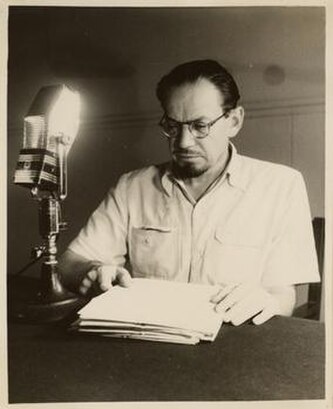

About Muhammad Asad
Muhammad Asad (2 July 1900 – 23 February 1992), born Leopold Weiss, was a journalist, traveler, writer, social critic, linguist, thinker, reformer, diplomat, political theorist, translator and scholar. Asad was one of the 20th century's most influential Jewish Muslims.
Best Muhammad Asad Quotes
Shortest
Earliest
Explore our curated collection of the most famous and impactful Muhammad Asad quotes.

“Jew or Arab. Both here are brimming over with an intolerant hatred that leads them nowhere. Each side says to the other: You do not belong here.”

“It doesn't matter if you agree or disagree with my interpretations, even the classical Quran commentators disagreed on many details. Disagreement deepens our understanding of the Quran.”


“The Law-Giver meant us Muslims to provide for the necessary, additional legislation through the exercise of our Ijtihad (Independent Reasoning) in consonance with the spirit of Islam.”
“There can be not the least doubt that an Islamic constitution to be evolved thirteen centuries after the Right-Guided Caliphs may legitimately differ from that which was valid in and for their time.”

“Within the Islamic concept of society there is no room for the concept of a "secular" state for the simple reason that Islam does not admit of any separation between "religious" and "mundane" life-concerns.”

“A Muslim is he who carries the fear of God in his heart and tries, by following the ways of Islam, to rise in spiritual stature: and not merely he who happens to have been born in a Muslim house and bears a Muslim name.”

“Islam is a complete, self-contained ideology which regards all aspects of our existence—moral and physical, spiritual and intellectual, personal and communal—as parts of the indivisible whole which we call "human life."”

“We allow ourselves to be blown by the winds because we do know what we want: our hearts know it, even if our thoughts are sometimes slow to follow- but in the end they do catch up with our hearts and then we think we have made a decision.”

“The poet-philosopher put greater stress on the spiritual aspect of our struggle, while the Quaid-e-Azam was mainly concerned with outlining its political aspect: but both were one in their intense desire to assure to the Muslims of India a future on Islamic lines.”
“By imitating the manners and the mode of life of the West, the Muslims are being gradually forced to adopt the Western moral outlook: for the imitation of outward appearance leads, by degrees, to a corresponding assimilation of the world-view responsible for that appearance.”



“True progress is not possible without a variety of opinions, for it is only through the friction of variously constituted intellects and through the stimulating effect they have on one another that social problems are gradually clarified and thus brought within the range of solution.”
“For let there be no mistake about it: freedom is not an end in itself—it is only a means to an end. The moment you achieve freedom from something, the question arises: What is this freedom for? It is this question which the Muslim millah is now being called upon to answer.”

“All scientific research is of utmost significance in the world-view of Islam, for it enables us to comprehend better and better the fact that all creation is based upon a definite divine plan, and is thus apt to strengthen and deepen our conviction of God's existence and omnipotence”

Muhammad Asad Quotes by Topic
Find exactly what you are looking for by browsing this categorized list of Muhammad Asad quotes by topic.
Muhammad Asad on Islam
“Islam appears to me like a perfect work of architecture. All its parts are harmoniously conceived to complement and support each other; nothing is superfluous and nothing lacking, with the result of an absolute balance and solid composure. Probably this feeling that everything in the teachings and postulates of Islam is "in its proper place" has created the strongest impression on me.”

Muhammad Asad on Kafir
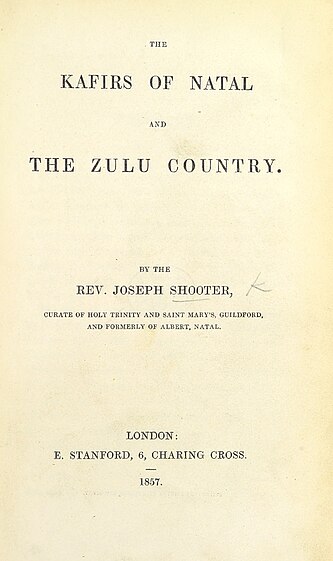
“[T]he term kāfir cannot be simply equated, as many Muslim theologians of post-classical times and practically all Western translators of the Qur’ān have done, with “unbeliever” or “infidel” in the specific, restricted sense of one who rejects the system of doctrine and law promulgated in the Qur’ān and amplified by the teachings of the Prophet — but must have a wider, more general meaning. This meaning is easily grasped when we bear in mind that the root verb of the participial noun kāfir (and of the infinitive noun kufr) is kafara, “he [or “it”] covered [a thing]”: thus, in 57:20 the tiller of the soil is called (without any pejorative implication) kāfir, “one who covers,” i.e., the sown seed with earth, just as the night is spoken of as having “covered” (kafara) the earth with darkness. In their abstract sense, both the verb and the nouns derived from it have a connotation of “concealing” something that exists or “denying” something that is true. Hence, in the usage of the Qur’ān — with the exception of the one instance (in 57:20) where this participial noun signifies a “tiller of the soil” - a kāfir is “one who denies [or “refuses to acknowledge”] the truth” in the widest, spiritual sense of this latter term: that is, irrespective of whether it relates to a cognition of the supreme truth — namely, the existence of God - or to a doctrine or ordinance enunciated in the divine writ, or to a self-evident moral proposition, or to an acknowledgment of, and therefore gratitude for, favours received.”

About Muhammad Asad
Muhammad Asad (2 July 1900 – 23 February 1992), born Leopold Weiss, was a journalist, traveler, writer, social critic, linguist, thinker, reformer, diplomat, political theorist, translator and scholar. Asad was one of the 20th century's most influential Jewish Muslims.