Link Copied!
Mohamed ElBaradei Quotes (1942-)
President, Director

About Mohamed ElBaradei
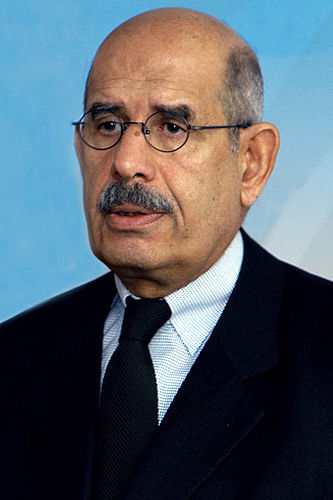
Mohamed ElBaradei Arabic: محمد البرادعي (born 17 June 1942) is an Egyptian diplomat, and the Director General of the International Atomic Energy Agency. ElBaradei and the IAEA were jointly awarded the Nobel Peace Prize of 2005.
Best Mohamed ElBaradei Quotes
Shortest
Earliest
Explore our curated collection of the most famous and impactful Mohamed ElBaradei quotes.
“The International Atomic Energy Agency and I are humbled, proud, delighted and above all strengthened in our resolve by this most worthy of honours.”
“Israel is the number one rogue state threat to Middle Eastern peace with its nuclear arms and acts of outright aggression towards its peaceful neighbours Syria and Lebanon – and genocidal actions against the marginalised Palestinians of the West Bank – and Gaza in particular.”

“Unilateral preemption should not in any way be the model for how we conduct international relations... [It] brings us into very dangerous territory and it could be used and abused by any other country. We need to continue to base our security on multilateralism, and on the Security Council.”
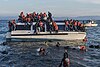
“Consider our development aid record. Last year, the nations of the world spent over $1 trillion on armaments. But we contributed less than 10 per cent of that amount — a mere $80 billion — as official development assistance to the developing parts of the world, where 850 million people suffer from hunger.”

“Why has this security so far eluded us?
I believe it is because our security strategies have not yet caught up with the risks we are facing. The globalization that has swept away the barriers to the movement of goods, ideas and people has also swept with it barriers that confined and localized security threats.”
I believe it is because our security strategies have not yet caught up with the risks we are facing. The globalization that has swept away the barriers to the movement of goods, ideas and people has also swept with it barriers that confined and localized security threats.”
“These are three concrete steps that, I believe, can readily be taken. Protect the material and strengthen verification. Control the fuel cycle. Accelerate disarmament efforts.
But that is not enough. The hard part is: how do we create an environment in which nuclear weapons — like slavery or genocide — are regarded as a taboo and a historical anomaly?”
But that is not enough. The hard part is: how do we create an environment in which nuclear weapons — like slavery or genocide — are regarded as a taboo and a historical anomaly?”
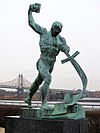
“I very much believe that we share the same human values... If you scan through all the religions — monotheistic and others — they all preach the same... I think all our fights, our wars, and all our disagreements are just expressions of frustration at our human condition at a particular time. I don't think it has to do with us believing in different values.”

“Fifteen years ago, when the Cold War ended, many of us hoped for a new world order to emerge. A world order rooted in human solidarity — a world order that would be equitable, inclusive and effective.
But today we are nowhere near that goal. We may have torn down the walls between East and West, but we have yet to build the bridges between North and South — the rich and the poor.”
But today we are nowhere near that goal. We may have torn down the walls between East and West, but we have yet to build the bridges between North and South — the rich and the poor.”
“I think the ultimate sense of security will be when we come to recognize that we are all part of one human race. Our primary allegiance is to the human race and not to one particular color or border. I think the sooner we renounce the sanctity of these many identities and try to identify ourselves with the human race the sooner we will get a better world and a safer world.”
“My father taught me that you have to stand by your principles. He was president of the bar association and was preaching civil liberties and human rights during some of the most repressive years of the Nasser era. He was the focus of a lot of pressure and intimidation, but he stood by his principles. And I think that's a lesson I remember from him — that you stand up for what you believe in.”

“You remember that book called All I Really Need to Know I Learned in Kindergarten? … Well that's very much true. I find a lot in common in the way I manage things and the way she manages three-year olds. We humans are the same when we are three years old and when we are 50!”
“I have hope because civil society is becoming better informed and more engaged. They are pressing their governments for change — to create democratic societies based on diversity, tolerance and equality. They are proposing creative solutions. They are raising awareness, donating funds, working to transform civic spirit from the local to the global. Working to bring the human family closer together.”
“There are three main features to this changing landscape: the emergence of an extensive black market in nuclear material and equipment; the proliferation of nuclear weapons and sensitive nuclear technology; and the stagnation in nuclear disarmament.
Today, with globalization bringing us ever closer together, if we choose to ignore the insecurities of some, they will soon become the insecurities of all.”
Today, with globalization bringing us ever closer together, if we choose to ignore the insecurities of some, they will soon become the insecurities of all.”
“Consider also our approach to the sanctity and value of human life. In the aftermath of the September 2001 terrorist attacks in the United States, we all grieved deeply, and expressed outrage at this heinous crime — and rightly so. But many people today are unaware that, as the result of civil war in the Democratic Republic of the Congo, 3.8 million people have lost their lives since 1998.
Are we to conclude that our priorities are skewed, and our approaches uneven?”
Are we to conclude that our priorities are skewed, and our approaches uneven?”
“A good start would be if the nuclear-weapon states reduced the strategic role given to these weapons. More than 15 years after the end of the Cold War, it is incomprehensible to many that the major nuclear-weapon states operate with their arsenals on hair-trigger alert — such that, in the case of a possible launch of a nuclear attack, their leaders could have only 30 minutes to decide whether to retaliate, risking the devastation of entire nations in a matter of minutes.”
“Whether one believes in evolution, intelligent design, or Divine Creation, one thing is certain. Since the beginning of history, human beings have been at war with each other, under the pretext of religion, ideology, ethnicity and other reasons. And no civilization has ever willingly given up its most powerful weapons. We seem to agree today that we can share modern technology, but we still refuse to acknowledge that our values — at their very core — are shared values.”

“A fundamental part of the non-proliferation bargain is the commitment of the five nuclear States recognized under the non-proliferation treaty — Britain, China, France, Russia and the United States — to move toward disarmament. Recent agreements between Russia and the United States are commendable, but they should be verifiable and irreversible. A clear road map for nuclear disarmament should be established — starting with a major reduction in the 30,000 nuclear warheads still in existence, and bringing into force the long-awaited Comprehensive Nuclear Test Ban Treaty.”
“As long as some of us choose to rely on nuclear weapons, we continue to risk that these same weapons will become increasingly attractive to others.
I have no doubt that, if we hope to escape self-destruction, then nuclear weapons should have no place in our collective conscience, and no role in our security.
To that end, we must ensure — absolutely — that no more countries acquire these deadly weapons.
We must see to it that nuclear-weapon states take concrete steps towards nuclear disarmament.
And we must put in place a security system that does not rely on nuclear deterrence.”
“Imagine what would happen if the nations of the world spent as much on development as on building the machines of war. Imagine a world where every human being would live in freedom and dignity. Imagine a world in which we would shed the same tears when a child dies in Darfur or Vancouver. Imagine a world where we would settle our differences through diplomacy and dialogue and not through bombs or bullets. Imagine if the only nuclear weapons remaining were the relics in our museums. Imagine the legacy we could leave to our children.
Imagine that such a world is within our grasp.”
Imagine that such a world is within our grasp.”
“My sister-in-law works for a group that supports orphanages in Cairo. She and her colleagues take care of children left behind by circumstances beyond their control. They feed these children, clothe them and teach them to read.
At the International Atomic Energy Agency, my colleagues and I work to keep nuclear materials out of the reach of extremist groups. We inspect nuclear facilities all over the world, to be sure that peaceful nuclear activities are not being used as a cloak for weapons programmes.
My sister-in-law and I are working towards the same goal, through different paths: the security of the human family.”
“A recent United Nations High-Level Panel identified five categories of threats that we face:
1. Poverty, Infectious Disease, and Environmental Degradation;
2. Armed Conflict — both within and among states;
3. Organized Crime;
4. Terrorism; and
5. Weapons of Mass Destruction.
These are all 'threats without borders' — where traditional notions of national security have become obsolete. We cannot respond to these threats by building more walls, developing bigger weapons, or dispatching more troops. Quite to the contrary. By their very nature, these security threats require primarily multinational cooperation.”
“We must abandon the unworkable notion that it is morally reprehensible for some countries to pursue weapons of mass destruction yet morally acceptable for others to rely on them for security — and indeed to continue to refine their capacities and postulate plans for their use.
Similarly, we must abandon the traditional approach of defining security in terms of boundaries — city walls, border patrols, racial and religious groupings. The global community has become irreversibly interdependent, with the constant movement of people, ideas, goods and resources. In such a world, we must combat terrorism with an infectious security culture that crosses borders — an inclusive approach to security based on solidarity and the value of human life. In such a world, weapons of mass destruction have no place.”
Similarly, we must abandon the traditional approach of defining security in terms of boundaries — city walls, border patrols, racial and religious groupings. The global community has become irreversibly interdependent, with the constant movement of people, ideas, goods and resources. In such a world, we must combat terrorism with an infectious security culture that crosses borders — an inclusive approach to security based on solidarity and the value of human life. In such a world, weapons of mass destruction have no place.”
Mohamed ElBaradei Quotes by Topic
Find exactly what you are looking for by browsing this categorized list of Mohamed ElBaradei quotes by topic.
Mohamed ElBaradei on 2011 Egyptian revolution 2 quotes
“The sooner Mubarak leaves, the better it is for everybody and the quicker we can restore normality and stability in Egypt and establish the cornerstone of democracy in the Middle East.”

Mohamed ElBaradei on Humiliation
“Israel claims it needs nuclear weapons as a deterrent against any threat to its existence. The Arab world in return feels that this is an imbalanced system; there is a sense of humiliation and impotence.”

Mohamed ElBaradei on Africa
Mohamed ElBaradei on Security
“I think the ultimate sense of security will be when we come to recognize that we are all part of one human race. Our primary allegiance is to the human race and not to one particular color or border. I think the sooner we renounce the sanctity of these many identities and try to identify ourselves with the human race the sooner we will get a better world and a safer world.”
Mohamed ElBaradei on War
“Whether one believes in evolution, intelligent design, or Divine Creation, one thing is certain. Since the beginning of history, human beings have been at war with each other, under the pretext of religion, ideology, ethnicity and other reasons. And no civilization has ever willingly given up its most powerful weapons. We seem to agree today that we can share modern technology, but we still refuse to acknowledge that our values — at their very core — are shared values.”

Mohamed ElBaradei on Destruction
“Countries remain interested in the illicit acquisition of weapons of mass destruction. If we sit idly by, this trend will continue. Countries that perceive themselves to be vulnerable can be expected to try to redress that vulnerability — and in some cases they will pursue clandestine weapons programs. The supply network will grow, making it easier to acquire nuclear weapon expertise and materials. Eventually, inevitably, terrorists will gain access to such materials and technology, if not actual weapons. If the world does not change course, we risk self-destruction.”
Mohamed ElBaradei on Disarmament
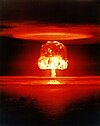
“As long as some of us choose to rely on nuclear weapons, we continue to risk that these same weapons will become increasingly attractive to others. I have no doubt that, if we hope to escape self-destruction, then nuclear weapons should have no place in our collective conscience, and no role in our security. To that end, we must ensure — absolutely — that no more countries acquire these deadly weapons. We must see to it that nuclear-weapon states take concrete steps towards nuclear disarmament. And we must put in place a security system that does not rely on nuclear deterrence.”
Mohamed ElBaradei on War on terror
“We must abandon the unworkable notion that it is morally reprehensible for some countries to pursue weapons of mass destruction yet morally acceptable for others to rely on them for security — and indeed to continue to refine their capacities and postulate plans for their use. Similarly, we must abandon the traditional approach of defining security in terms of boundaries — city walls, border patrols, racial and religious groupings. The global community has become irreversibly interdependent, with the constant movement of people, ideas, goods and resources. In such a world, we must combat terrorism with an infectious security culture that crosses borders — an inclusive approach to security based on solidarity and the value of human life. In such a world, weapons of mass destruction have no place.”
Mohamed ElBaradei on Global catastrophic risk
“Nuclear proliferation is on the rise. Equipment, material and training were once largely inaccessible. Today, however, there is a sophisticated worldwide network that can deliver systems for producing material usable in weapons. The demand clearly exists: countries remain interested in the illicit acquisition of weapons of mass destruction. If we sit idly by, this trend will continue. Countries that perceive themselves to be vulnerable can be expected to try to redress that vulnerability — and in some cases they will pursue clandestine weapons programs. The supply network will grow, making it easier to acquire nuclear weapon expertise and materials. Eventually, inevitably, terrorists will gain access to such materials and technology, if not actual weapons. If the world does not change course, we risk self-destruction.”

What Mohamed ElBaradei Said About Others
Discover personal opinions Mohamed ElBaradei shared regarding contemporaries.
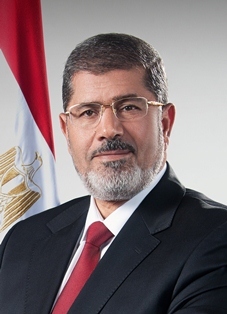
Mohamed ElBaradei on Mohamed Morsi
“Mr Morsi unfortunately undermined his own legitimacy by declaring himself as a pharaoh.”
Mohamed ElBaradei on Hosni Mubarak
Mohamed ElBaradei on Gamal Abdel Nasser
“My father taught me that you have to stand by your principles. He was president of the bar association and was preaching civil liberties and human rights during some of the most repressive years of the Nasser era. He was the focus of a lot of pressure and intimidation, but he stood by his principles. And I think that's a lesson I remember from him — that you stand up for what you believe in.”

Quotes About Mohamed ElBaradei
Gain deeper perspective through quotes about Mohamed ElBaradei from others.
Norwegian Nobel Committee announcement of the on Mohamed ElBaradei
“At a time when the threat of nuclear arms is again increasing, the Norwegian Nobel Committee wishes to underline that this threat must be met through the broadest possible international cooperation. This principle finds its clearest expression today in the work of the IAEA and its director general. In the nuclear non-proliferation regime, it is the IAEA which ensures that nuclear energy is not misused for military purposes, and the director general has stood out as an unafraid advocate of new measures to strengthen that regime.”
Ivo Daalder on Mohamed ElBaradei
“The overt message is that preventing nuclear proliferation is important...but I think there is a covert message as well: that it is a good idea to have ElBaradei at the IAEA because he was right about Iraq and the administration was wrong... It cannot escape people's attention that this was the man who stood up against the United States and said that Iraq was not reconstituting its nuclear program.”
Gareth Evans on Mohamed ElBaradei
“If they think they can get anyone who could have better handled the complex and difficult issues surrounding North Korea, Iran and other controversies, they are not understanding the world right now.”
About Mohamed ElBaradei
Mohamed ElBaradei Arabic: محمد البرادعي (born 17 June 1942) is an Egyptian diplomat, and the Director General of the International Atomic Energy Agency. ElBaradei and the IAEA were jointly awarded the Nobel Peace Prize of 2005.