Link Copied!
Émile Zola Quotes (1840-1902)
Poet, Artist, Playwright
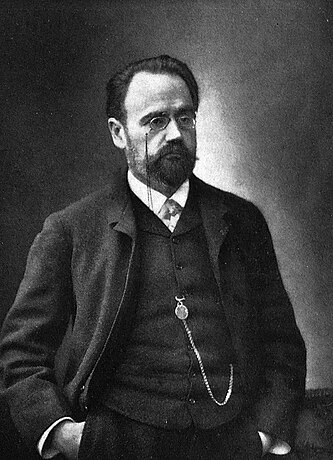


About Émile Zola
Émile Édouard Charles Antoine Zola (2 April 1840 – 29 September 1902) was a French novelist, playwright, journalist, the best-known practitioner of the literary school of naturalism, and an important contributor to the development of theatrical naturalism.
Best Émile Zola Quotes
Shortest
Earliest
Explore our curated collection of the most famous and impactful Émile Zola quotes.
“Respectable people... What bastards!”
“At every mouthful Nana swallowed an acre.”
“Everything is only a dream.”

“Prends garde, mon garçon, on en meurt.”
“La certitude d'avoir empêche de désirer.”

“« Du pain! est-ce que ça suffit, imbéciles ? »”
“When younger, he had been fun-loving to the point of tedium.”
“Des morts, des semences, et le pain poussait de la terre.”
“Blow the candle out, I don’t need to see what my thoughts look like.”
“When a man was honest in his dealings, you could forgive him the rest.”
“Nothing could be more heartrending than this mute and motionless despair.”

“Ne me regardez plus comme ça, parce que vous allez vous user les yeux.”
“One forges one's style on the terrible anvil of daily deadlines.”
“Great disorders lead to great conversions. Providence would have its opportunity.”
“Lorsque l'avenir est sans espoir, le présent prend une amertume ignoble.”
“In the sudden change that had come over her heart, she no longer recognised herself.”

“A ruined man fell from her hands like a ripe fruit, to rot on the ground by himself.”
Émile Zola Quotes by Topic
Find exactly what you are looking for by browsing this categorized list of Émile Zola quotes by topic.
Émile Zola on Artist
“The artist is nothing without the gift, but the gift is nothing without work.”

Émile Zola on Christianity
“Civilization will not attain perfection until the last stone, from the last church, falls on the last priest.”

Émile Zola on Paris
Émile Zola on Truth
“If you shut up truth and bury it under the ground, it will but grow, and gather to itself such explosive power that the day it bursts through it will blow up everything in its way.”

Émile Zola on Enlightenment (spiritual)
Émile Zola on Poultry
“When the goose was on the table, huge and golden and running with gravy, it was not begun upon all at once. A sort of respectful wonderment had silenced every tongue. There were winks and nods, as everybody pointed it out to everybody. What a devilish fine fat beast it was! what legs! what a breast!”

Émile Zola on Horses
“[S]ome men appeared drawing out the dead beast, a miserable mass of flesh still fastened in the rope net; they left it in the midst of the puddles of melting snow. The surprise was so great that no one prevented the men from returning and barricading the door afresh. They all recognized the horse, with his head bent back and stiff against the plank. Whispers ran around: "It's Trompette, isn't it? it's Trompette." It was, in fact, Trompette. Since his descent he had never become acclimatized. He remained melancholy, with no taste for his task, as though tortured by regret for the light. In vain Bataille, the doyen of the mine, would rub him with his ribs in his friendly way, softly biting his neck to impart to him a little of the resignation gained in his ten years beneath the earth. These caresses increased his melancholy, his skin quivered beneath the confidences of the comrade who had grown old in darkness; and both of them, whenever they met and snorted together, seemed to be grieving, the old one that he could no longer remember, the young one that he could not forget. At the stable they were neighbours at the manger, and lived with lowered heads, breathing in each other's nostrils, exchanging a constant dream of daylight, visions of green grass, of white roads, of infinite yellow light. Then, when Trompette, bathed in sweat, lay in agony in his litter, Bataille had smelled at him despairingly with short sniffs like sobs. He felt that he was growing cold, the mine was taking from him his last joy, that friend fallen from above, fresh with good odours, who recalled to him his youth in the open air. And he had broken his tether, neighing with fear, when he perceived that the other no longer stirred.”

What Émile Zola Said About Others
Discover personal opinions Émile Zola shared regarding contemporaries.
Émile Zola on Gustave Flaubert
“[L'Éducation sentimentale displays Flaubert's] nervous analysis of the smallest facts, a notation of life that is both meticulous and alive.”

Émile Zola on Camille Pissarro
“[Pissarro is] one of the three of four great painters of the time. He possesses solidity and breadth of touch, he paints handsomely, following tradition, like the masters.”
Quotes About Émile Zola
Gain deeper perspective through quotes about Émile Zola from others.
Paul Cézanne on Émile Zola 2 quotes
“I've ripped it to pieces - your portrait, you know. I tried to work on it this morning, but it went from bad to worse, so I destroyed it...”

Edwidge Danticat on Émile Zola
“Many older students also read the meticulous details of Émile Zola's downtrodden classes, which strongly echoed some of the realties of my own impoverished neighborhood.”

Anatole France on Émile Zola 2 quotes
“He was a moment in the conscience of Man.”

Emma Goldman on Émile Zola
“The real pioneers in ideas, in art and in literature have remained aliens to their time, misunderstood and repudiated. And if, as in the case of Zola, Ibsen and Tolstoy, they compelled their time to accept them, it was due to their extraordinary genius and even more so to the awakening and seeking of a small minority for new truths, to whom these men were the inspiration and intellectual support.”

Edmond de Goncourt on Émile Zola
“Then came the sweetly hypocritical compliments, the questions which are traps, the declarations which, if you follow him, he will suddenly interrupt with an 'Oh, my dear fellow, I wouldn't go as far as you!' followed by a virtual recantation of his previous arguments. In fact that art of talking without saying anything of which the Man of Medan is the master.”

Ross King on Émile Zola
“Adolphe Thiers... was named "chief of the executive power of the French Republic" and given the authority to negotiate the terms of surrender with Otto von Bismarck. ...Since escaping to Marseilles in September [1871] Zola had launched a newspaper, La Marseillaise... intended... as a voice of the proletariat. However, this organ ceased publication... when, ironically, the printers struck for higher wages [and] Zola, turning strike-buster, tried unsuccessfully to overcome by engaging a team of cut-rate printers from Arles. With his career as a newspaper proprietor thwarted, he began cultivating plans to secure... a [political] post... [e]ventually... secretary to an elderly and reputedly senile left-wing deputy in the National Assembly. He was also reporting on the National Assembly for La Cloche and fretting about the refugees occupying his apartment in Paris. "Has anything been ransacked or stolen?"”
John Rewald on Émile Zola
“In 1886 he published... L'Oeuvre, the hero of which was a painter. ...Zola's own notes are evidence that the portrait... was based partly on Manet and partly on Cézanne... [T]he hero, symbolizing an impressionist, is characterized as a painful mixture of genius and madness. The struggle between his great dreams and his insufficient creative power ends in utter failure, in suicide. ...Cézanne was deeply hurt ...[and] found there a moving echo of his own youth, which had been inseparable from that of Zola, but also the betrayal of his hopes. ...[H]e now saw irrevocably expressed in this novel: Zola's pity for those who had not achieved success, a pity more unbearable than contempt. Zola had not only failed to grasp the true meaning of the effort to which Cézanne and his comrades had devoted all their strength, he had lost all feeling of solidarity. From the secure castle he had built himself in Médan, he passed judgement upon his friends, embracing all the bourgeois prejudices against which they had once fought together. The letter which Cézanne wrote to Zola to thank him for sending a copy of L'Oeuvre was meloncholy and sad; it was... a letter of farewell, and the two friends were never to meet again.”
The Times on Émile Zola
“Zola's true crime has been in daring to rise to defend the truth and civil liberty... for that courageous defense of the primordial rights of the citizen, he will be honored wherever men have souls that are free...”

Donald E. Wilkes Jr. on Émile Zola
“Last month marked the centennial anniversary of the greatest newspaper article of all time... Written in the form of an open letter to the President of France, the 4,000 word article, entitled "J'Accuse!" (I Accuse!), rightly has been judged a "masterpiece" of polemics and a literary achievement "of imperishable beauty." No other newspaper article has ever provoked such public debate and controversy or had such an impact on law, justice, and society.”
Disputed Quotes
Quotes attributed to Émile Zola that are questionable.
“Civilization will not attain perfection until the last stone from the last church falls on the last priest!”
About Émile Zola
Émile Édouard Charles Antoine Zola (2 April 1840 – 29 September 1902) was a French novelist, playwright, journalist, the best-known practitioner of the literary school of naturalism, and an important contributor to the development of theatrical naturalism.