Link Copied!
Micere Githae Mugo Quotes (1942-2023)
Author, Poet, Activist


About Micere Githae Mugo
Micere Githae Mugo (born Madeleine Micere Githae; 1942 – 30 June 2023) was a playwright, author, activist, instructor and poet from Kenya. She was a literary critic and professor of literature in the Department of African American Studies at Syracuse University. She was forced into exile in 1982 from Kenya during the Daniel Arap Moi dictatorship for activism and moved to teach in Zimbabwe, and later the United States.
Best Micere Githae Mugo Quotes
Shortest
Earliest
Explore our curated collection of the most famous and impactful Micere Githae Mugo quotes.
“"He is a comrade; he was a friend when my own people did not want me."”

“You see, when you go into retirement, you tend to be out of the limelight and so, winning this Africa Writes Lifetime Achievement Award gives me a sense of belonging.”

“Both are creative, imaginative artistic expressions that use words and language to communicate: one is spoken, or verbal; the other one is written. So, there is a direct connection.”
“The spoken word is only a tiny bit of orature: it is poetic oracy and oracy is what I define as the skillful use of linguistic-expression to create utterance that renders itself to performance.”
“Don’t be discouraged by rejection, especially from publishers who say your work is not quite right for them. Have faith in your ability and very importantly, focus on learning, growing and developing.”
“The struggle for social justice badly needs the participation of young people. Global youth make up an estimated 1.3 billion of the world’s population and so they need to fight to ensure that they live in a just world.”
“Orature narratives on justice and injustice turned into life lessons that matured into the realization that if I am going to claim humanity for myself, I must seek to humanize others by reaching out to them in solidarity.”
“Writing can be a lifeline—especially when your existence has been denied, especially when you have been left on the margins, especially when your life and process of growth have been subjected to attempts at strangulation.”
“Learning about African orature and poetry is essential. Equally, Orature from the various global cultures of people of African origin, regardless of where they’re located, is a precious cultural heritage we cannot afford to ignore or neglect.”
“Writing, and even becoming a published writer, is not necessarily going to make you famous or make you money: in fact, you may very well die poor! You need to be in love with writing; let the impetus come from deep within you; feel it in your bones and in the very depths of your soul. Allow the message to possess you to the extent that you cannot hold it back.”
“I clearly remember my introduction to the African American heritage. I was in the school sanatorium with a bad attack of the flu when the headmistress came to see me, bringing copies of Richard Wright's Native Son, Black Boy and Trevor Huddleston's Naught For Your Comfort, I could not put any of the books down. Later on I looked for books by James Baldwin and Ralph Ellison. From then on I became a part-time student of African American Literature which was not offered on the colonial syllabus.”
What Micere Githae Mugo Said About Others
Discover personal opinions Micere Githae Mugo shared regarding contemporaries.
Micere Githae Mugo on Richard Wright
“I clearly remember my introduction to the African American heritage. I was in the school sanatorium with a bad attack of the flu when the headmistress came to see me, bringing copies of Wright's Native Son, Black Boy and Trevor Huddleston's Naught For Your Comfort, I could not put any of the books down.”

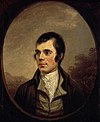
Micere Githae Mugo on Robert Burns
“I also liked the Romantic poets. Wordsworth, Keats, Burns and Blake were some of my favourites. There was something about their rebellious spirit against the evils of industrialization that moved me. Of course now, some of their pessimism, mysticism and limited critical realist visions make me quite uncomfortable.”
Micere Githae Mugo on William Wordsworth
“I also liked the Romantic poets. Wordsworth, Keats, Burns and Blake were some of my favourites. There was something about their rebellious spirit against the evils of industrialization that moved me. Of course now, some of their pessimism, mysticism and limited critical realist visions make me quite uncomfortable.”

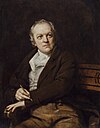
Micere Githae Mugo on William Blake
“I also liked the Romantic poets. Wordsworth, Keats, Burns and Blake were some of my favourites. There was something about their rebellious spirit against the evils of industrialization that moved me. Of course now, some of their pessimism, mysticism and limited critical realist visions make me quite uncomfortable.”
Micere Githae Mugo on John Keats
“I also liked the Romantic poets. Wordsworth, Keats, Burns and Blake were some of my favourites. There was something about their rebellious spirit against the evils of industrialization that moved me. Of course now, some of their pessimism, mysticism and limited critical realist visions make me quite uncomfortable.”

Quotes About Micere Githae Mugo
Gain deeper perspective through quotes about Micere Githae Mugo from others.
Remarked on Micere Githae Mugo
“Mugo is a poet with a mission in her society, which embraces the black race, the underprivileged class, and her specific female gender.She appears to speak for Africans and blacks, women, and the downtrodden.”
Renate Simson, talking about Micere on Micere Githae Mugo
“Professor Mugo is one of the leading lights of our department and the University, she also is quite influential in her native Kenya, whose own liberation struggles have figured prominently in her lifelong political activism.”
About Micere Githae Mugo
Micere Githae Mugo (born Madeleine Micere Githae; 1942 – 30 June 2023) was a playwright, author, activist, instructor and poet from Kenya. She was a literary critic and professor of literature in the Department of African American Studies at Syracuse University. She was forced into exile in 1982 from Kenya during the Daniel Arap Moi dictatorship for activism and moved to teach in Zimbabwe, and later the United States.