Link Copied!
Mehmed Talat Quotes (1874-1921)
Leader

About Mehmed Talat
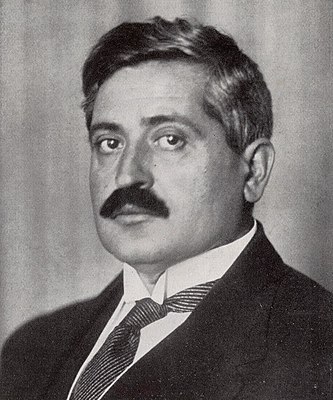
Mehmed Talat (September 1, 1874 – March 15, 1921), also known as "Talat Pasha", was one of the first important members of the Committee of Union and Progress. He played an increasingly important part in Ottoman politics becoming deputy for Edirne, minister and finally in 1917 Grand Vizier. During World War I, Mehmed Talat was the interior minister who ordered the arrest of Armenian leaders with a order on April 24, 1915 and sent a request for the Tehcir Law on May 29, 1915, which initiated the large scale Armenian Genocide. After the courts gave him a sentence of death in absentia, he left the empire with Enver and Djemal Pashas in 1918. He was assassinated in Berlin in 1921 as a response for evading the war crimes committed under his order.
Best Mehmed Talat Quotes
Shortest
Earliest
Explore our curated collection of the most famous and impactful Mehmed Talat quotes.
“We need to tranquilize our neighbors. State officials ought to remain in ignorance. Let the Armenians wait, opportunities will certainly come our way too. Turkey belongs only to the Turks.”
“Necessary preparations have been discussed and taken for the complete and fundamental elimination of this concern, which occupies an important place in the exalted state's list of vital issues.”
“I have accomplished more toward solving the Armenian problem in three months than Abdul Hamid accomplished in thirty years!”
“The Turkish elements here referred to were shortsighted, fanatical, and yet sincere in their belief. The public encouraged them, and they had the general approval behind them. They were numerous and strong.”
“These different blocs in the Turkish Empire...always conspired against Turkey; because of the hostility of these native peoples, Turkey has lost province after province - Greece, Serbia, Rumania, Bulgaria, Bosnia, Herzegovina, Egypt, and Tripoli. In this way, the Turkish Empire has dwindled almost to nothing.”

“It is confirmed that the Armenians should be transferred to the indicated region as communicated in the February 13th telegram. As the situation has been evaluated by the state, the probability of rebellion and protest indicates the need to take action. The increasing possibility of Armenian uprisings requires that every effective means of suppression needs to be applied.”

“The Porte, acting under the same obligation, and wishing to secure the safety of its army and its citizens, took energetic measures to check these uprisings. The deportation of the Armenians was one of these preventive measures. I admit also that the deportation was not carried out lawfully everywhere. In some places unlawful acts were committed. The already existing hatred among the Armenians and Mohammedans, intensified by the barbarous activities of the former, had created many tragic consequences. Some of the officials abused their authority, and in many places people took preventive measures into their own hands and innocent people were molested. I confess it. I confess, also, that the duty of the Government was to prevent these abuses and atrocities, or at least to hunt down and punish their perpetrators severely. In many places, where the property and goods of the deported people were looted, and the Armenians molested, we did arrest those who were responsible and punished them according to the law. I confess, however, that we ought to have acted more sternly, opened up a general investigation for the purpose of finding out all the promoters and looters and punished them severely.”

Mehmed Talat Quotes by Topic
Find exactly what you are looking for by browsing this categorized list of Mehmed Talat quotes by topic.
Mehmed Talat on Ottoman Empire
“These different blocs in the Turkish Empire...always conspired against Turkey; because of the hostility of these native peoples, Turkey has lost province after province - Greece, Serbia, Rumania, Bulgaria, Bosnia, Herzegovina, Egypt, and Tripoli. In this way, the Turkish Empire has dwindled almost to nothing.”

Mehmed Talat on Ottoman Greece
“These different blocs in the Turkish Empire...always conspired against Turkey; because of the hostility of these native peoples, Turkey has lost province after province - Greece, Serbia, Rumania, Bulgaria, Bosnia, Herzegovina, Egypt, and Tripoli. In this way, the Turkish Empire has dwindled almost to nothing.”

Quotes About Mehmed Talat
Gain deeper perspective through quotes about Mehmed Talat from others.
Niall Ferguson on Mehmed Talat
“To this day, the Turkish government refuses to acknowledge the Armenian genocide. This is strange, since the historical evidence of what happened is plentiful. Western observers like the US ambassador in Constantinople, Henry Morgenthau, wrote detailed reports about what was being done - including the telling statement of Mehmed Talaat Pasha, the Interior Minister, that all the Armenians had to perish because 'those who were innocent today might be guilty tomorrow'. Western missionaries too wrote harrowing accounts of what they witnessed. Their testimony formed an important part of the wartime report on 'The Treatment of the Armenians' compiled by Viscount Bryce, who had also investigated the German atrocities in Belgium in 1914.”

Simon Sebag Montefiore on Mehmed Talat
“Mehmed Talat Pasha was one of the ‘Young Turks’, the nationalistic reformers who seized power in the Ottoman empire in 1908, but as one of the ‘Three Pashas’ who dominated the Turkish government he was the key architect of the Armenian massacres perpetrated between 1915 and 1916, which cost the lives of over 1 million people.”
About Mehmed Talat
Mehmed Talat (September 1, 1874 – March 15, 1921), also known as "Talat Pasha", was one of the first important members of the Committee of Union and Progress. He played an increasingly important part in Ottoman politics becoming deputy for Edirne, minister and finally in 1917 Grand Vizier. During World War I, Mehmed Talat was the interior minister who ordered the arrest of Armenian leaders with a order on April 24, 1915 and sent a request for the Tehcir Law on May 29, 1915, which initiated the large scale Armenian Genocide. After the courts gave him a sentence of death in absentia, he left the empire with Enver and Djemal Pashas in 1918. He was assassinated in Berlin in 1921 as a response for evading the war crimes committed under his order.