Link Copied!
Meenakshi Jain Quotes (0-)
King, Scientist

Best Meenakshi Jain Quotes
Shortest
Earliest
Explore our curated collection of the most famous and impactful Meenakshi Jain quotes.
“So complete was the destruction of Banaras that not a single pre-eighteenth century temple survived. p 124”

“With no king to protect them, for centuries they restored demolished temples and deities, till not a glimmer of hope remained...”
“He [Tipu Sultan] sponsored the construction of the Ala Mosque within the fort of Seringapatam, in which pillars of Hindu origin are clearly visible. p 65”
“The memory of Mahakaleshwar had remained undimmed over time; the present structure was built almost five centuries after the destruction by Iltutmish. p 142”
“In India, the twain of faith and polity never met. It was not within royal purview to supervise the compliance of religious obligations by the citizenry. Indeed, there were no religious duties mandatory for all. p. 3”
“The belligerence of Left academics was at odds with their inability to validate and authenticiate their assertions in Court. On the very issues they continue to raise outside, they had been found on weak footing in the Allahabad High Court. (3)”
“The Rohillas displayed their iconoclastic fervour during the campaing, melting all the silver and gold idols they could seize. In the interests of the Himalayan trade and the pilgrimage traffic, the Kumaun rajas maintained cordial relations with them. p. 70”
“Thus far neither Dr. Roy, nor Professor Prasad, nor Professor Irfan Habib have responded to the publication of the photograph of the Treta Ka Thakur inscription, which falsifies the arguments they have been persistently advocating for over two decades. (112)”
“Numerous other shrines, too many to enumerate, were displaced, reduced in size, or simply erased. The Banaras that was reconstructed in the eighteenth century was markedly different from the Banaras destroyed. Sacred geography had changed beyond recognition. p 105”

“The Bindu Madhava, the most important Vishnu temple in Varanasi, was demolished in 1669 and a mosque constructed in its place. The temple now bearing the name Bindu Madhava is a modest structure in the shadow of the mosque, but continues the traditions associated with the site.”

“Shockingly, Sita Ram Roy subseque ntly admitted in Court that at the time of writing his article he had "not seen full photograph, estampage of the inscription or its decipherment". Yet he had no qualms in pontificating on a matter of such importance in the Ayodhya dispute. (106)”
“In Braj, only two pre-Mughal Hindu monuments are still standing, the Assi Khambha at Mahaban and the Chaurasi Khambha at Kaman ; still standing because they were refashioned into mosques. Everything else, Buddhist, Jain, Hindu was abandoned and left to collapse, or destroyed. (p 34, citing Enhvistle 1987: 134)”

“The Mysore Archaeological Survey contends that at least three temples within his realm were destroyed on Tipu's orders. The Harihareswara temple at Harihar was looted and a section of it converted into a mosque, while the Varahaswami temple in Seringapatam and the Odakaraya temple in Hospet were both destroyed. p. 68”
“In multiple cases, the reconstructed shrines had unknown patrons, pointing to the feebleness of the theory that restricted temples to an alliance of king and deity. Intriguingly, mosques built on temple sites often retained the sacred names — Bijamandal mosque, Lat masjid, Atala masjid, Gyanvapi mosque, and not to forget, masjid-i-janamsthan.”

““No evidence whatsoever has been proffered of continued Muslim occupation Babri Masjid, while the uninterrupted presence of Hindu devotees has been attested by several sources. Babri Masjid finds no mention in the revenue records of the Nawabi and British periods, nor was any Waqf ever created for its upkeep. No Muslim filed an FIR when the image of Sri Rama was placed under the central dome on 23rd December 1949.” (p.144)”
““So why has the matter dragged on for so long? Can a handful of historians be held accountable for stalling resolution of what is essentially a settled matter? Their voluble assertions on Babri Masjid have all been found to be erroneous, yet there has been no public retraction. Are they liable for vitiating social harmony over the issue? If the nation has to move on, honest answers must be found to these questions.” (p.145)”

“Several other sacred sites in Rajasthan suffered severe assault. D.V. Sharma, who excavated in the Sikri region (ancient Seka), established that it had been a major temple-town and cultural centre like Osian, Gwalior, Vidisha, and Khajuraho. He reconstructed the sacred culture of several temple towns in the area, like Chichana, Chauma-Shahpur, Imlaoda, Churyari, Rasulpur, Jautana, Kiraoli, Dura, and Kagarol on the periphery, and Sikri at the nucleus. p 125”
“In an astonishing act of daring, a handful of Left historians attempted to counter a centuries old belief, and vociferously assert that Babri Masjid was built on vacant land. They remain undeterred despite the mounting evidence stacked against them. Some of these historians even appeared as experts of the Babri Masjid Action Committee (BMAC) during negotiations between the Vishwa Hindu Parishad (VHP), BMAC, and the Government in 1990-1991. Yet throughout they have maintained the charade of being "independent historians." (p 5)”
“On Muhammad Ghuri, Tarinicharan says that his soldiers were 'inhabitants of the hills, hardy and skilled in warfare. By comparison, the Hindu kings were disunited and their soldiers relatively docile and undisciplined. Consequently, it was only to be expected that Muhammad would win easily. But that is not what happened. Virtually no Hindu ruler surren- dered his freedom without a mighty struggle. In particular, the Rajahputra were never defeated. ‘The rise, consolidation and collapse of Muslim rule have been completed, but the Rajahputra remain free to this day.'”

“Notwithstanding this politico-cultural reality, early Indian nationalists sought to inculcate a spirit of inclusivity and accommodation into the emergent socio-political discourse. As the freedom movement developed however, the Muslim League articulated an ideology committed wholly to its Islamic fountainhead and stressed the need to maintain the community’s political dominance in the country. The League’s refusal or failure to come to terms with the forces of modernization ushered in by the British further pushed it on a trajectory away from the national mainstream.”
“A scholar of medieval Indian history, Meenakshi Jain accurately captures a core theological reason for the Caliph’s glowing praise of Mahmud: Mahmud’s assault on Somanatha electrified the Muslim world because it was viewed as a sequel to the Prophet’s action at Kaba. Muslims identified the Somanatha idol as that of Manat62, believed to have been ferreted out of Mecca just prior to the Prophet’s attack on its temple. By destroying Somanatha, therefore, Mahmud was virtually completing the Prophet’s work; hence the act was hailed as the crowning glory of Islam over idolatry.”
“The Bindu Madhava temple, commended by Tulasi Das in several poems, was amongn the tallest and finest buildings atop the Panchaganga Ghat. Vandalized several times between the twelfth and sixteenth centuries, it was rebuilt the last time by Raja Man Singh. The French traveler, Tavernier, described it as the most imposing structure along the Banaras waterfront. Aurangzeb had a huge mosque constructed at the site, which still dominates the skyline at the Ghat. A temple bearing that name was constructed in the shadow of the mosque. It is a non-descript structure, but continues the traditions associated with the site.”
“Indian Marxists, notwithstanding their claims to originality, have always been faithful followers of Western intellectual trends, often long after these were dated in the west. Thus, well after Western academics expounded upon European feudalism, Indian Marxists continue to search for point-by-point parallels between post-Gupta India and the West. Similarly the once-in-vogue notion of 'imagined' communities continues to bewitch our Marxist brethren who remain committed to fitting the history of the subcontinent to this maxim. Only the western rethinking on old patriotisms underpinning the new nationalisms has yet to win the allegiance of Indian Marxists.”
“But what is truly astounding is Kishore Kunal's exposure on the Treta Ka Thakur inscription housed in Lucknow Museum. For over two decades, Left historians, principally Professor Irfan Habib, mounted a forceful campaign claiming that this inscription was stolen from Lucknow Museum and planted at Ayodhya during the chaos of 6th December. Now for the first time a photograph of the Treta Ka Thakur inscription has been published. It conclusively establishes that the Treta Ka Thakur inscription and the Vishnu Hari inscription found in 1992 are two distinct epigraphs and that there had been no substitution.
But does evidence really matter? Evidence may come; evidence may go; bu Left historians "go on forever". (p 7)”
But does evidence really matter? Evidence may come; evidence may go; bu Left historians "go on forever". (p 7)”

“In several cases, temple structures were burnt or demolished stone by stone. All materials that could be used went into the construction of churches. Metal images were melted and used to make church ornaments. In the Salcete territory, all temples in 58 of the 76 villages were destroyed. The Jesuits estimated the big temples to number 280, while the small temples were “innumerable.”The wood of the Lakshmi temple in Sancoale village was utilized in making the church of St. Lourenco. The images of Daro (Dhaddo), Pormando (Paramameda), Narana (Narayana) Baguaonte (Bhagavati), Hesporo (Ishwara, Shiva) were burnt, beaten to pulp, and thrown in the river,
A guru (guru of the temple is the gentile who cleans the temple and sweeps it, who decorates it and adores its idols; he lives next to the temple and eats the offerings) cried so much as it is possible to cry for the death of the good king. p 218”
A guru (guru of the temple is the gentile who cleans the temple and sweeps it, who decorates it and adores its idols; he lives next to the temple and eats the offerings) cried so much as it is possible to cry for the death of the good king. p 218”
Meenakshi Jain Quotes by Topic
Find exactly what you are looking for by browsing this categorized list of Meenakshi Jain quotes by topic.
Meenakshi Jain on Ayodhya dispute 2 quotes
“[Irfan Habib's] commitment to the Babri Masjid could be gauged from the fact that under his Chairmanship, ICHR was accused of functioning as a wing of the BMAC. Suraj Bhan admitted in Court that during Professor Habib's tenure, ICHR sanctioned him a grant for "exploration" at Ayodhya.”
Meenakshi Jain on Archaeology of Ayodhya
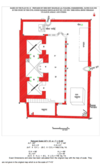
“Plainly stated, the ASI Report conclusively established that Babri Masjid was not built on virgin land and that the remains found at the site were of religious structures... In other words, the excavations revealed that Babri Masjid was erected over, and with full knowledge of a pre-existing structure... parts of earlier temples and religious members of the last temple were used in the walls of the mosque.”

Meenakshi Jain on Babri Masjid
““No evidence whatsoever has been proffered of continued Muslim occupation Babri Masjid, while the uninterrupted presence of Hindu devotees has been attested by several sources. Babri Masjid finds no mention in the revenue records of the Nawabi and British periods, nor was any Waqf ever created for its upkeep. No Muslim filed an FIR when the image of Sri Rama was placed under the central dome on 23rd December 1949.” (p.144)”

Meenakshi Jain on All-India Muslim League
“Notwithstanding this politico-cultural reality, early Indian nationalists sought to inculcate a spirit of inclusivity and accommodation into the emergent socio-political discourse. As the freedom movement developed however, the Muslim League articulated an ideology committed wholly to its Islamic fountainhead and stressed the need to maintain the community’s political dominance in the country. The League’s refusal or failure to come to terms with the forces of modernization ushered in by the British further pushed it on a trajectory away from the national mainstream.”

What Meenakshi Jain Said About Others
Discover personal opinions Meenakshi Jain shared regarding contemporaries.
Meenakshi Jain on Irfan Habib 2 quotes
“His commitment to the Babri Masjid could be gauged from the fact that under his Chairmanship, ICHR was accused of functioning as a wing of the BMAC. Suraj Bhan admitted in Court that during Professor Habib's tenure, ICHR sanctioned him a grant for "exploration" at Ayodhya.”

Meenakshi Jain on K. S. Lal
“K.S. Lal provided a painstakingly researched account of the Khalji period, which remains a standard reference.”
Quotes About Meenakshi Jain
Gain deeper perspective through quotes about Meenakshi Jain from others.
K. Elst on Meenakshi Jain
“After coming to power in 1998, the BJP-dominated government has made a half-hearted and not always very competent attempt to effect glasnost (openness, transparency) at least in the history textbooks. They ordered the writing of new history textbooks for the schools. This led the Marxists to start a furious hate campaign against the so-called “saffronization” (hinduization) of history. Most of the new textbooks have rightly been criticized for being written in poor English and riddled with errors,-- the result of both the Hindu movement's long-standing anti-intellectual prejudice and the systematic exclusion of aspiring pro-Hindu scholars from the institutions by the ruling Marxists. The one major exception, however, is precisely the volume on the Muslim conquest and rule, Medieval India (class XI) by Prof. Meenakshi Jain, an impeccable text systematically based on primary sources.”
Koenraad Elst on Meenakshi Jain
“But the BJP does not have a good record in this regard. In ca. 2002, it tried to achieve an overhaul of the history textbooks officially recommended to the Indian schools, but only managed to cover itself in ridicule. The textbook reform became a horror show of incompetence. The best of the textbooks, probably the only one up to standard, was by Dr. Meenakshi Jain, therefore also the main attractor of specious secularist criticisms, as the other textbooks were already considered as rendered harmless by ridicule.”

About Meenakshi Jain
Meenakshi Jain is an Indian political scientist and historian.