Link Copied!
Max Planck Quotes (1858-1947)
Physicist, King, Theologian
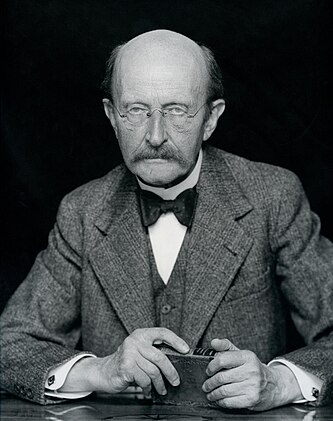







About Max Planck
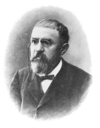
Max Karl Ernst Ludwig Planck (23 April 1858 – 4 October 1947) was a German theoretical physicist whose discovery of energy quanta won him the Nobel Prize in Physics in 1918.
Best Max Planck Quotes
Shortest
Earliest
Explore our curated collection of the most famous and impactful Max Planck quotes.
“Experiments are the only means of knowledge at our disposal. The rest is poetry, imagination.”

“The energy and entropy of the world have no meaning, because such quantities admit of no accurate definition.”

“Farsighted theologians are now working to mine the eternal metal from the teachings of Jesus and to forge it for all time.”

“It is not the possession of truth, but the success which attends the seeking after it, that enriches the seeker and brings happiness to him.”

“The first and most important quality of all scientific ways of thinking must be the clear distinction between the outer object of observation and the subjective nature of the observer.”


“I regard consciousness as fundamental. I regard matter as derivative from consciousness. We cannot get behind consciousness. Everything that we talk about, everything that we regard as existing, postulates consciousness.”

“Again and again the imaginary plan on which one attempts to build up that order breaks down and then we must try another. This imaginative vision and faith in the ultimate success are indispensable. The pure rationalist has no place here.”
“Anybody who has been seriously engaged in scientific work of any kind realizes that over the entrance to the gates of the temple of science are written the words: Ye must have faith. It is a quality which the scientist cannot dispense with.”
“New scientific ideas never spring from a communal body, however organized, but rather from the head of an individually inspired researcher who struggles with his problems in lonely thought and unites all his thought on one single point which is his whole world for the moment.”
“But science sets out confidently on the endeavor finally to know the thing in itself, and even though we realize that this ideal goal can never be completely reached, still we struggle on towards it untiringly. And we know that at every step of the way each effort will be richly rewarded.”
“In other words, the fundamental principles and indispensable postulates of every genuinely productive science are not based on pure logic but rather on the metaphysical hypothesis — which no rules of logic can refute — that there exists an outer world which is entirely independent of ourselves. It is only through the immediate dictate of our consciousness that we know that this world exists. And that consciousness may to a certain degree be called a special sense.”
“That God existed before there were human beings on Earth, that He holds the entire world, believers and non-believers, in His omnipotent hand for eternity, and that He will remain enthroned on a level inaccessible to human comprehension long after the Earth and everything that is on it has gone to ruins; those who profess this faith and who, inspired by it, in veneration and complete confidence, feel secure from the dangers of life under protection of the Almighty, only those may number themselves among the truly religious.”

“Experimenters are the shocktroops of science… An experiment is a question which science poses to Nature, and a measurement is the recording of Nature’s answer. But before an experiment can be performed, it must be planned – the question to nature must be formulated before being posed. Before the result of a measurement can be used, it must be interpreted – Nature’s answer must be understood properly. These two tasks are those of theorists, who find himself always more and more dependent on the tools of abstract mathematics.”

“It [science] has as its highest principle and most coveted aim the solution of the problem to condense all natural phenomena which have been observed and are still to be observed into one simple principle, that allows the computation of past and more especially of future processes from present ones. ...Amid the more or less general laws which mark the achievements of physical science during the course of the last centuries, the principle of least action is perhaps that which, as regards form and content, may claim to come nearest to that ideal final aim of theoretical research.”

“Under these conditions it is no wonder, that the movement of atheists, which declares religion to be just a deliberate illusion, invented by power-seeking priests, and which has for the pious belief in a higher Power nothing but words of mockery, eagerly makes use of progressive scientific knowledge and in a presumed unity with it, expands in an ever faster pace its disintegrating action on all nations of the earth and on all social levels. I do not need to explain in any more detail that after its victory not only all the most precious treasures of our culture would vanish, but — which is even worse — also any prospects at a better future.”
“Als Physiker, der sein ganzes Leben der nüchternen Wissenschaft, der Erforschung der Materie widmete, bin ich sicher von dem Verdacht frei, für einen Schwarmgeist gehalten zu werden. Und so sage ich nach meinen Erforschungen des Atoms dieses: Es gibt keine Materie an sich. Alle Materie entsteht und besteht nur durch eine Kraft, welche die Atomteilchen in Schwingung bringt und sie zum winzigsten Sonnensystem des Alls zusammenhält. Da es im ganzen Weltall aber weder eine intelligente Kraft noch eine ewige Kraft gibt—es ist der Menschheit nicht gelungen, das heißersehnte Perpetuum mobile zu erfinden—so müssen wir hinter dieser Kraft einen bewußten intelligenten Geist annehmen. Dieser Geist ist der Urgrund aller Materie.”
“Eine neue wissenschaftliche Wahrheit pflegt sich nicht in der Weise durchzusetzen, daß ihre Gegner überzeugt werden und sich als belehrt erklären, sondern vielmehr dadurch, daß ihre Gegner allmählich aussterben und daß die heranwachsende Generation von vornherein mit der Wahrheit vertraut gemacht ist. … Eine neue große wissenschaftliche Idee pflegt sich nicht in der Weise durchzusetzen, daß ihre Gegner allmählich überzeugt und bekehrt werden — daß aus einem Saulus ein Paulus wird, ist eine große Seltenheit —, sondern vielmehr in der Weise, dass die Gegner allmählich aussterben und daß die heranwachsende Generation von vornherein mit der Idee vertraut gemacht wird. Auch hier heißt es wieder: Wer die Jugend hat, der hat die Zukunft.”
“I also knew the formula that expresses the energy distribution in the normal spectrum. A theoretical interpretation therefore had to be found at any cost, no matter how high. It was clear to me that classical physics could offer no solution to this problem, and would have meant that all energy would eventually transfer from matter to radiation. ...This approach was opened to me by maintaining the two laws of thermodynamics. The two laws, it seems to me, must be upheld under all circumstances. For the rest, I was ready to sacrifice every one of my previous convictions about physical laws. ...[One] finds that the continuous loss of energy into radiation can be prevented by assuming that energy is forced at the outset to remain together in certain quanta. This was purely a formal assumption and I really did not give it much thought except that no matter what the cost, I must bring about a positive result.”

Max Planck Quotes by Topic
Find exactly what you are looking for by browsing this categorized list of Max Planck quotes by topic.
Max Planck on Scientists
“A scientist is happy, not in resting on his attainments but in the steady acquisition of fresh knowledge.”

Max Planck on Future
Max Planck on Omniscience
“And if we ascribe to God, in addition to His omnipotence and omniscience, also the attributes of goodness and love, recourse to Him produces an increased feeling of safety ...”

Max Planck on Existence
Max Planck on Science
“A new scientific truth does not triumph by convincing its opponents and making them see the light, but rather because its opponents eventually die, and a new generation grows up that is familiar with it.”
What Max Planck Said About Others
Discover personal opinions Max Planck shared regarding contemporaries.
Max Planck on James Clerk Maxwell
“He achieved greatness unequalled.”

Max Planck on Albert Einstein
“Summing up, we may say that there is hardly one among the great problems, in which modern physics is so rich, to which Einstein has not made an important contribution. That he may sometimes have missed the target in his speculations, as, for example, in his hypothesis of light quanta, cannot really be held too much against him, for it is not possible to introduce fundamentally new ideas, even in the most exact sciences, without occasionally taking risk.”

Quotes About Max Planck
Gain deeper perspective through quotes about Max Planck from others.
Scientific Autobiography and Other Papers on Max Planck
“Both religion and science require a belief in God. For believers, God is in the beginning, and for physicists He is at the end of all considerations… To the former He is the foundation, to the latter, the crown of the edifice of every generalized world view.”
Source on Max Planck 4 quotes
View all 4 quotes on Source →A. D'Abro on Max Planck 2 quotes
“There is no particular mystery about mathematical analysis; its only distinguishing feature is that it is more trustworthy, more precise, and permits us to proceed farther and along safer lines. Consider, for example, the well-known change of colour from red to white displayed by the light radiated through an aperture made in a heated enclosure, as the temperature increases. From this elementary fact of observation Planck, thanks to mathematical analysis, was able to deduce the existence of light quanta and thence the possibility that all processes of change were discontinuous, and that a body could only rotate with definite speeds. Obviously, commonplace reasoning unaided by mathematics would never have led us even to suspect these extraordinary results.”
Freeman Dyson on Max Planck
“Besides inventing quantum theory, Planck had made another great contribution to science by welcoming and generously supporting the young Albert Einstein. In 1905, when Einstein, then an unknown employee of the Swiss patent office in Bern, sent five revolutionary papers to the physics journal that Planck edited in Berlin, Planck immediately recognized them as works of genius and published them quickly without sending them to referees. He did not agree with all of Einstein’s ideas, but he published all of them. He helped Einstein to move ahead in the academic world, and in 1913 invited him to a full professorship in Berlin. For twenty years Planck and Einstein were friends and colleagues in Berlin, leaders of a scientific community that remained creative and vibrant, in spite of the political and economic disarray that surrounded them. Planck was the rock-solid central figure of German science, with the vision to promote the unorthodox and unpatriotic citizen-of-the-world Einstein.”
Albert Einstein on Max Planck 3 quotes
“A man to whom it has been given to bless the world with a great creative idea has no need for the praise of posterity. His very achievement has already conferred a higher boon upon him.”


Misattributed Quotes
Quotes mistakenly credited to Max Planck
“No burden is so heavy for a man to bear as a succession of happy days.”
About Max Planck
Max Karl Ernst Ludwig Planck (23 April 1858 – 4 October 1947) was a German theoretical physicist whose discovery of energy quanta won him the Nobel Prize in Physics in 1918.