Link Copied!
Max Born Quotes (1882-1970)
Physicist, Mathematician
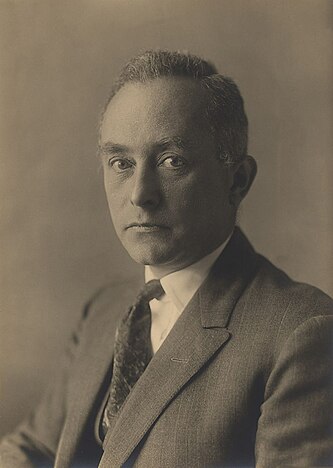
About Max Born
Max Born (11 December 1882 – 5 January 1970) was a German physicist and mathematician who became a British citizen, who was instrumental in the development of quantum mechanics. He also made contributions to solid-state physics and optics and supervised the work of a number of notable physicists in the 1920s and 30s. He shared with Walther Bothe the 1954 Nobel Prize in Physics, and was the grandfather of Olivia Newton-John.
Best Max Born Quotes
Shortest
Earliest
Explore our curated collection of the most famous and impactful Max Born quotes.
“It is true that many scientists are not philosophically minded and have hitherto shown much skill and ingenuity but little wisdom.”

“The belief that there is only one truth and that oneself is in possession of it, seems to me the deepest root of all that is evil in the world.”
“The continuity of our science has not been affected by all these turbulent happenings, as the older theories have always been included as limiting cases in the new ones.”
“Intellect distinguishes between the possible and the impossible; reason distinguishes between the sensible and the senseless. Even the possible can be senseless.”
“If God has made the world a perfect mechanism, He has at least conceded so much to our imperfect intellect that in order to predict little parts of it, we need not solve innumerable differential equations, but can use dice with fair success.”
“I am now convinced that theoretical physics is actually philosophy. It has revolutionized fundamental concepts, e.g., about space and time (relativity), about causality (quantum theory), and about substance and matter (atomistics). It has taught us new methods of thinking (complementarity), which are applicable far beyond physics.”
“I believe there is no philosophical high-road in science, with epistemological signposts. No, we are in a jungle and find our way by trial and error, building our road behind us as we proceed. We do not find signposts at crossroads, but our own scouts erect them, to help the rest.”
“There are metaphysical problems, which cannot be disposed of by declaring them meaningless. For, as I have repeatedly said, they are "beyond physics" indeed and demand an act of faith. We have to accept this fact to be honest. There are two objectionable types of believers: those who believe the incredible and those who believe that "belief" must be discarded and replaced by "the scientific method." ”
“The scientist's urge to investigate, like the faith of the devout or the inspiration of the artist, is an expression of mankind's longing for something fixed, something at rest in the universal whirl: God, Beauty, Truth.
Truth is what the scientist aims at. He finds nothing at rest, nothing enduring, in the universe. Not everything is knowable, still less predictable. But the mind of man is capable of grasping and understanding at least a part of Creation; amid the flight of phenomena stands the immutable pole of law.”
Truth is what the scientist aims at. He finds nothing at rest, nothing enduring, in the universe. Not everything is knowable, still less predictable. But the mind of man is capable of grasping and understanding at least a part of Creation; amid the flight of phenomena stands the immutable pole of law.”

“In combination with other infernal contraptions, like rockets to deliver bombs at large distances, chemical, biological and radioactive poisons, such a war must mean a degree of human suffering and degradation which is beyond the power of imagination. No country would be immune, but those with highly developed industry would suffer most. It is very doubtful whether our technological civilization would survive such a catastrophe.
One may be inclined to regard this as no great loss, but as a just punishment for its shortcomings and sins: the lack of productive genius in art and literature, the neglect of the moral teachings of religion and philosophy, the slowness to abandon outdated political conceptions, like national sovereignty.''' Yet we are all involved in this tragedy, and the instinct of self-preservation, the love of our children, makes us think about a way of salvation.”
One may be inclined to regard this as no great loss, but as a just punishment for its shortcomings and sins: the lack of productive genius in art and literature, the neglect of the moral teachings of religion and philosophy, the slowness to abandon outdated political conceptions, like national sovereignty.''' Yet we are all involved in this tragedy, and the instinct of self-preservation, the love of our children, makes us think about a way of salvation.”
“America has grown by expansion in a practical vacuum; the pioneers of the West had to overcome terrific natural obstacles, but negligible human resistance. The Russia of today had to conquer not only natural but human difficulties: she had to break up the rotten system of the Czars and to assimilate backward Asiatic tribes; now she has set herself the task of bringing her brand of modernization to the ancient civilizations of the Far East. For this purpose it is indispensable to have a well-defined doctrine full of slogans, which appeals to the needs and instincts of the poverty-stricken masses. Thus one understands the power which Marx's philosophy has gained in the East.
What can we scientists do in this conflict? We can join the spiritual, religious, philosophical forces, which reject war on ethical grounds. We can even attack the ideological foundations of the conflict itself. For science is not only the basis of technology but also the material for a sound philosophy.”
What can we scientists do in this conflict? We can join the spiritual, religious, philosophical forces, which reject war on ethical grounds. We can even attack the ideological foundations of the conflict itself. For science is not only the basis of technology but also the material for a sound philosophy.”
“I must give some attention to the delicate question of religion, on which I have touched already. In my father's generation this question still was discussed with passion. Since then a sort of truce has existed in the countries of the West, while in the communist states of the East atheism has been made into the State religion. It is not advisable to blow on the embers of such controversies. But as I am talking about the limitations of our physical world picture I cannot but say that I do not believe in transgressions of the laws of nature. As these laws are of a statistical nature, and therefore allow deviations from the norm, I must define more clearly what I mean. The statistical deviations themselves obey certain laws. The miraculous events of religious tradition, however, are of a different kind, they lie on a different plane altogether; they are meant to prove something lying entirely beyond scientific consideration, such as the power of prayer, the intervention of divine power for or against certain men or nations.”
“The dance of atoms, electrons and nuclei, which in all its fury is subject to God's eternal laws, has been entangled with another restless Universe which may well be the Devil's: the human struggle for power and domination, which eventually becomes history. My optimistic enthusiasm about the disinterested search for truth has been severely shaken. I wonder at my simplemindedness when I re-read what I said on the modern fulfilment of the alchemists dream: "Now however, the motive is not the lust for gold, cloaked by the mystery of magic arts, but the scientists' pure curiosity. For it is clear from the beginning that we may not expect wealth too." Gold means power, power to rule and to have a big share in the riches of this world. Modern alchemy is even a short-cut to this end, it provides power directly; a power to dominate and to threaten and hurt on a scale never heard of before. And this power we have actually seen displayed in ruthless acts of warfare, in the devastation of whole cities and the destruction of their population.”

“I... refer to the... Waynflete Lectures given by... E. D. Adrian, on The Physical Background of Perception because the results of physiological investigations seem... in perfect agreement with my suggestion about the meaning of reality in physics. The messages which the brain receives have not the least similarity with the stimuli. They consist in pulses of given intensities and frequencies, characteristic for the transmitting nerve-fiber, which ends in a definite place in the cortex. All the brain 'learns' (I use... the objectionable language of the 'disquieting figure of a little hobgoblin sitting... aloft in the cerebral hemisphere') is a distribution or a 'map' of pulses. From this information it produces the image of the world by a process which can metaphorically be called a consummate place of combinatorial mathematics: it sorts out of the maze of indifferent and varying signals invariant shapes and relations which form the world of ordinary experience.”
“Can we call something with which the concepts of position and motion cannot be associated in the usual way, a thing, or a particle? And if not, what is the reality which our theory has been invented to describe?
The answer to this is no longer physics, but philosophy. … Here I will only say that I am emphatically in favour of the retention of the particle idea. Naturally, it is necessary to redefine what is meant. For this, well-developed concepts are available which appear in mathematics under the name of invariants in transformations. Every object that we perceive appears in innumerable aspects. The concept of the object is the invariant of all these aspects. From this point of view, the present universally used system of concepts in which particles and waves appear simultaneously, can be completely justified. The latest research on nuclei and elementary particles has led us, however, to limits beyond which this system of concepts itself does not appear to suffice. The lesson to be learned from what I have told of the origin of quantum mechanics is that probable refinements of mathematical methods will not suffice to produce a satisfactory theory, but that somewhere in our doctrine is hidden a concept, unjustified by experience, which we must eliminate to open up the road.”
The answer to this is no longer physics, but philosophy. … Here I will only say that I am emphatically in favour of the retention of the particle idea. Naturally, it is necessary to redefine what is meant. For this, well-developed concepts are available which appear in mathematics under the name of invariants in transformations. Every object that we perceive appears in innumerable aspects. The concept of the object is the invariant of all these aspects. From this point of view, the present universally used system of concepts in which particles and waves appear simultaneously, can be completely justified. The latest research on nuclei and elementary particles has led us, however, to limits beyond which this system of concepts itself does not appear to suffice. The lesson to be learned from what I have told of the origin of quantum mechanics is that probable refinements of mathematical methods will not suffice to produce a satisfactory theory, but that somewhere in our doctrine is hidden a concept, unjustified by experience, which we must eliminate to open up the road.”
Max Born Quotes by Topic
Find exactly what you are looking for by browsing this categorized list of Max Born quotes by topic.
Max Born on Experience 2 quotes
“The generation to which EINSTEIN, BOHR and I belong, was taught that there exists an objective physical world, which unfolds itself according to immutable laws independent of us; we are watching this process as the audience watches a play in a theatre. still believes that this should be the relation between the scientific observer and his subject. Quantum mechanics, however, interprets the experience gained in atomic physics in a different way.”

Max Born on Reality 2 quotes
“Whoever believes that the only important reality is the realm of ideas, of the spirit, should not occupy himself with science. The scientist must be a realist, he must accept his sense impressions as more than hallucinations, as messages of a real outer world. In disentangling these messages he uses ideas of a very abstract kind, group theory in spaces of many or even infinitely many dimensions and things like that, but finally he has his observational invariants representing real things with which he learns to operate like any craftsman with his wood or metal.”
Max Born on Natural philosophy 2 quotes
“An unrestricted belief in causality leads necessarily to the idea that the world is an automaton of which we ourselves are only little cog-wheels. This means materialistic determinism. It resembles very much that religious determinism accepted by different creeds, where the actions of men are believed to be determined from the beginning by a ruling of God. ...The notion of divine predestination clashes with the notion of free will, in the same way as the assumption of an endless chain of natural causes. On the other hand, an unrestricted belief in chance is impossible, as it cannot be denied that there are a great many regularities in the world; hence there can be, at most, 'regulated accident'. One has to postulate laws of chance which assume the appearance of laws of nature or laws for human behaviour. ...Our philosophy is dualistic in this respect; nature is ruled by laws of cause and laws of chance in a certain mixture. How is this possible? Are there no logical contradictions? Can this mixture of ideas be cast into a consistent system in which all phenomena can be adequately described or explained? What do we mean by such an explanation if the feature of chance is involved ? What are the irreducible or metaphysical principles involved? Is there any room in this system for free will or for the interference of deity? ...The statement, frequently made, that modern physics has given up causality is entirely unfounded. Modern physics, it is true, has given up or modified many traditional ideas; but it would cease to be a science if it had given up the search for the causes of phenomena. ...I shall survey the development of physical thought, dwelling here and there on special points of interest, and I shall try to apply the results to philosophy in general.”

Max Born on Belief
“Einstein's letters teach us impressively the fact that even an exact science like physics is based on fundamental beliefs.”
Max Born on Root
“The belief that there is only one truth and that oneself is in possession of it, seems to me the deepest root of all that is evil in the world.”

Max Born on Objectivity
“The principle of objectivity can, I think, be applied to every human experience, but is often quite out of place. For instance: what is a fugue by Bach? Is it the invariant cross-section, or the common content of all printed or written copies, gramophone records, sound waves at performances, etc., of this piece of music?”
Max Born on Born rule
“If one translates this result into terms of particles, only one interpretation is possible: Phi_{n,m} (alpha, beta, gamma)[* addition in proof: More careful consideration shows that the probability is proportional to the square of the quantity Phi_{n,m}] gives the probability for the electron, arriving from the z-direction, …”
Max Born on Metaphysics
“There are metaphysical problems, which cannot be disposed of by declaring them meaningless. For, as I have repeatedly said, they are "beyond physics" indeed and demand an act of faith. We have to accept this fact to be honest. There are two objectionable types of believers: those who believe the incredible and those who believe that "belief" must be discarded and replaced by "the scientific method."”

Max Born on Science
“But in practical affairs, particularly in politics, men are needed who combine human experience and interest in human relations with a knowledge of science and technology. Moreover, they must be men of action and not contemplation. I have the impression that no method of education can produce people with all the qualities required. I am haunted by the idea that this break in human civilization, caused by the discovery of the scientific method, may be irreparable.”

Max Born on Atomic bombings of Hiroshima and Nagasaki
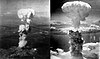
“One would have to have been brought up in the “spirit nut militarism” to understand the difference between Hiroshima and Nagasaki on the one hand, and Auschwitz and Belsen on the other. The usual reasoning is the following: the former case is one of warfare, the latter of cold-blooded slaughter. But the plain truth is that the people involved are in both instances nonparticipants, defenseless old people, women, and children, whose annihilation is supposed to achieve some political or military objective.… I am certain that the human race is doomed, unless its instinctive detestation of atrocities gains the upper hand over the artificially constructed judgment of reason.”
Max Born on Information
“I... refer to the... Waynflete Lectures given by... E. D. Adrian, on The Physical Background of Perception because the results of physiological investigations seem... in perfect agreement with my suggestion about the meaning of reality in physics. The messages which the brain receives have not the least similarity with the stimuli. They consist in pulses of given intensities and frequencies, characteristic for the transmitting nerve-fiber, which ends in a definite place in the cortex. All the brain 'learns' (I use... the objectionable language of the 'disquieting figure of a little hobgoblin sitting... aloft in the cerebral hemisphere') is a distribution or a 'map' of pulses. From this information it produces the image of the world by a process which can metaphorically be called a consummate place of combinatorial mathematics: it sorts out of the maze of indifferent and varying signals invariant shapes and relations which form the world of ordinary experience.”
Max Born on Brain
“I... refer to the... Waynflete Lectures given by... E. D. Adrian, on The Physical Background of Perception because the results of physiological investigations seem... in perfect agreement with my suggestion about the meaning of reality in physics. The messages which the brain receives have not the least similarity with the stimuli. They consist in pulses of given intensities and frequencies, characteristic for the transmitting nerve-fiber, which ends in a definite place in the cortex. All the brain 'learns' (I use... the objectionable language of the 'disquieting figure of a little hobgoblin sitting... aloft in the cerebral hemisphere') is a distribution or a 'map' of pulses. From this information it produces the image of the world by a process which can metaphorically be called a consummate place of combinatorial mathematics: it sorts out of the maze of indifferent and varying signals invariant shapes and relations which form the world of ordinary experience.”
Max Born on Learning
“I... refer to the... Waynflete Lectures given by... E. D. Adrian, on The Physical Background of Perception because the results of physiological investigations seem... in perfect agreement with my suggestion about the meaning of reality in physics. The messages which the brain receives have not the least similarity with the stimuli. They consist in pulses of given intensities and frequencies, characteristic for the transmitting nerve-fiber, which ends in a definite place in the cortex. All the brain 'learns' (I use... the objectionable language of the 'disquieting figure of a little hobgoblin sitting... aloft in the cerebral hemisphere') is a distribution or a 'map' of pulses. From this information it produces the image of the world by a process which can metaphorically be called a consummate place of combinatorial mathematics: it sorts out of the maze of indifferent and varying signals invariant shapes and relations which form the world of ordinary experience.”

What Max Born Said About Others
Discover personal opinions Max Born shared regarding contemporaries.
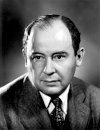
Max Born on John von Neumann
“Von Neumann was considered the leading mathematician in the United States.”
Max Born on Niels Bohr
“If quantum theory has any philosophical importance at all, it lies in the fact that it demonstrates for a single, sharply defined science the necessity of dual aspects and complementary considerations. Niels Bohr has discussed this question with respect to many applications in physiology, psychology, and philosophy in general.”

Max Born on Werner Heisenberg
“When he arrived he looked like a simple peasant boy, with short, fair hair, clear bright eyes and a charming expression. He took his duties as an assistant more seriously than Pauli and was a great help to me. His incredible quickness and acuteness of apprehension has always enabled him to do a colossal amount of work without much effort; he finished his hydrodynamic thesis, worked on atomic problems partly alone, partly in collaboration with me, and helped me to direct my research students.”

Quotes About Max Born
Gain deeper perspective through quotes about Max Born from others.
Friedrich Hayek on Max Born
“While Born evidently realised that our extended order no longer gratified primitive instincts, he too failed to examine closely the structures that create and maintain this order, or to see that our instinctual morals have over the past five thousand years or more gradually been replaced or restrained. Thus, although perceiving that 'science and technology have destroyed the ethical basis of civilisation, perhaps irreparably', he imagines that they have done so by the facts they have uncovered rather than by their having systematically discredited beliefs that fail to satisfy certain 'standards of acceptability' demanded by constructivist rationalism (see below). While admitting that `no one has yet devised a means of keeping society together without traditional ethical principles', Born yet hopes that these can be replaced 'by means of the traditional method used in science'. He too fails to see that what lies between instinct and reason cannot be replaced by 'the traditional method used in science'.”

Friedrich Herneck on Max Born
“He felt that what is called “Copenhagen interpretation” should be called “Göttingen interpretation,” and was a bit hurt that he got the Nobel rather late.”
About Max Born
Max Born (11 December 1882 – 5 January 1970) was a German physicist and mathematician who became a British citizen, who was instrumental in the development of quantum mechanics. He also made contributions to solid-state physics and optics and supervised the work of a number of notable physicists in the 1920s and 30s. He shared with Walther Bothe the 1954 Nobel Prize in Physics, and was the grandfather of Olivia Newton-John.