Link Copied!
Matsuo Bashō Quotes (1644-1694)
Poet
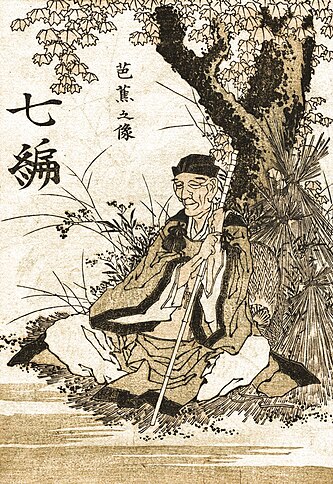
About Matsuo Bashō
Matsuo Bashō (松尾芭蕉, 1644 – 28 November 1694) was a major Japanese poet, primarily known for his achievements in the haikai no renga and haiku (as it would become known later) forms, and his poetic diaries.
Best Matsuo Bashō Quotes
Shortest
Earliest
Explore our curated collection of the most famous and impactful Matsuo Bashō quotes.
“The yellow rose
petals—one by one—gone into
roaring waterfalls”
petals—one by one—gone into
roaring waterfalls”
“やがて死ぬ
けしきは見えず
蝉の声
• yagate shinu
keshiki wa miezu
semi no koe”
けしきは見えず
蝉の声
• yagate shinu
keshiki wa miezu
semi no koe”
“古人の跡を求めず、
古人の求めたるの所を求めよ。
• kojin no ato wo motomezu,
kojin no motometaru no tokoro wo motome yo”
古人の求めたるの所を求めよ。
• kojin no ato wo motomezu,
kojin no motometaru no tokoro wo motome yo”
“Every day is a journey, and the journey itself is home.
• Matsuo Bashō, Narrow Road to the Interior and other writings, Boston, 2000, p. 3 (Translation: Sam Hamill)”
• Matsuo Bashō, Narrow Road to the Interior and other writings, Boston, 2000, p. 3 (Translation: Sam Hamill)”

“静けさや
岩に滲み入る
蝉の声
• shizukesaya
iwa ni shimiiru
semi no koe
• Donald Keene, World Within Walls: Japanese Literature of the Pre-Modern Era, 1600-1867, New York, 1999, p. 89 (Translation: Donald Keene)”
岩に滲み入る
蝉の声
• shizukesaya
iwa ni shimiiru
semi no koe
• Donald Keene, World Within Walls: Japanese Literature of the Pre-Modern Era, 1600-1867, New York, 1999, p. 89 (Translation: Donald Keene)”
“朝顔に
我は飯食ふ
男かな
• asagao ni
ware wa meshi kû
otoko kana
• Classical Japanese Database, Translation #174 (Translation: Reginald Horace Blyth)”
我は飯食ふ
男かな
• asagao ni
ware wa meshi kû
otoko kana
• Classical Japanese Database, Translation #174 (Translation: Reginald Horace Blyth)”
“夏草や
兵どもが
夢の跡
• natsukusa ya
tsuwamonodomo ga
yume no ato
• Donald Keene, Travelers of a Hundred Ages, New York, 1999, p. 316 (Translation: Donald Keene)
• Matsuo Bashō, The Narrow Road to Oku, Tokyo, 1996, p. 87 (Translation: Donald Keene)”
兵どもが
夢の跡
• natsukusa ya
tsuwamonodomo ga
yume no ato
• Donald Keene, Travelers of a Hundred Ages, New York, 1999, p. 316 (Translation: Donald Keene)
• Matsuo Bashō, The Narrow Road to Oku, Tokyo, 1996, p. 87 (Translation: Donald Keene)”
“旅に病で
夢は枯野を
かけ廻る
• tabi ni yande
yume wa kareno wo
kake-meguru
• Bashō's last poem, written while he was dying of a stomach illness. (Translation: Robert Hass)
• Basho, On Love and Barley: Haiku of Basho, London, 1985, p. 81 (Translation: Lucien Stryk)”
夢は枯野を
かけ廻る
• tabi ni yande
yume wa kareno wo
kake-meguru
• Bashō's last poem, written while he was dying of a stomach illness. (Translation: Robert Hass)
• Basho, On Love and Barley: Haiku of Basho, London, 1985, p. 81 (Translation: Lucien Stryk)”
“The fact that Saigyo composed a poem that begins, "I shall be unhappy without loneliness," shows that he made loneliness his master.
• Classical Japanese Database, Translation #41 of a Saga Diary excerpt (Translation: Robert Hass)”
• Classical Japanese Database, Translation #41 of a Saga Diary excerpt (Translation: Robert Hass)”
“京にても
京なつかしや
時鳥
• kyou nitemo
kyou natsukashi ya
hototogisu
• Classical Japanese Database, Translation #55 (Translation: Robert Hass)
• Basho, On Love and Barley: Haiku of Basho, London, 1985, p. 43 (Translation: Lucien Stryk)”
京なつかしや
時鳥
• kyou nitemo
kyou natsukashi ya
hototogisu
• Classical Japanese Database, Translation #55 (Translation: Robert Hass)
• Basho, On Love and Barley: Haiku of Basho, London, 1985, p. 43 (Translation: Lucien Stryk)”
“見るところ花にあらずと云ふことなし、
思ふところ月にあらずと云ふことなし。
• Miru tokoro hana ni arazu to iu koto nashi,
omou tokoro tsuki ni arazu to iu koto nashi
• Classical Japanese Database, Translation #172 (Translation: Reginald Horace Blyth)”
思ふところ月にあらずと云ふことなし。
• Miru tokoro hana ni arazu to iu koto nashi,
omou tokoro tsuki ni arazu to iu koto nashi
• Classical Japanese Database, Translation #172 (Translation: Reginald Horace Blyth)”
“It rains during the morning. No visitors today. I feel lonely and amuse myself by writing at random. These are the words:
Who mourns makes grief his master.
Who drinks makes pleasure his master.
• Classical Japanese Database, Translation #41 of a Saga Diary excerpt (Translation: Robert Hass)”
Who mourns makes grief his master.
Who drinks makes pleasure his master.
• Classical Japanese Database, Translation #41 of a Saga Diary excerpt (Translation: Robert Hass)”
“行く春や
鳥啼き魚の
目は泪
• yuku haru ya
tori naki uo no
me wa namida
• Matsuo Bashō, Narrow Road to the Interior and other writings, Boston, 2000, p. 4 (Translation: Sam Hamill)
• Matsuo Bashō, The Narrow Road to Oku, Tokyo, 1996, p. 23 (Translation: Donald Keene)
• Donald Keene, Travelers of a Hundred Ages, New York, 1999, p. 310 (Translation: Donald Keene)”
“My body, now close to fifty years of age, has become an old tree that bears bitter peaches, a snail which has lost its shell, a bagworm separated from its bag; it drifts with the winds and clouds that know no destination. Morning and night I have eaten traveler's fare, and have held out for alms a pilgrim's wallet.
• Genjūan no Fu ("Prose Poem on the Unreal Dwelling") in Donald Keene, Anthology of Japanese Literature, p. 374 (Translation: Donald Keene)”
• Genjūan no Fu ("Prose Poem on the Unreal Dwelling") in Donald Keene, Anthology of Japanese Literature, p. 374 (Translation: Donald Keene)”
“さびは句の色なり。閑寂なる句をいふにあらず。たとへば、老人の甲冑をたいし戦場に働き、錦繍をかざり御宴に侍りても、老の姿有るがごとし。
• sabi wa ku no iro nari. kanjaku naru ku wo iu ni arazu. tatoeba, roujin no katchuu wo taishi senjou ni hataraki, kinshuu wo kazari goen ni haberitemo, oi no sugata aru ga gotoshi.
• Classical Japanese Database, Translation #42 (Translation: Robert Hass)”
• sabi wa ku no iro nari. kanjaku naru ku wo iu ni arazu. tatoeba, roujin no katchuu wo taishi senjou ni hataraki, kinshuu wo kazari goen ni haberitemo, oi no sugata aru ga gotoshi.
• Classical Japanese Database, Translation #42 (Translation: Robert Hass)”
“古池や
蛙飛び込む
水の音
• furu ike ya
kawazu tobikomu
mizu no oto
• Classical Japanese Database, Translation #64 (Translation: Reginald Horace Blyth)
• (Translation: Sam Hamill)
• Basho, On Love and Barley: Haiku of Basho, London, 1985, p. 58 (Translation: Lucien Stryk)
• Matsuo Bashō, The Narrow Road to the Deep North and Other Travel Sketches, London, 1966, p. 9 (Translation: Nobuyuki Yuasa)”
About Matsuo Bashō
Matsuo Bashō (松尾芭蕉, 1644 – 28 November 1694) was a major Japanese poet, primarily known for his achievements in the haikai no renga and haiku (as it would become known later) forms, and his poetic diaries.