Link Copied!
Mary Parker Follett Quotes (1868-1933)
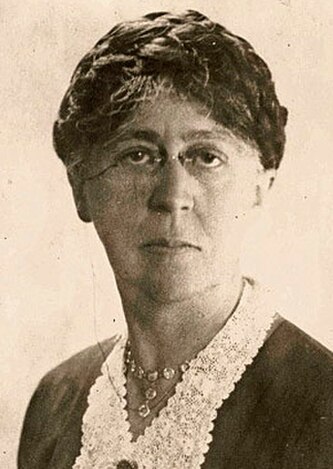


About Mary Parker Follett
Mary Parker Follett (September 3, 1868 – December 18, 1933) was an American social worker, management consultant and pioneer in the fields of organizational theory and organizational behavior.
Best Mary Parker Follett Quotes
Shortest
Earliest
Explore our curated collection of the most famous and impactful Mary Parker Follett quotes.
“There is no such thing as vicarious experience.”


“The study of human relations in business and the study of the technology of operating are bound up together.”

“The study of human relations in business and the study of the technology of operating are bound up together.”

“Individuality is the capacity for union. The measure of individuality is the depth and breadth of true relation. I am an individual not as far as I am apart from, but as far as I am a part of other men. Evil is non-relation.”



“Power is not a pre-existing thing which can be handed out to someone, or wrenched from someone. We have seen again and again the failure of "power" conferred. You could give me dozens of cases. The division of power is not the thing to be considered, but the method of organization which will generate power.”

“Group organization is to be the new method in politics, the basis of our future industrial system, the foundation of international order. Group organization will create the new world we are now blindly feeling after, for creative force comes from the group, creative power is evolved through the activity of the group life.”

“What then is the essence of the group process by which are evolved the collective thought and the collective will? It is an acting and reacting, a single and identical process which brings out differences and integrates them into a unity. The complex reciprocal action, the intricate interweavings of the members of the group, is the social process.”
“As the psychic coherence of the group can be obtained only by the full contribution of every member, so we see that a readiness to compromise must be no part of the individual's attitude. Just so far as people think that the basis of working together is compromise or concession, just so far they do not understand the first principles of working together.”

“It is a mistake to think that social progress is to depend upon anything happening to the working people: some say that they are to be given more material goods and all will be well; some think they are to be given more "education" and the world will be saved. It is equally a mistake to think that what we need is the conversion to "unselfishness" of the capitalist class.”
“Democracy is a great spiritual force evolving itself from men, utilizing each, completing his incompleteness by weaving together all in the many-membered community life which is the true Theophany. The world today is growing more spiritual, and I say this not in spite of the Great War, but because of all this war has shown us of the inner forces bursting forth in fuller and fuller expression.”
“You may wonder why I have talked of government, and of the League of Nations, instead of spending all my hour on leadership in industry. I have done it deliberately, because it seems to me a fact of very great significance that we are finding the same trend in all these different fields. It reinforces us in our conviction that we are moving in harmony with the deeper and more vital forces of human progress.”

“Early psychology was based on the study of the individual; early sociology was based on the study of society. But there is no such thing as the "individual," there is no such thing as "society"; there is only the group and the group-unit — the social individual. Social psychology must begin with an intensive study of the group, of the selective processes which go on within it, the differentiated reactions, the likenesses and unlikenesses, and the spiritual energy which unites them.”

“We see now that the process of the many becoming one is not a metaphysical or mystical idea; psychological analysis shows us how we can at the same moment be the self and the other, it shows how we can be forever apart and forever united. It is by the group process that the transfiguration of the external into the spiritual takes place, that is, that what seems a series becomes a whole. The essence of society is difference, related difference. "Give me your difference" is the cry of society to-day to every man.”
“Another reason is because industry is the most important field of human activity, and management is the fundamental element in industry. It is now generally recognized that not bankers, not stockholders, but management is the pivot of business success. It is good management that draws credit, that draws workers, that draws customers. Moreover, whatever changes should come, whether industry is owned by individual capitalists, or by the State, or by the workers, it will always have to be managed. Management is a permanent function of business.”

“Certain changes have been going on in business practice which are destined, I believe, to alter our thinking fundamentally. I think this is a contribution which business is going to make to the world, and not only to the business world, but eventually to government and international relations. Men may be making useful products, but beyond this, by helping to solve the problems of human relations, they are perhaps destined to lead the world in the solution of those great problems of coordination and control upon which our future progress must depend.”

“The third reason why I am working at business management is because I believe in control, and so do our most progressive business men. I believe in the individual not trusting to fate or chance or inheritance or environment, but learning how to control his own life. And nowhere do I see such a complete acceptance of this as in business thinking, the thinking of more progressive business men. They are taking the mysticism out of business. They do not believe that there is anything fatalistic about the business cycle that is wholly beyond the comprehension of men; they believe that it can be studied and to some extent controlled.”
“There are three main ways of dealing with conflict; domination, compromise and integration. Domination, obviously, is a victory of one side over the other. This is the easiest way of dealing with conflict, the easiest for the moment but not usually successful in the long run, as we can see from what has happened since the War.
The second way of dealing with conflict, that of compromise, we understand well, for it is the way we settle most of our controversies; each side gives up a little in order to have peace, or, to speak more accurately, in order that the activity which has been interrupted by the conflict may go on. Compromise is the basis of trade union tactics.”
The second way of dealing with conflict, that of compromise, we understand well, for it is the way we settle most of our controversies; each side gives up a little in order to have peace, or, to speak more accurately, in order that the activity which has been interrupted by the conflict may go on. Compromise is the basis of trade union tactics.”
“THE subject I have been given for these lectures is The Psychological Foundations of Business Administration, but as it is obvious that we cannot in four papers consider all the contributions which contemporary psychology is making to business administration — to the methods of hiring, promoting and discharging, to the consideration of incentives, the relation of output to motive, to group organization, etc. — I have chosen certain subjects which seem to me to go to the heart of personnel relations in industry. I wish to consider in this paper the most fruitful way of dealing with conflict. At the outset I should like to ask you to agree for the moment to think of conflict as neither good nor bad; to consider it without ethical prejudgment; to think of it not as warfare, but as the appearance of difference, difference of opinions, of interests. For that is what conflict means — difference. We shall not consider merely the differences between employer and employee, but those between managers, between the directors at the Board meetings, or wherever difference appears.”
“Since I have been in England I have been asked several times why I am studying business management. I will try to tell you. Free to choose between different paths of study, I have chosen this for a number of reasons. First of all, it is among businessmen (not all, but a few) that I find the greatest vitality of thinking to-day, and I like to do my thinking where it is most alive. I said last winter to a Professor of Philosophy: 'Do you realize that you philosophers have got to look to your laurels, that businessmen are doing some very valuable thinking and may get ahead of you?' And he acknowledged this, which I think was a very significant concession. Moreover, I find the thinking of businessmen to-day in line with the deepest and best thinking we have ever had. The last word in science—in biology—is the principle of unifying. The most profound philosophers have always given us unifying as the fundamental principle of life. And now business men are finding it is the way to run a successful business. Here the ideal and the practical have joined hands. That is why I am working at business management, because, while I care for the ideal, it is only because I want to help bring it into our everyday affairs.”
“One of the most interesting things about business to me is that I find so many business men who are willing to try experiments. I should like to tell you about two evenings I spent last winter and the contrast between them. I went one evening to a drawing-room meeting where economists and M.Ps. talked of current affairs, of our present difficulties. It all seemed a little vague to me, did not seem really to come to grips with our problem. The next evening it happened that I went to a dinner of twenty business men who were discussing the question of centralization and decentralization. Each one had something to add from his own experience of the relation of branch firms to the central office, and the other problems included in the subject. There I found L hope for the future. There men were not theorizing or dogmatizing; they were thinking of what they had actually done and they were willing to try new ways the next morning, so to speak. Business, because it gives us the opportunity of trying new roads, of blazing new trails, because, in short, it is pioneer work, pioneer work in the organized relations of human beings, seems to me to offer as thrilling an experience as going into a new country and building railroads over new mountains. For whatever problems we solve in business management may help towards the solution of world problems, since the principles of organization and administration which are discovered as best for business can be applied to government or international relations. Indeed, the solution of world problems must eventually be built up from all the little bits of experience wherever people are consciously trying to solve problems of relation. And this attempt is being made more consciously and deliberately in industry than anywhere else.”
Mary Parker Follett Quotes by Topic
Find exactly what you are looking for by browsing this categorized list of Mary Parker Follett quotes by topic.
Mary Parker Follett on Social organization 2 quotes
“The group process contains the secret of collective life, it is the key to democracy, it is the master lesson for every individual to learn, it is our chief hope or the political, the social, the international life of the future.”


Quotes About Mary Parker Follett
Gain deeper perspective through quotes about Mary Parker Follett from others.
Lyndall Urwick on Mary Parker Follett
“Before Mary Follett, industrial groups had seldom been the subject of study of political or social scientists. It was her special merit to turn from the traditional subjects of study - the state or the community as a whole - progressively to concentrate on the study of industry... Her approach was to analyse the nature of the consent on which any democratic group is based by examining the psychological factors underlying it. This consent, she suggested, is not static but a continuous process, generating new and living group ideas through the interpenetration of individual ideas.”

Seebohm Rowntree on Mary Parker Follett
“Mary Follett devoted a lifetime to searching for the true principles of organization which would ensure a stable foundation for the steady, ordered progress of human well-being. That her search was not in vain will be evident to all who read the lectures. Her teaching is not theoretical, but is based on a close study of the practice of a large number of business undertakings. She chose this field of enquiry to supplement her work on local and national government because she realized that the principles which should determine organization are identical, no matter what the purpose which that organization is designed to serve.”

Business Week, on Mary Parker Follett
“WE SHOULDN'T FORGET "the woman who invented management," particularly when Peter Drucker is said to have referred to her as his "guru": Mary Parker Follett (1868-1933). Rising to prominence as a management consultant in the 1920s, she is generally recognized as the originator of management concepts based on human relationships, teamwork, win-win solutions, leadership through shared purpose, and what would come to be called knowledge work.”
Jon M. Werner on Mary Parker Follett
“One of the undesirable by-products of the factory system was the frequent abuse of unskilled workers, including children, who were often subjected to unhealthy working conditions, long hours, and low pay. The appalling conditions spurred a national anti-factory campaign. Led by Mary Parker Follett and Lillian Gilbreth, the campaign gave rise to the “human relations movement" advocating more humane working. Among other things, the human relations movement provided a more complex and realistic understanding of workers as people, instead of merely cogs in a factory machine.”
About Mary Parker Follett
Mary Parker Follett (September 3, 1868 – December 18, 1933) was an American social worker, management consultant and pioneer in the fields of organizational theory and organizational behavior.