Link Copied!
Mary Midgley Quotes (1919-2018)
Philosopher, King

About Mary Midgley
Mary Beatrice Midgley (née Scrutton; 3 September 1919 – 10 October 2018) was an English moral philosopher.
Best Mary Midgley Quotes
Shortest
Earliest
Explore our curated collection of the most famous and impactful Mary Midgley quotes.
“Philosophy, like speaking prose, is something have to do all our lives, well or badly, whether we notice it or not.”
“Arguments can always be answered. Moral philosophy, unlike straight moralizing, arises from and trives on plurality of values.”
“Philosophy, in spite of all its tiresome features, is not a luxury but a necessity, because we always have to use it when things get difficult.”
“The preliminary outward movement of thought—holism—is everybit as necessary as the inward, atomizing one and in any investigation it usually needs to come first.”
“Hubris calls for nemesis, and in one form or another it's going to get it, not as a punishment from outside but as the completion of a pattern already started.”

“Every age has its pet contradictions. Thirty years ago we used to accept Marx and Freud together, and then wonder, like the chameleon on the turkey carpet, why life was so confusing.”
“Many natural patterns, such as the arrangement of buds on a stem, accord with the series of Fibonacci numbers, and Fibonacci spirals are also observed in spiral nebulae. There are, moreover, no flying pigs …”
“We are not just rather like animals; we are animals. Our difference from other species may be striking, but comparisons with them have always been, and must be, crucial to our view of ourselves.”
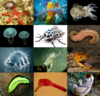
“Rightly did Darwin pin up a paper warning himself to be careful about using such words as "higher" and "lower." What is downward about the trend that has produced elephants, chimpanzees, wolves, dolphins, and jackdaws by comparison with ants and bees?”
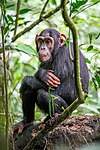
“Scientism exalts the idea of science on its own, causing people to become fixated on the assumptions that seemed scientific to them during their formative years. This prevents them from seeing contrary facts, however glaring they may be, that have been noticed more lately.”
“The symbolism of meat-eating is never neutral. To himself, the meat-eater seems to be eating life. To the vegetarian, he seems to be eating death. There is a kind of gestalt-shift between the two positions which makes it hard to change, and hard to raise questions on the matter at all without becoming embattled.”

“Consideration of motives brings up the matter of free will. I had better say once, that my project of taking animal comparisons seriously does not involve a slick mechanistic or deterministic view of freedom. Animals are not machines; one of my main concerns is to combat this notion. Actually only machines are machines.”

“We must face unconsidered possibilities and ask ourselves alarming questions–for instance, must we perhaps let the self-destroyer go if he really wants to? Trying to answer this by collecting information about our own neurones would be no more use than doing it, like the Roman augur, by inspecting the entrails of a goat.”
“Neither ecological nor social engineering will lead us to a conflict-free, simple path . . . Utilitarians and others who simply advise us to be happy are unhelpful, because we almost always have to make a choice either between different kinds of happiness--different things to be happy _about_--or between these and other things we want, which nothing to do with happiness.”
“Selection does not work by cutthroat competition between individuals, but by favouring whatever behavior is useful to the group. People with crude notions of "Darwinism" make an intriguing blunder here. They refuse the mere fact of competing, that is, of needing to share out a resource with the ''motive of competitiveness or readiness to quarrel.”

“In fact, the whole idea of illusion seems to make sense only if we accept the reality of the illusory experience as an experience and question only what it seems to be telling us about the outside world. Optical illusions do really hapen. What they can’t do is provide accurate measurements of the outside world. The idea of having, so to speak, two successive layers of illusion here is unworkable.”

“The issue is not between bad guys who use and "adversary" approach and good guys who are scientific and impartial...Everybody, including himself is partial in the sense of starting somewhere, of selecting something for emphasis. The fatal thing is not this. It is being confused about ones reasons for doing so. Particular insights and principles of inquiry must be set in the context of other possible alternatives.”
“Other areas were being mapped by anthropologists, who seemed to have some interest in my problem, but who were inclined (at that time) to say that what human beings had in common was not in the end very important; that the key to all the mysteries did lie in culture. This seemed to me shallow. It is because our culture is changing so fast, because it does not settle on everything that we need to go into these questions.”

“The point cannot be just survival, nor even survival in numbers. Survival is just as well achieved by much less ambitions creatures which go in for sheer number. (In fact a cost-benefit-conscious gene that really understood its business would, no doubt, have remained on board something like the amoeba; it will probably be amoung the last to go.) Nor is it survival-as-society, since many animals achieve this despite a lot of bickering.”

“Creatures really have divergent and conflicting desires. Their distinct motives are not (usually) wishes for survival or for means-to-survival, but for various particular things to be done and obtained while surviving. And these can always conflict. Motivation is fundamentally plural. It must be so because, in evolution, all sorts of contingincies and needs arise, calling for all sorts of different responses. An obsessive creature, constantly dominated by one kind of motive, would not survive.”
“Still, people have a lot of obvious and important things that other species do not–speech, rationality, culture and the rest. Comparison must deal with these. I have tried to discuss some of the most important of them, not attempting at all to deny their uniqueness, but merely to grasp how they occur in what is, after a primate species, not a brand of machine or a type of disembodied spirit. I have tried to show these capabilites as continuous with our animal nature, connected with our basic structure of motives.”
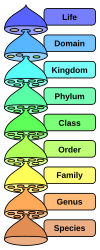
“What do we mean when we speak...of higher and lower animals? ...What too about communication (a respect in which, Wilson says, we much exceed the insects)? What is so good about communicating? How are we sure that it constitutes and excellence? Is it even clear that in respect we do exceed the corals and the colonial jellyfish? With them, there are no internal barriers; information flow freely from unit to unit wherever it is needed. The unrestrictedness of the communication much exceeds that among people. Why does this fail to impress us?”

“If we ask how creatures [bees] that act so elaborately against their private advantage can have evolved, the answer lies in their mode of reproduction. Most workers are sterile. The unit of selection is normally the whole community. Its prosperity depends on the efficiency of the workers. An uncooperative strain would simply revert toward the solitary life these insects started from and in which many would still remain..So it is natural to understand their evolution, as we would that of a plant, without reference to the plans or wishes of the individual bees.”

“But understanding and explaining motives does not compromise freedom; nor does even predicting acts necessarily do so. A person committed to a political cause may vote predictably, and intelligibly in an election. He does not vote less freely than someone that flips a coin at the last minute. So if we find comparison with animals any help in understanding motives, it will not mean that conduct is not free. And since animals are not (as Descartes supposed) automata, the issue of freedom does not make comparing man with any other species and downgrading irrelevance.”

Mary Midgley Quotes by Topic
Find exactly what you are looking for by browsing this categorized list of Mary Midgley quotes by topic.
Mary Midgley on Animals
“We are not just rather like animals; we are animals. Our difference from other species may be striking, but comparisons with them have always been, and must be, crucial to our view of ourselves.”
Mary Midgley on Vegetarianism
“The symbolism of meat-eating is never neutral. To himself, the meat-eater seems to be eating life. To the vegetarian, he seems to be eating death. There is a kind of gestalt-shift between the two positions which makes it hard to change, and hard to raise questions on the matter at all without becoming embattled.”

Mary Midgley on Insect
“It would be quite false to say that competition is the only relation that obtains between species. Mutual dependence is in general quite as important. Each kind exists within an ecosystem, and needs the others to keep the system going. Thus, grazing animals on the African plains co-exist because each specializes in eating some particular kind of plant, and needs the others to keep the whole pasture at a balanced level. They depend, too, on each other's specialized capacities to give warning of danger. … each also depends for survival on innumerable others, such as the insects which pollinate the plants, the fauna of their intestines and of course their predators. It is unthinkable that any species should be an island.”
Mary Midgley on Species
“It would be quite false to say that competition is the only relation that obtains between species. Mutual dependence is in general quite as important. Each kind exists within an ecosystem, and needs the others to keep the system going. Thus, grazing animals on the African plains co-exist because each specializes in eating some particular kind of plant, and needs the others to keep the whole pasture at a balanced level. They depend, too, on each other's specialized capacities to give warning of danger. … each also depends for survival on innumerable others, such as the insects which pollinate the plants, the fauna of their intestines and of course their predators. It is unthinkable that any species should be an island.”
What Mary Midgley Said About Others
Discover personal opinions Mary Midgley shared regarding contemporaries.
Mary Midgley on Ayn Rand
“Rand's guiding vision is clearly what used to be called infantile omnipotence – the childish hope of total control – and her doctrines have great influence because that hope is still always strong in the depths of our hearts. The fear that haunts her is the fear of having to obey someone else. This fear, intelligently disciplined, does indeed lie at the root of our emphasis on liberty, but there is nothing to be said for erecting it on its own into a "heroic" stance of self-admiration.”

Mary Midgley on Friedrich Nietzsche
“Nietzsche's dynamic contradictiousness has served as a source for the kind of static, somnolent, undiscriminating, sceptical tolerance which seems to be expressed by the claim to have stopped believing in sin. Readiness to question everything mutates mysteriously into a pose of equal indifference to all possible answers. Can this be more than pose? That it often is a pose, lasting only till the owner's moral corns happen to be trodden on, is by now a common observation. (The shocked immoralist in Tom Stoppard's play Professional Foul is a nice case.) But this is not just an unfair joke by satirists. What else could the undiscriminating position be? It is scarcely possible to vindicate it as a stern attempt to stand by one's moral principles, and remain indifferent in the face of all temptation to do otherwise.”

About Mary Midgley
Mary Beatrice Midgley (née Scrutton; 3 September 1919 – 10 October 2018) was an English moral philosopher.