Link Copied!
Mary Church Terrell Quotes (1863-1954)
Activist


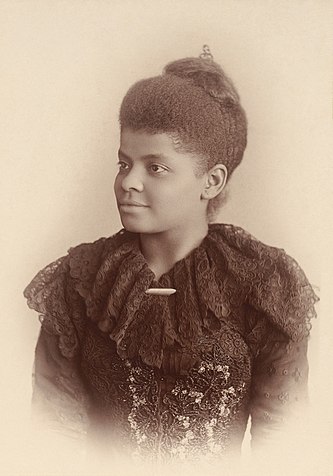
About Mary Church Terrell
Mary Church Terrell (September 23, 1863 – July 24, 1954) was one of the first African-American women to earn a college degree, and became known as a national activist for civil rights and suffrage.
Best Mary Church Terrell Quotes
Shortest
Earliest
Explore our curated collection of the most famous and impactful Mary Church Terrell quotes.
“Tho thorny the path and rough the road, forward she pressed to do the work for the persecuted and afflicted which she felt called to perform.”
“Lucretia Mott shines more brilliantly in the galaxy of the good and great because of her work as an abolitionist and her efforts to improve the condition of woman”
“We congratulate ourselves upon having two such efficient and zealous workers as Miss Wells and Mr. Fortune to address us tonight. The harvest truly is great but the labourers are few.”

“In Mr. T. Thomas Fortune of the New York Age we possess a journalist who has always felt this responsibility, who has always been a power for good, a journalist whose opinions have been an education and whose sentiments an inspiration to all earnest souls.”
“She used her brain and systematized her work, so that she might find time to do good in the world. The time many wives and mother of her day frittered away in gayety and embroidery she spent in reading and committing to memory choice thoughts in poetry and prose.”
“We extend to her a cordial welcome, we offer her our hearty support. In suppressing Miss Wells paper, the Free Speech, tyranny has wrought a good work of which it little dreamed. The fetters placed upon truth in the South are here transformed into weapons against itself.”
“Look back over the history of the ages, and whence has come the inspiration of those who have lifted themselves from the level of the brute to the dignity of manhood? Has it not come from the oppressor’s chains? Tyranny’s mission is to teach. It has Proclaimed in clarion tones, which have echoed and re-echoed through all the battles, “Man must be free.””
“I could wish no better, brighter future for the boys and the girls who are so fortunate as to attend this beautiful, well-appointed Mott school than that they emulate the courage, the unselfishness, and the zeal in all good work which were such conspicuous and beautiful traits in the character of that saintly woman, for whom this building which we dedicate to day is named.”
“We colored women own [sic] her a two-fold debt of gratitude. Her persecutions were greater than those of Garrison or Phillips. She was never a coward, not even among pistols. She contributed her work, but while I would not attempt to try to underage her work, there is almost as much work to-day as there was fifty or sixty years ago. In many States colored men are deprived of their right to vote and are held as slaves in peonage.”
“When Miss Wells, a journalist of the South, exiled for daring to use the prerogative of free speech in defence of her own race, fled to the South, it was Mr. Fortune who espoused her cause, and made it possible for her to continue the good work so nobly begun. We admire Miss Wells for her undaunted courage, we laud her zeal in so worthy a cause, we ecourage her ambition to enlighten the mind and touch the heart by a thrilling and earnest recital of the wrongs heaped upon her oppressed people in the South.”
“How long the emancipation of the slave might have been delayed, had it not been for those Female Anti-Slavery Societies established largely through the efforts of Lucretia Mott, and other noble women like her, no human being can tell...Many a poor trembling slave was lifted from bondage into freedom by means of the underground railroad which ran through the home of James and Lucretia Mott. She helped and befriended free colored people and protested in season and out against the cruel exhibition of prejudice against them from which they suffered in the North.”
“Mr. Chauncy M. Depew in his oration delivered at the dedicatory exercises of the World’s Fair a few days ago said, “The United States is a christian country and a living and practical christianity is characteristic of its people.” In his conviction that this is a christian country, that a living and practical christianity is characteristic of its people we naturally conclude that Mr. Depew along with other truthful, law-abiding citizens of this great commonwealth is ignorant of the many barbarities, and the fiendish atrocities visited by the Southern Whites upon the defenceless and persecuted Blacks. We must conclude that Mr. Depew is not aware of the knavish methods employed to disfranchise the Negro or of the scandalous compliances resorted to which transform the courts from seats of justice into veritable haunts of inquisition and corruption wherever the Afro-American is concerned.”

“I can not believe that the great mass of Americans, who fought for freedom and who love justice, are awake to the shocking and systematic subversion of all law and order in the South. To ignorance and not to connivance must we charge the wicked apathy of some of the best citizens of the country. Open their eyes to the magnitude and hideousness of the evil flourishing in the South, blighting the lives and wrecking the happiness of men whose labor has enriched and whose blood has been shed for this country and I can not believe that by their silence and indifference they will continue to be accomplices in crime. Let us impress upon men and women whose hearts are not dead to law and love that there are citizens in the South who are deprived of all the rights of citizenship, denied even the right to life, who are hunted down and butchered like wild animals, and I am persuaded that the inquisition will be throttled to death.”
“Lucretia Mott traveled thousands of miles, when travelling was much more difficult and far less pleasant than it is to day, holding meetings all through New England and even venturing in some of the slave States to arouse the conscience and touch the hearts of the people concerning the woes and wrongs heaped upon 4,000,000 slaves. She was often debarred from the use of public halls and suffered persecution of every conceivable nature even at the hands of those who called themselves Christians — yes even from her own religious sect, the Quakers, because of her activity in behalf of the slave. Once but wonder at the cool, calm courage of the small, fragile, gentle Lucretia Mott who never at any time of her life weighed more than 90 pounds, and much of the time did not weigh even that, as she faced the violence of hostile mobs. More than once her long, gray Quaker cloak was singed with vitriol thrown at her through windows by howling, hooting mobs during the meetings which she addressed. Nothing illustrates the courage and the tact [of] the little woman more than an experience she had, when she, the other speakers and the audience were driven from an abolition meeting in Philadelphia by an angry mob. She placed a friend who was with her under the care of a gentleman. “But what will you do”, inquired the lady. “This man”, replied Mrs. Mott touching the arm of a man among the hooting ruffians who had broken up the meeting, “will see me through safely, I think.” The man was so impressed with the sweetness of her manner and the angelic expression of her countenance that he instantly responded to her appeal [and] protected her from further insult as they passed through the hostile crowd.”

What Mary Church Terrell Said About Others
Discover personal opinions Mary Church Terrell shared regarding contemporaries.
Mary Church Terrell on Susan B. Anthony
“We colored women own [sic] her a two-fold debt of gratitude. Her persecutions were greater than those of Garrison or Phillips. She was never a coward, not even among pistols. She contributed her work, but while I would not attempt to try to underage her work, there is almost as much work to-day as there was fifty or sixty years ago. In many States colored men are deprived of their right to vote and are held as slaves in peonage.”

Mary Church Terrell on Ida B. Wells
“When Miss Wells, a journalist of the South, exiled for daring to use the prerogative of free speech in defence of her own race, fled to the South, it was Mr. Fortune who espoused her cause, and made it possible for her to continue the good work so nobly begun. We admire Miss Wells for her undaunted courage, we laud her zeal in so worthy a cause, we ecourage her ambition to enlighten the mind and touch the heart by a thrilling and earnest recital of the wrongs heaped upon her oppressed people in the South. We extend to her a cordial welcome, we offer her our hearty support. In suppressing Miss Wells paper, the Free Speech, tyranny has wrought a good work of which it little dreamed. The fetters placed upon truth in the South are here transformed into weapons against itself. We congratulate ourselves upon having two such efficient and zealous workers as Miss Wells and Mr. Fortune to address us tonight. The harvest truly is great but the labourers are few.”

Quotes About Mary Church Terrell
Gain deeper perspective through quotes about Mary Church Terrell from others.
Source on Mary Church Terrell 7 quotes
“I arose and said, As a colored woman, I hope this association will include in the resolution the injustices of various kinds of which colored people are the victims." p. 143”
Bettina Aptheker on Mary Church Terrell 2 quotes
“Ida B. Wells and Mary Church Terrell, two women who helped shape the main contours of the civil-rights movement in the United States in the twentieth century.”

Mary McLeod Bethune on Mary Church Terrell
“Has the Negro girl proved herself worthy of the intellectual advantages which have been given her? What is your answer when I tell you that Negro women stand at the helm of outstanding enterprises; such are: Nannie Borroughs — Charlotte Hawkins Brown; they are proprietors of business — we recall Madam Walker and Annie Malone; they are doing excellent work in the field of Medicine, Literary Art, Painting and Music. Of that large group let us mention Mary Church Terrell and Jessie Fauset; Hazel Harrison, Caterina Jarbors and Marian Anderson as beacon lights. One very outstanding woman is a banner. Others are leaders in Politics.”
Audre Lorde on Mary Church Terrell
“I have no creative use for guilt, yours or my own. Guilt is only another way of avoiding informed action, of buying time out of the pressing need to make clear choices, out of the approaching storm that can feed the earth as well as bend the trees. If I speak to you in anger, at least I have spoken to you: I have not put a gun to your head and shot you down in the street; I have not looked at your bleeding sister’s body and asked, “What did she do to deserve it?” This was the reaction of two white women to Mary Church Terrell’s telling of the lynching of a pregnant Black woman whose baby was then torn from her body. That was in 1921, and Alice Paul had just refused to publicly endorse the enforcement of the Nineteenth Amendment for all women — by refusing to endorse the inclusion of women of Color, although we had worked to help bring about that amendment.”
Alice Paul about on Mary Church Terrell
“We all felt very proud of ourselves, walking along in our caps and gowns. One of the largest and loveliest sections was made up of uniformed nurses. It was very impressive. Then we had a foreign section, and a men’s section, and a Negro women’s section from the National Association of Colored Women, led by Mary Church Terrell. She was the first colored woman to graduate from Oberlin, and her husband was a judge in Washington. Well, Mrs. Terrell got together a wonderful group to march, and then, suddenly, our members from the South said they wouldn’t march. Oh, the newspapers just thought this was a wonderful story and developed it to the utmost. I remember that that was when the men’s section came to the rescue. The leader, a Quaker I knew, suggested that the men march between the southern delegations and the colored women’s section, and that finally satisfied the southern women. That was the greatest hurdle we had”
About Mary Church Terrell
Mary Church Terrell (September 23, 1863 – July 24, 1954) was one of the first African-American women to earn a college degree, and became known as a national activist for civil rights and suffrage.