Link Copied!
Martin Niemöller Quotes (1892-1984)
Activist, King

About Martin Niemöller
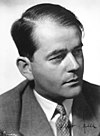
Friedrich Gustav Emil Martin Niemöller (14 January 1892 – 6 March 1984) was a Protestant pastor and social activist.
Best Martin Niemöller Quotes
Shortest
Earliest
Explore our curated collection of the most famous and impactful Martin Niemöller quotes.
“For politicians truth and falsehood are unimportant. So I never could become a politician — not even a church politician.”

“The oppression is growing, and anyone who has had to submit to the Tempter's machine-gun fire during this last week thinks differently from what he did even three weeks ago.”

“We had been frightened of atomic weapons since 1945. In those days I became convinced — and remain convinced now — that, after Hitler, Truman was the greatest murderer in the world.”
“One thing is clear, the president of North Vietnam is not a fanatic. He is a very strong and determined man, but capable of listening, something that is very rare in a person of his position.”

“I began my political responsibility as an ultra-conservative. I wanted the Kaiser to come back; and now I am a revolutionary. I really mean that. If I live to be a hundred I shall maybe be an anarchist, for an anarchist wants to do without all government.”
“We have no more thought of using our own powers to escape the arm of authorities than had the Apostles of old. No more are we ready to keep silent at man's behest when God commands us to speak. For it is, and must remain, the case that we must obey God rather than man.”
“The renunciation of war as expressed in the Japanese Constitution has given a first ray of hope to a world in darkness and despair, and men today cling to this hope passionately. Can we really do something about it or are we to stand aside as idle onlookers, unable to contribute for better or for worse?”

“I have never concealed the fact and said it before the court in 1938 that I came from an anti-Semitic past and tradition... I ask only that you look at my life historically and take it as history. I believe that from 1933 I truly represented the Lutheran-Christian outlook on the Jewish question — as I revealed before the court — but that I returned home after eight years' imprisonment as a completely different person.”
“Als die Nazis die Kommunisten holten,
habe ich geschwiegen;
ich war ja kein Kommunist.
Als sie die Sozialdemokraten einsperrten,
habe ich geschwiegen;
ich war ja kein Sozialdemokrat.
Als sie die Gewerkschafter holten,
habe ich nicht protestiert;
ich war ja kein Gewerkschafter.
Als sie die Juden holten,
habe ich geschwiegen;
ich war ja kein Jude.
Als sie mich holten,
gab es keinen mehr,
der protestieren konnte.”
habe ich geschwiegen;
ich war ja kein Kommunist.
Als sie die Sozialdemokraten einsperrten,
habe ich geschwiegen;
ich war ja kein Sozialdemokrat.
Als sie die Gewerkschafter holten,
habe ich nicht protestiert;
ich war ja kein Gewerkschafter.
Als sie die Juden holten,
habe ich geschwiegen;
ich war ja kein Jude.
Als sie mich holten,
gab es keinen mehr,
der protestieren konnte.”
“I am now convinced that the Reformation of the church will come from the east. In the west there is no spiritual life. (I'm speaking of the Protestant church and not the Roman Catholic church.) We have civilisation and we try to keep up culture, but we have no spiritual life. The east has a spiritual life. They know that colour influences the spirit more than black lines. In Russia there is still the notion that art is nearer religion than thinking in lines and logic. All abstract rationalising needs to be filled out with sensual thinking and feelings. In Russia there is still a strong impression of colour.”

“No honest man or woman in Germany feels responsible for these things. Good Germans took Nazism as a new religion. These people are shocked by the revelations which have shown that Nazism was not idealism, but a means to the performance of criminal acts...
In war a German feels bound to join the ranks without question. Three of my sons were called up. I could not hold back. I wrote from the concentration camp to Admiral Raeder, C. in C. of the Navy, asking to be allowed to return to the submarine service or to do any other service in the Navy. I heard nothing for several months, and then a reply came, not from Raeder but from Keitel, head of the Wehrmacht. He thanked me, but regretted I could not be employed on active service.”
In war a German feels bound to join the ranks without question. Three of my sons were called up. I could not hold back. I wrote from the concentration camp to Admiral Raeder, C. in C. of the Navy, asking to be allowed to return to the submarine service or to do any other service in the Navy. I heard nothing for several months, and then a reply came, not from Raeder but from Keitel, head of the Wehrmacht. He thanked me, but regretted I could not be employed on active service.”
“Our people are trying to break the bond set by God. That is human conceit rising against God. In this connection we must warn the Führer, that the adoration frequently bestowed on him is only due to God. Some years ago the Führer objected to having his picture placed on Protestant altars. Today his thoughts are used as a basis not only for political decisions but also for morality and law. He himself is surrounded with the dignity of a priest and even of an intermediary between God and man... We ask that liberty be given to our people to go their way in the future under the sign of the Cross of Christ, in order that our grandsons may not curse their elders on the ground that their elders left them a state on earth that closed to them the Kingdom of God.”
“In Erlangen, for instance, in January 1946 he spoke of meeting a German Jew who had lost everything — parents, brothers, and sisters too. 'I could not help myself', said Niemöller, 'I had to tell him, "Dear brother, fellow man, Jew, before you say anything, I say to you: I acknowledge my guilt and beg you to forgive me and my people for this sin."' Niemöller's stance was by no means entirely welcome to the 1,200 students to whom he was preaching. They shouted and jeered as he preached that Germany must accept responsibility for the five or six million murdered Jews. Students in Marburg and Göttingen similarly heckled him. But Niemöller insisted that "We must openly declare that we are not innocent of the Nazi murders, of the murder of German communists, Poles, Jews, and the people in German-occupied countries. No doubt others made mistakes too, but the wave of crime started here and here it reached its highest peak. The guilt exists, there is no doubt about that — even if there were no other guilt than that of the six million clay urns containing the ashes of incinerated Jews from all over Europe. And this guilt lies heavily upon the German people and the German name, even upon Christendom. For in our world and in our name have these things been done."”
Martin Niemöller Quotes by Topic
Find exactly what you are looking for by browsing this categorized list of Martin Niemöller quotes by topic.
Martin Niemöller on Anarchism
“I began my political responsibility as an ultra-conservative. I wanted the Kaiser to come back; and now I am a revolutionary. I really mean that. If I live to be a hundred I shall maybe be an anarchist, for an anarchist wants to do without all government.”

Martin Niemöller on Christian anarchism
“I began my political responsibility as an ultra-conservative. I wanted the Kaiser to come back; and now I am a revolutionary. I really mean that. If I live to be a hundred I shall maybe be an anarchist, for an anarchist wants to do without all government.”

Martin Niemöller on Silence
“First they came for the Socialists, and I did not speak out—
Because I was not a Socialist.
Then they came for the Trade Unionists, and I did not speak out—
Because I was not a Trade Unionist.
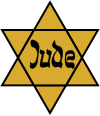
Then they came for the Jews, and I did not speak out—
Because I was not a Jew.
Then they came for me—and there was no one left to speak for me.”
Martin Niemöller on Nazism
“When the Nazis came for the communists, I remained silent; I was not a communist. When they locked up the social democrats, I remained silent; I was not a social democrat. When they came for the trade unionists, I did not speak out; I was not a trade unionist. When they came for the Jews, I remained silent; I wasn't a Jew. When they came for me, there was no one left to speak out.”

Martin Niemöller on Antisemitism
“First they came for the Communists
And I did not speak out
Because I was not a Communist
Then they came for the Socialists
And I did not speak out
Because I was not a Socialist
Then they came for the trade unionists
And I did not speak out
Because I was not a trade unionist
Then they came for the Jews
And I did not speak out
Because I was not a Jew
Then they came for me
And there was no one left
To speak out for me”
What Martin Niemöller Said About Others
Discover personal opinions Martin Niemöller shared regarding contemporaries.
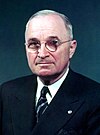
Martin Niemöller on Harry S. Truman
“We had been frightened of atomic weapons since 1945. In those days I became convinced — and remain convinced now — that, after Hitler, Truman was the greatest murderer in the world.”
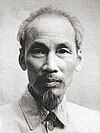
Martin Niemöller on Ho Chí Minh
“One thing is clear, the president of North Vietnam is not a fanatic. He is a very strong and determined man, but capable of listening, something that is very rare in a person of his position.”
Quotes About Martin Niemöller
Gain deeper perspective through quotes about Martin Niemöller from others.
Dr. Reinhard Becker on Martin Niemöller
“You suppose that Christianity is oppressed in Germany and that there is a rule by force and secret trial. Though this is not the case, the German State cannot be expected to tolerate incessant attacks, open or veiled, by ministers of the Christian faith upon its very foundations. There are recalcitrant pastors who seem to be unaware of the fact that they would have been shot, hanged or burned long ago if it had not been for the gigantic and successful struggle of Adolf Hitler to safeguard civilization in this country against the horrors of Communism. Therefore by attacking National Socialism, they are striking at themselves.”
Wolfgang Benz on Martin Niemöller
“The Confessional Church as a whole did not offer resistance in the political sense, with the intent of bringing down the National Socialist regime. It fought first to keep its organizational structures intact and then preserve the independence of church doctrine, according to which the Christian commandments were not to be subordinated to Nazi ideology. However, the regime often felt politically and ideologically attacked by this ecclesiastical and theological contrariness. Henceforth a rupture ran through all the churches of the German states: the adherents of the Confessional Church found themselves increasingly in a state of principled opposition to both the state and the German Christians, who were committed National Socialists. In many Christians of the Confessional Church the oppositional stance eventually evolved into political resistance. Duty bound by conscience and often entirely on their own (and at other times supported by their fellow congregants), they fought with the means at their disposal—sermons and the written word—first against state intrusion into church life and then against National Socialist ideology in practice, for example when it targeted the handicapped. Moreover, they also opposed a Christian faith that was blended with anti-Semitism and “neo-Pagan heresies.” The latter included the call for a “heroic Jesus” as well as the desire for a “true to type” faith founded on “race, national characteristics [Volkstum], and nation.””
Dietmar Schmidt on Martin Niemöller
“He called on the people to show a sense of responsibility towards their fellow-men, he abjured them not to forget the lessons of the past and, above all, he reminded them constantly of the burden of guilt which had to be redeemed before a new life could begin. In so doing he was at pains not to exclude himself from a like responsibility, and told in this connexion the story of the visit which he and his wife paid to Dachau in the autumn of 1945. "After showing her the cell in which he had been confined for so many months, they passed the crematorium. A great white-painted board had been affixed to a tree and on it, in black letters, they read: "Here between the years 1933 and 1945 238,756 human beings were incinerated." At that moment, Niemoller told his audience, the consciousness of his own guilt and his own failure assailed him as never before. "And God asked me — as once He asked the First Man after the Fall, Adam — Man, where wast thou in those years 1933 to 1945? I knew I had no answer to that question. True, I had an alibi in my pocket, for the years 1937 to 1945, my identity disc from the concentration camp. But what help to me was that? God was not asking me where I had been from 1937 to 1945, but from 1933 to 1945, and for the years 1933 to 1937 I had no answer. Should I have said perhaps: 'As a pastor in those years I bore courageous witness to the Faith; I dared to speak, and risked life and freedom in doing so?' But God did not ask about that. God asked: 'Where were you from 1933 to 1945 when human beings were incinerated here? When, in 1933, Goering publicly boasted that all active Communists had been imprisoned and rendered harmless — that was when we forgot our responsibility, that was when we should have warned our parishioners. Many a man from my own parish, who went and joined the National Socialist Party and who is now to do penance for his act, could rise up against me today and say that he would have acted differently if I had not kept silence at that time. … I know that I made my contribution towards the enslavement of the German people.”
William L. Shirer on Martin Niemöller
“The Reverend Martin Niemoeller had personally welcomed the coming to power of the Nazis in 1933. In that year his autobiography, From U-boat to Pulpit, had been published. The story of how this submarine commander in the First World War had become a prominent Protestant pastor was singled out for special praise in the Nazi press and became a best seller. To Pastor Niemoeller, as to many a Protestant clergyman, the fourteen years of the Republic had been, as he said, "years of darkness" and at the close of his autobiography he added a note of satisfaction that the Nazi revolution had finally triumphed and that it had brought about the "national revival" for which he himself had fought so long — for a time in the free corps, from which so many Nazi leaders had come. He was soon to experience a terrible disillusionment. … By the beginning of 1934, the disillusioned Pastor Niemoeller had become the guiding spirit of the minority resistance in both the "Confessional Church" and the Pastor's Emergency League.”

Albert Speer on Martin Niemöller
“Niemöller had once again delivered a rebellious sermon in Dahlem; at the same time transcripts of his tapped telephone conversations were presented to Hitler. In a bellow, Hitler ordered Niemöller to be put in a concentration camp and, since he had proven himself to be incorrigible, kept there for life.”
About Martin Niemöller
Friedrich Gustav Emil Martin Niemöller (14 January 1892 – 6 March 1984) was a Protestant pastor and social activist.