Link Copied!
Mark Tully Quotes (1935-)

About Mark Tully
Sir William Mark Tully, KBE (born 24 October 1935) is the former Bureau Chief of BBC, New Delhi. He worked for BBC for a period of 30 years before resigning in July 1994.
Best Mark Tully Quotes
Shortest
Earliest
Explore our curated collection of the most famous and impactful Mark Tully quotes.
“I had rather thought I was yesterday's man.”
A lifelong tie to his birthplace fueled a 78-year-old man's application for Overseas Citizen of India status, hoping to maintain a connection to Calcutta.
“I hate to lose my connection with the great city of Calcutta.”
- Mark Tully, It's Sir Mark Tully in UK honors list, 2001



“It struck me that a sense of uncertainty about ways of reaching God is what makes Hinduism different. Because of its ability to adapt, so many faiths could thrive here.”
- Mark Tully, It's Sir Mark Tully in UK honors list, 2001

“I am very proud to have worked with the BBC for 30 years. I had hoped to continue to work for the corporation but that is no longer possible.”
Koenraad Elst highlights the common anti-Hindu sentiment linking Hinduism to the caste system, often encountered when he speaks positively about the religion.
“Whenever I go and give a talk on Hinduism, and when I say something nice about it, invariably someone from the audience will object: "I think Hinduism is a disgusting religion because of the caste system."”

“There is blind secularism in this country [India]. If anyone speaks about Hinduism in this country, they are branded as Hindu fundamentalists.”


“There is hope: in a fiercely independent Supreme court, a crusading free press and an absolute commitment to representative democracy. It's time to slip those last reins of rundown colonial institutions.”
“Since I expressed my views...in July last year, I have sought to negotiate a position which would allow me to defend my stance in public, especially when it is questioned. The BBC has required that I do not speak on matters on which my stance is already known. That is not acceptable to me. I have therefore asked the corporation to accept my resignation as South Asia correspondent.”
“I am amazed that Roli Books should publish such thinly disguised plagiarism, and allow the author to hide in a cavalier manner behind a nom-de-plume. The book is clearly modelled on my career, even down to the name of the main character. That character's journalism is abysmal, and his views on Hindutva and Hinduism do not in any way reflect mine. I would disagree with them profoundly.”

“I remember, too, the kudos being born in Calcutta gave me by making me stand-out as a rarity when, at the age of 10, I found myself in the highly competitive society of a British boarding school. To boost my kudos even further, I would boast that I was born in the "Second City of the British Empire".”
- Mark Tully, "Why Mark Tully needs a Calcutta birth certificate at 78"
“There are many arguments about the role of religion in the history of this country. But the fundamental fact still remains that India has been a historic home to all the great religions of the world. I believe this pluralism and this ability to have an individual element in your religion is culturally specific to India...I came to India as an orthodox Christian thinking there was only one way to God. I now believe there are many ways to God and that came from living in India.”

“I am very proud not just of my connection with Calcutta but my connection with India which is approaching 50 years now. I do not like being called an expat. That's why I do hope to become an Overseas Citizen of India. That will mean I will be acknowledged as a citizen of the two countries I feel I belong to, India and Britain. I will bring together the two nationalities which were separated during my childhood.”
- Mark Tully, "Why Mark Tully needs a Calcutta birth certificate at 78"
Mark Tully highlights Hinduism's unique tradition of religious tolerance and pluralism as a model for peaceful coexistence and national identity, contrasting it with Semitic religious traditions.
“It was the promotion of the ancient Indian tradition of religious tolerance, a tolerance which owes so much to Hinduism's own pluralism. .. This tradition provides a basis for Hindus and for Indians who believe in many of the many other religions of this country to live with self-respect, in peace, and proud of their national identity. This is very much an Indian tradition, a tradition, which is very different too from the tradition of countries where Semitic religions like Christianity and Islam have dominated. It is the tradition which could meet the needs of so many other countries in the world.”

“In the 78 years since I was born in what I hope I am still entitled to call Calcutta - not Tollygunge - all this has rightly been swept aside, and my life bears no resemblance to my childhood. Almost all my friends in India are Indian. I have an Indian son-in-law and an Indian daughter-in-law. I do know an Indian language, although I would know it a lot better if more people would speak to me in Hindi rather than English.”
- Mark Tully, "Why Mark Tully needs a Calcutta birth certificate at 78"
“My connection with Calcutta stretches back a long way. It goes back at least to 1857, the year of what my maternal great-grandfather would have called the Indian Mutiny. He managed to escape the uprising in eastern Uttar Pradesh in a boat down the Ganges to Calcutta. My maternal grandfather made his living selling jute in the city. He bought the jute in what is now Bangladesh, which is how my mother happened to be born there. But she met and married my father in Calcutta. He was the first of his family to come to India where he became one of the senior partners of Gillanders Arbuthnot, a Calcutta-based firm.”
- Mark Tully, "Why Mark Tully needs a Calcutta birth certificate at 78"
“Migrant workers, dismissed by employers, enjoying no protection from their governments, often thrown out of their accommodation by their landlords, in urgent need of food, transport and money, driven by desperation to walk home. It is a scene many have described as reminiscent of the migration at Partition. This is the outcome of the largest and one of the strictest lockdowns in the world enforced during the coronavirus disease crisis — a lockdown that has been widely applauded internationally. Why has the outcry against this suffering inflicted on men and women who are more than 90% of India’s workforce been so muted? It is, I believe, in part at least, because those in a position to raise their voices have not identified themselves with those who are suffering.”
- Mark Tully, "Why Mark Tully needs a Calcutta birth certificate at 78"

“During the nine years that Calcutta was my home, I lived a life which would now be seen as thoroughly politically incorrect. From our youngest days, we were never allowed to forget that we were different - we were English, not Indian. We had an English nanny who saw to that. She supervised us 24x7 and once, finding me learning to count from our driver, she cuffed my head, saying "that's the servants' language, not yours". Inevitably, we were not allowed to play with Indian children. There were even class barriers to the European children we were allowed to play with. My nanny would not allow us to play with children who only had Indian or Anglo-Indian nannies because their parents couldn't afford a "proper nanny", as she saw herself. European society in the Calcutta of those days was divided by a strict class system, not dissimilar to the caste system. Members of the ICS, were considered the Brahmins (the elite caste), while the members of the Indian army were regarded as the Rajputs (the warrior caste). As a businessman, my father was a Vaisya (trading caste), dismissed by the snooty ICS and army as a mere "boxwallah".”
- Mark Tully, "Why Mark Tully needs a Calcutta birth certificate at 78"

Mark Tully Quotes by Topic
Find exactly what you are looking for by browsing this categorized list of Mark Tully quotes by topic.
Mark Tully on COVID-19 pandemic in India
“Migrant workers, dismissed by employers, enjoying no protection from their governments, often thrown out of their accommodation by their landlords, in urgent need of food, transport and money, driven by desperation to walk home. It is a scene many have described as reminiscent of the migration at Partition. This is the outcome of the largest and one of the strictest lockdowns in the world enforced during the coronavirus disease crisis — a lockdown that has been widely applauded internationally. Why has the outcry against this suffering inflicted on men and women who are more than 90% of India’s workforce been so muted? It is, I believe, in part at least, because those in a position to raise their voices have not identified themselves with those who are suffering.”

Mark Tully on Migrant worker
“Migrant workers, dismissed by employers, enjoying no protection from their governments, often thrown out of their accommodation by their landlords, in urgent need of food, transport and money, driven by desperation to walk home. It is a scene many have described as reminiscent of the migration at Partition. This is the outcome of the largest and one of the strictest lockdowns in the world enforced during the coronavirus disease crisis — a lockdown that has been widely applauded internationally. Why has the outcry against this suffering inflicted on men and women who are more than 90% of India’s workforce been so muted? It is, I believe, in part at least, because those in a position to raise their voices have not identified themselves with those who are suffering.”

Mark Tully on Labour in India
“Migrant workers, dismissed by employers, enjoying no protection from their governments, often thrown out of their accommodation by their landlords, in urgent need of food, transport and money, driven by desperation to walk home. It is a scene many have described as reminiscent of the migration at Partition. This is the outcome of the largest and one of the strictest lockdowns in the world, enforced during the coronavirus disease crisis — a lockdown that has been widely applauded internationally. Why has the outcry against this suffering inflicted on men and women, who are more than 90% of India’s workforce, been so muted? It is, I believe, in part at least, because those in a position to raise their voices have not identified themselves with those who are suffering.”

What Mark Tully Said About Others
Discover personal opinions Mark Tully shared regarding contemporaries.
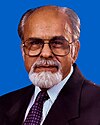
Mark Tully on I. K. Gujral 5 quotes
“He always knew which way the camel would lie down. This old Urdu saying was particularly applicable to Gujral who had a deep love of Urdu poetry.”
Mark Tully on B. K. S. Iyengar
“Guruji did warn me: "Relaxation doesn't mean yoga is a soft option. It's a disciplined subject — a casual attempt only gains casual results."”

Quotes About Mark Tully
Gain deeper perspective through quotes about Mark Tully from others.
"It's Sir Mark Tully in UK honors list" on Mark Tully
“During his career he has covered several assassinations, the 1971 war between India and Pakistan and the horrors of the Bhopal gas leak in which thousands were killed.”
"Mark Tully: The voice of India" on Mark Tully 2 quotes
“His understanding of all things Indian did not happen by accident. Mark Tully was born in Calcutta in 1936. The son of a wealthy accountant, he was brought up by a strict European nanny and did not come to Britain until he was ten.”
Michael Holland on Mark Tully
“Few foreigners manage to get under the skin of the world's biggest democracy the way he does, and fewer still can write about it with the clarity and insight he brings to all his work.”
Dean Nelson on Mark Tully
“Mark Tully is well-known as a thoroughly decent gentleman and one of the finest journalists ever posted to India. This is a badly-written book which should never have passed a lawyer or a publisher. It totally misrepresents his personal life and his work.”
François Gautier on Mark Tully
“Mark Tully may also have wanted to atone for his coverage of South Asia. I remember when we were both reporting on the Valley of Kashmir in the early nineties, that he would always highlight human right abuses on Muslims by the army, but hardly ever spoke about the 400.000 Kashmiri Hindus who were chased out of their ancestral homeland by threats, violence, rapes, torture and murder – and today have become refugees in their own countries... Many of us know that since the mid-eighties Pakistan encouraged, financed, trained and armed Kashmiri separatism. But Mark always made it a point to say: "India accuses Pakistan to foster separatism in Kashmir"; or :"elections are being held in Indian- held Kashmir"; or "Kashmir militants" have attacked an army post, instead of "terrorists".”

F. Gautier on Mark Tully
“I want to recall here my days as a young journalist covering Kashmir because I faced the same incomprehension that sometimes bordered on contempt in my reporting. At that time, the BBC was the Queen, so to say, of all media, because television was still in its infancy here and radio remained, for both the public and us journalists, the best and fastest means to keep abreast of the news. Mark Tully was then the South Asia Chief of Bureau of BBC — he was worshipped by Indian and Western journalists alike, and his word was gospel. From 1989, when the first Hindu public figures of the Valley of Kashmir were getting murdered by what was then the Jammu and Kashmir Liberation Front (JKLF), such as the director of Doordarshan, Lassa Kaul, and Satish Tikoo, people whom I had interviewed earlier, till the first elections in Kashmir in 2000, the Indian government was accusing Pakistan of training, arming, and financing the Indian Kashmiri militants, and sending them back across the border to create havoc in India. Mark Tully, ironically, accused the Indian government of lying and denied that the Pakistani government had a hand in Kashmir's terror saga. ...I was there, it touched me immensely and opened my eyes to what a monotheist and intolerant religious worldview could do to other people. What bothered me most was that Western journalists, led by Mark Tully, followed by Indian reporters, only highlighted the so-called human rights violations committed by the Indian Army and paramilitary forces on Muslims of Kashmir, but kept quiet on the ethnic cleansing of Hindus — as if they were responsible for their persecution.”
About Mark Tully
Sir William Mark Tully, KBE (born 24 October 1935) is the former Bureau Chief of BBC, New Delhi. He worked for BBC for a period of 30 years before resigning in July 1994.