Link Copied!
Mark Rothko Quotes (1903-1970)
Painter


About Mark Rothko
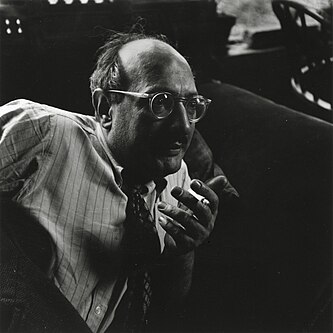
Mark Rothko (September 25, 1903 – February 25, 1970), born Marcus Rothkowitz, was a Latvian-born American painter usually considered an Abstract Expressionist.
Best Mark Rothko Quotes
Shortest
Earliest
Explore our curated collection of the most famous and impactful Mark Rothko quotes.
“A painting is not a picture of an experience; it is an experience.”

“[the first ingredient of his work]... is a clear preoccupation with death - intimations of mortality.”

“[I am] dealing not with the particular anecdote, but rather with the Spirit of Myth, which is generic to all myths at all times.”
“It's a risky business to send a picture out into the world. How often it must be impaired by the eyes of the unfeeling and the cruelty of the impotent who could extend their affliction universally!”
“One does not paint for design students or historians but for human beings, and the reaction in human terms is the only thing that is really satisfactory to the artist. [in conversation with W.C. Seitz]”

“[I]t was with the utmost reluctance that I found the figure could not serve my purposes...But a time came when none of us could use the figure without mutilating it. [his quote in 1959, looking back to the 1930s]”
“With us the disguise must be complete. The familiar identity of things has to be pulverized in order to destroy the finite associations with which our society increasingly enshrouds every aspect of our environment.”
“It is Cézanne's feeling that determined the form of his pictorial structure. It is his pictorial structure that gives off his feeling. If all his pictorial structures were to disappear from the world, so would a certain feeling.”
“Like the Cubists before them, the abstractionists felt a beautiful thing in perceiving how the medium can, of its own accord, carry one into the unknown, that is to the discovery of new structures. What an inspiration the medium is..”
“I do not believe that there was ever a question of being abstract or representational. It is really a matter of ending this silence and solitude, of breathing, and stretching one's arms again transcendental experiences became possible.”
“I use colors that have already been experienced through the light of day and through the state of mind of the total man. In other words, my colors are not colors that are laboratory tools which are isolated from all accidentals or impurities so that they have a specified identity or purity.”

“We are concerned with similar states of consciousness and relationship to the world.. .If previous abstractions paralleled the scientific and objective preoccupations of our times, ours are finding a pictorial equivalent for man's new knowledge and consciousness of his more complex inner self.”

“It was not that the figure had been removed, not that the figures had been swept away, but the symbols for the figures, and in turn the shapes in the later canvases were substitutes for the figures.. ..these new shapes say.. ..what the symbols said. [Rothko, explaining Seitz his new way of painting during the mid-1940s]”

“The aesthetic is the sine qua none for art: if a work is not aesthetic, it is not art by definition.. .We feel through the senses, and everyone knows that the content of art is feeling; it is the creation of an object for sensing that is the artist’s task; and it is the qualities of this object that constitute its felt content.”
“I will say without reservations that from my point of view there can be no abstractions. Any shape or area that has not the pulsating concreteness of real flesh and bones, its vulnerability to pleasure or pain is nothing at all. Any picture that does not provide the environment in which the breath of life can be drawn does not interest me.”

“[O]ne must agree with Rilke when he says that with 'nothing can one touch a work of art so little as with critical words...'. It was Marcel Duchamps who was critical, when he drew a moustache on the Mona Lisa. And so was Mondrian when he dreamed of the dissolution of painting, sculpture, and architecture into a transcendent ensemble.”
“Drama moves us: conflict is an inherent pattern in reality. Harmony moves us too: faced as we are with ever imminent disorder. It is a powerful idea. Van Gogh's drama and Seurat's silent harmony were born in the same country and epoch: but they do not contradict one another; they refer to different patterns among those which constitute reality.”
“It is a widely accepted notion among painters that it does not matter what one paints as long as it is well painted. This is the essence of academism. There is no such thing as good painting about nothing. We assert that only that subject matter is valid which is tragic and timeless. That is why we profess spiritual kinship with primitive and archaic art.”

“On shapes:
- They are organisms with volition and a passion for self-assertion.
- They move with internal freedom, and without need to conform with or to violate what is probable in the familiar world.
- They have no direct association with any particular visible experience, but in them one recognizes the principle and passion of organisms.”
“The activity of the artist makes him less socially conditioned and more humans. It is then that he is disposed to revolution. Society stands against anarchy; the artist stands for the human against society; society therefore threats him As an anarchist. Society's logic is faulty, but its intimation of an enemy is not. Still, the social conflict with society is an incidental obstacle in the artist's path.”

“The most important tool the artist fashions through constant practice is the faith in his ability to produce miracles when they are needed. Pictures must be miraculous; the instant one is completed, the intimacy between the creation and the creator is ended. He is an outsider. The picture must be for him, as for anyone experiencing it later, a revelation, an unexpected and unprecedented resolution of an eternally familiar need.”
“But the most common error among the whole-hearted abstractionists nowadays [in 1946] is to mistake the medium for an end in itself, instead of a means. On the other hand, the surrealists erred in supposing that one can do without a medium, that in attacking the medium one does not destroy just one means for getting into the unknown. Color and space relations constitute such a means because from them can be made structures which exhibit the various patterns of reality.”
“The progression of a painter's work, as it travels in time from point to point, will be toward clarity: toward the elimination of all obstacles between the painter and the idea, and between the idea and the observer. As examples of such obstacles, I give (among others) memory, history or geometry, which are swamps of generalization from which one might pull out parodies of ideas (which are ghosts) but never an idea in itself. To achieve this clarity is, inevitably, to be understood.”

Mark Rothko Quotes by Topic
Find exactly what you are looking for by browsing this categorized list of Mark Rothko quotes by topic.
Mark Rothko on Clarity
“The progression of a painter’s work, as it travels in time from point to point, will be toward clarity: toward the elimination of all ...”
Mark Rothko on Abstract expressionism
“The progression of a painter's work, as it travels in time from point to point, will be toward clarity: toward the elimination of all obstacles between the painter and the idea, and between the idea and the observer. As examples of such obstacles, I give (among others) memory, history or geometry, which are swamps of generalization from which one might pull out parodies of ideas (which are ghosts) but never an idea in itself. To achieve this clarity is, inevitably, to be understood.”
Mark Rothko on Romanticism
“The romantics were prompted to seek exotic subjects and to travel to far off places. They failed to realize that, though the transcendental must involve the strange and unfamiliar, not everything strange or unfamiliar is transcendental. The unfriendliness of society to his activity is difficult for the artists to accept. Yet this very hostility can act as a lever for true liberation. Both the sense of community and of security depend on the familiar. Free of them, transcendental experiences become possible.”
Quotes About Mark Rothko
Gain deeper perspective through quotes about Mark Rothko from others.
Quote of Adolph Gottlieb on Mark Rothko 2 quotes
“..For example; in the early forties Rothko and I decided to paint a certain subject matter. Perhaps if we saw some of those paintings now.. ..they might not seem so different as they did at the time. However, at no point was there ever any sort of a doctrine or a program or anything that would make a school. I think it was simply a situation in which all of the painters [of the New York School] were at that time; they were trying to break away from certain things.”
Thomas B. Hess on Mark Rothko
“There is a moment of blinding light. There is a moment that seems like death, a paralysis. Then a new man, Paul, emerges from the experience. Rothko, the most famous example, changed his name, his wife and his style in a few months of profound self-questioning.”
Jenny Holzer on Mark Rothko
“I wanted to be soft like Rothko and ruthless like Ad Reinhardt.”
Quote of Elaine de Kooning on Mark Rothko 2 quotes
“[B]ut Rothko was hypnotized by his own role and there was just one. The role was that of the Messiah-I have come; I have the word. I mean, Rothko had a very healthy self-worship and he did feel that he had discovered some great secret. He felt that this was of universal import...Rothko became totally involved in his own mythology, more than anyone I know except Barney Newman. They both were tremendously involved with their self-image. As the Kennedy White House was - where everything was done in terms of its fitting in with the self-image.”
Elaine de Kooning on Mark Rothko
“Well, I interpreted them [the late 'gray' paintings of Rothko] differently from his self-image right then and there. We argued about the significance of his paintings because he felt that they had a certain sense of foreboding and so on, and I didn't feel that at all. I felt they were very involved with comfort and luxury and they looked very natural in Jeanne Reynal's luxurious house, and people looked very well against them. They made a wonderful graceful decor, all of which was anathema to Rothko. I think in his very last paintings that he had down at the Rice Institute that there he got what he was talking about to me in the early '50s, but I don't think he had it then. I think when he got away from the pretty colors, beautiful colors and he got into those mysterious blacks and nameless deep, dark colors, that then the paintings did have this sense of foreboding. And I think they're his most magnificent paintings [in the Rothko Chapel....But those big black paintings, they took me by surprise. ...I was tremendously impressed. I found them very grand and the scale of them, the size, it was just quite amazing.”
Stanley Kunitz on Mark Rothko
“Mark Rothko was very conscious of his sources, both as location and as cultural heritage.”
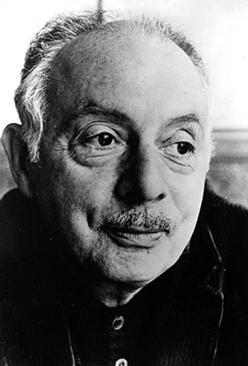
About Mark Rothko
Mark Rothko (September 25, 1903 – February 25, 1970), born Marcus Rothkowitz, was a Latvian-born American painter usually considered an Abstract Expressionist.