Link Copied!
Mark Norell Quotes (1957-2025)
King
About Mark Norell
Mark Norell (July 26, 1957 – September 9, 2025) was an American paleontologist and molecular geneticist, acknowledged as one of the most important living vertebrate paleontologists. He was recently the chairman of paleontology and a research associate at the American Museum of Natural History. He is best known as the discoverer of the first theropod embryo and for the description of feathered dinosaurs.
Best Mark Norell Quotes
Shortest
Earliest
Explore our curated collection of the most famous and impactful Mark Norell quotes.

“If you saw a baby tyrannosaur you would probably think it was a weird looking bird. A full grown one might have had feathers too, maybe not on its whole body though, maybe more of an ornamental display sort of feathers. So traits in the theropod dinosaurs were more birdlike than say, crocodiles.”
“Really the best way to understand anything about dinosaurs is by looking at living animals. You look at birds and then look at the closest living ancestor of birds, which is the crocodile. If you look at characteristics that birds and crocodiles have in common, the explanation is that the trait was in the common ancestor that birds and crocodiles had at one time.”
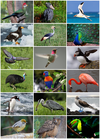
“The more that we learn about these animals the more we find that there is basically no difference between birds and their closely related dinosaur ancestors like velociraptor. Both have wishbones, brooded their nests, possess hollow bones, and were covered in feathers. If animals like velociraptor were alive today our first impression would be that they were just very unusual looking birds.”
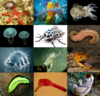
“When people look of non-avian dinosaur they’re thinking of extrapolating a cow up to that size. Mammals are much much denser than birds are, because a lot of the skeletons of sauropods (the big, long-necked ones—Apatosaurus, Brachiosaurus and the like) and theropod dinosaurs are just air. Theropods don’t have solid bones like we do; they have hollow bones. Sauropods don’t, but they have tremendous air sacs that fill up a lot of their bodies. And thus they weigh way less than a mammal scaled up to that size.”
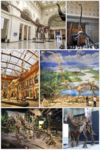
“A couple things that we do know about theropods—the ones that most closely related to birds—is that they brooded their nests. If you go deeper in the tree, what you see is that for sauropods, we have no direct evidence that they returned to the nest after the eggs were laid. Most of the evidence for that comes from an excavation in Argentina called Auca Mahuevo. What’s thought with sauropods is that they’d just lay a bunch of eggs and leave them alone—the turtle model. Few of those would ever reach adulthood.”
“If you look at crocodiles today, they aren’t really representative of what the lineage of crocodiles look like. Crocodiles are represented by about 23 species, plus or minus a couple. Along that lineage the more primitive members weren’t aquatic. A lot of them were bipedal, a lot of them looked like little dinosaurs. Some were armored, others had no teeth. They were all fully terrestrial. So this is just the last vestige of that radiation that we’re seeing. And the ancestor of both dinosaurs and crocodiles would have, to the untrained eye, looked much more like a dinosaur.”
Mark Norell Quotes by Topic
Find exactly what you are looking for by browsing this categorized list of Mark Norell quotes by topic.
Mark Norell on Dinosauria 2 quotes
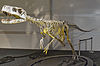
“We have as much evidence that T. rex was feathered, at least during some stage of its life, as we do that australopithecines like Lucy had hair.”
Mark Norell on Tyrannosaurus

Mark Norell on Birds
“The more that we learn about these animals the more we find that there is basically no difference between birds and their closely related dinosaur ancestors like velociraptor. Both have wishbones, brooded their nests, possess hollow bones, and were covered in feathers. If animals like velociraptor were alive today our first impression would be that they were just very unusual looking birds.”
Mark Norell on Velociraptors
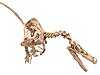
“The more that we learn about these animals the more we find that there is basically no difference between birds and their closely related dinosaur ancestors like Velociraptor. Both have wishbones, brooded their nests, possess hollow bones, and were covered in feathers. If animals like velociraptor were alive today our first impression would be that they were just very unusual looking birds.”
About Mark Norell
Mark Norell (July 26, 1957 – September 9, 2025) was an American paleontologist and molecular geneticist, acknowledged as one of the most important living vertebrate paleontologists. He was recently the chairman of paleontology and a research associate at the American Museum of Natural History. He is best known as the discoverer of the first theropod embryo and for the description of feathered dinosaurs.