Link Copied!
Mark Kurlansky Quotes (1948-)
Writer, Director







About Mark Kurlansky
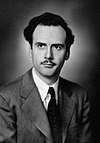
Mark Kurlansky (born December 7, 1948 in Hartford, Connecticut) is an American journalist and writer of general interest non-fiction. He is especially known for titles on eclectic topics, such as cod or salt.
Best Mark Kurlansky Quotes
Shortest
Earliest
Explore our curated collection of the most famous and impactful Mark Kurlansky quotes.
“Politics and nationalism often play far greater roles than conservation in the decision-making process.”

“To a cod, ocean floors mean safety. That is why they were rendered commercially extinct by bottom draggers.”

“Without the music to shout over, few people bothered saying anything. (Remarking on a power cut while in a bar in the Dominican Republic)”

“If ever there was a fish made to endure, it is the Atlantic cod—the common fish. But it has among its predators man, an openmouthed species greedier than cod.”

“The 200-mile limit was not seen in Canada, the United States, or anywhere else as a conservation measure, but rather as a protectionist measure for the national fisheries.”
“In spite of muzzling the press, imprisoning thousands, and engaging in torture, kidnapping and murder, the Gonzalez government was still vulnerable to the accusation of being "soft on Basques." To demonstrate the sincerity of its stance, the new government decided to have the entire twenty-three-person directorate of Herri Batasuna arrested.”

“Whatever steps are taken, one of the great obstacles to restoring cod stocks off of Newfoundland is an almost pathological collective denial of what has happened. Newfoundlanders seem prepared to believe anything other than that they have killed off nature’s bounty.”

“The American Revolution was the first great anticolonialist movement. It was about political freedom. But in the minds of its most hard-line revolutionaries, the New England radicals, the central expression of that freedom was the ability to make their own decisions about their own economy.”

“Canadian cod was not yet biologically extinct, but it was commercially extinct—so rare that it could no longer be considered commercially viable. Just three years short of the 500-year anniversary of the reports of Cabot’s men scooping up cod in baskets, it was over. Fishermen had caught them all.”
“Commercially successful fish farms reduce operating costs by feeding pellets of pressed fish meal rather than wild bait fish. In the case of salmon they are also fit artificial coloring to give them the pink tin to the acquire in the wild from eating crustaceans. Gastronomically, a wild salmon and a farmed salmon have as much in common as a side of wild boar has with pork chops.”

“Man wants to see nature and evolution as separate from human activities. There is a natural world, and there is man. But man also belongs to the natural world. If he is a ferocious predator, that too is part of evolution. If cod and haddock and other species cannot survive because man kills them, something more adaptable will take their place. Nature, the ultimate pragmatist, doggedly searches for something that works. But as the cockroach demonstrates, what works best in nature does not always appeal to us.”
“But while the new, offshore all-Canadian fishery was prospering, the inshore fisherman found their catch dropping off. They suspected the reason was that the offshore draggers were taking so many cod that the fish did not have a chance to migrate in the shore to spawn. The inshore fishermen complained to the regulatory agency, the Department of Fisheries and Oceans, but the government had invested in offshore fishing, not inshore, and its political priority was to make its investment a success story.”
“The ocean floor left behind is a desert. Any fish swimming in the vast area of these nets is caught. The only control is mesh size. Fish that are smaller than the holes in the net can escape. While mandating minimum mesh sizes has become a favorite tool of regulators, fisherman often point out that once the back wall of the cod end has a good crop of fish in it, few fish of any size can escape, regardless of how big the mesh. Millions of unwanted fish—undesirable species, fish that are undersized or over quota, even fish with a low market price that week—are tossed overboard, usually dead.”
“The Magnuson Fisheries Conservation and Management Act of 1976 had extended the exclusive U.S. fishing zone to 200 miles offshore and set up as regulators regional fishery management councils dominated by fishing interests. Fishermen never had been good regulators, but they were virtually encouraged not to be by loan guarantees and other financial incentives that led to a massive growth in the U.S. fishing fleet. In 1994, when the National Marine Fisheries Service counted fish stocks, it concluded that the fleet was about twice as large as the fish stocks could sustain.”
Mark Kurlansky Quotes by Topic
Find exactly what you are looking for by browsing this categorized list of Mark Kurlansky quotes by topic.
Mark Kurlansky on Mexico 2 quotes
“In 1910 Mexico had been a labyrinth of political chaos and social injustice. Centuries of inept colonial rule followed by corrupt dictatorships and foreign occupations then culminated in thirty years of one-man rule. After years of chaos, the dictator Porfirio Díaz offered stability. But in 1910 he was eighty years old and had arranged for no successor or any institutions to outlast him. There were no political parties, and he represented no ideology. Mexico was divided by different cultures, ethnic groups, and social classes, all with dramatically different needs and demands. When the country erupted into what was called the Mexican revolution that year, it was an endless series of highly destructive civil wars, most of them fought on a regional basis. There were many leaders and many armies. But this was the Mexico Hernan Cortes had found in the early sixteenth century. The Aztecs had ruled by managing a coalition of leaders from different groups. Cortes had defeated the Aztecs by dividing this coalition, gaining the loyalty of some of the leaders. That was how politics was played in Mexico.”

Mark Kurlansky on Satellite 2 quotes
“The other invention that was changing television was live satellite transmission. The first transmission from a satellite was the tape-recorded voice of President Dwight Eisenhower giving Christmas greetings on December 18, 1958. Early satellites, such as the “Early Bird,” were not geostationary—they did not maintain their position relative to the earth—and so could receive from any point on earth only at certain hours of the day. The satellite transmission of a major story required so many lucky coincidences that they rarely happened in the first few years. In those days, stories from Europe usually aired the next day in the States, after film could be flown in. The first story from Europe to be aired the same day on American television was not a satellite transmission. In 1961, when the Berlin Wall was first erected, the construction started so early in the day that with the time zone advantage, CBS was able to fly film to New York City in time for the evening news. President Kennedy complained that the half day it took to break the story on television had not allowed him enough time to formulate his response.”

Mark Kurlansky on 1968
“There has never been a year like 1968, and it is unlikely that there will ever be one again. At a time when nations and cultures were still separate and very different—and in 1968 Poland, France, the United States, and Mexico were far more different from one another than they are today—there occurred a spontaneous combustion of rebellious spirits around the world.”
Mark Kurlansky on Palestine
“At the beginning of 1968, the word Palestinian was generally used to refer to members of Arab guerrilla units, which were also frequently referred to in the Western press as terrorist organizations. These groups used the label Palestinian, as in the Palestine Liberation Front, the Palestinian Revolution, the Palestine Revolutionary Youth Movement, the Vanguard for Palestine Liberation, the Palestinian Revolutionaries Front, and the Popular Front for the Liberation of Palestine. At least twenty-six such groups were operating before the 1967 war.”

Mark Kurlansky on Cold War
“Growing up during the cold war had the same effect on most of the children of the world. It made them fearful of both blocs. This was one of the reasons European, Latin American, African, and Asian youth were so quick and so resolute in their condemnation of U.S. military action in Vietnam. By and large, theirs was not a support of communists, but a distaste for either bloc imposing its power. To American youth, the execution of the Rosenbergs, the lives ruined by Senator Joseph McCarthy’s hearings, taught them to distrust the U.S. government.”

Mark Kurlansky on Poetry
“1968 was one of those rare times in America when poetry seemed to matter. Telephone service in New York City in 1968 offered a “dial-a-poem.” A government pilot program that year sent poets around the country to public high schools to give readings and discussions. The response was wildly enthusiastic. In Detroit, poet Donald Hall was trapped in a hallway at Amelia Earhart Junior High School by excited students shouting, “Say us a poem!” Obligingly he shouted one, but then the crowd had doubled with new arrivals and he had to read it again.”

Mark Kurlansky on Monasticism
“During the Middle Ages, the customary way to reject militarism was to retreat to a monastery. In fact, the monastic movement was to a large degree a rejection of the Church state with its wealth, power, and wars. This is why the Church refused, and still refuses to support them. Monks and nuns produced crops, bread, jam, wine, liqueurs, and cheeses while they illuminated stunning manuscripts and sang some of the most beautiful music mankind ever created. Monasteries became citadels of learning in a violent age, enclaves for Christians who refused to take up arms.”
Mark Kurlansky on Just war theory
“The ideology of warfare that has been repeatedly invoked for the past thousand years of Western history grew out of Augustine's thesis of just war in the fifth century and continued to be developed to its complete expression in Pope Urban II's propaganda campaign launching the first Crusade at the end of the eleventh century. Simply stated in the terms of the American western, one of the great cultural institutions for fostering violence, the world is made up of good guys and bad guys, and the good guys have to shoot the bad guys for everyone's well-being. Once this was established, the state had only to declare its proposed victim a bad guy to justify a war.”

Mark Kurlansky on Leadership
“It was the beginning of the end of the cold war and the dawn of a new geopolitical order. Within that order, the nature of politics and leaders changed. The Trudeau approach to leadership, where a figure is known by style rather than substance, has become entrenched. Marshall McLuhan, that great prophet of the 1960s, predicted "The politician will be only too happy to abdicate in favor of his image, because the image will be so much more powerful than he could ever be." The political leaders of the 1968 generation who have come to power, such as Bill Clinton in the United States or Tony Blair in the United Kingdom, have shown an intuitive fluency with this concept of leadership.”

Mark Kurlansky on Racism in the United Kingdom
“Aside from the imported issue of Vietnam and a worsening climate in Northern Ireland, the biggest issue in Britain that year was racism. Led by Enoch Powell, a member of Parliament, the country was seeing a virulent strain of what the American civil rights movement called white backlash set off by the Labour government’s proposed Commonwealth Immigration Bill. As the British decolonized their empire, workers were being told that black and brown people from the former empire would be coming and taking away their jobs. “Keep Britain White,” was Powell’s slogan, and a number of workers groups demonstrated with this slogan. There was some amusement when a Kenyan diplomat was harassed entering the House of Commons by “Keep Britain White” hecklers who shouted, “Go back to Jamaica!” at the East African.”
Mark Kurlansky on Atomic bombings of Hiroshima and Nagasaki
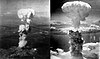
“While an older generation justified the nuclear bombing of Japan because it had shortened the war, the new generation once again, as children, had seen the pictures and they viewed it very differently. They had also seen the mushroom clouds of nuclear explosions on television because the United States still did aboveground testing. Americans and Europeans, both Eastern and Western, grew up with the knowledge that the United States, which was continuing to build bigger and better bombs, was the only country that had actually used one. And it talked about doing it again, all the time―in Korea, in Cuba, in Vietnam. The children born in the 1940s in both superpower blocs grew up practicing covering themselves up in the face of a nuclear attack. Savio recalled being ordered under his desk at school: "I ultimately took degrees in physics so even then I asked myself questions like, 'Will this actually do the job?'"”
Mark Kurlansky on Millennium
“The eleventh century was an impassioned time. The excitement about the new millennium in 2000 focused largely on whether computers would continue working; but in the year 1000 Europe was focused on the first millennium of Christ. All events—storms, comets, wars, floods, epidemics—were given momentous significance. God's wrath was seen at every turn. Christians seemed to believe they had strayed very far from God's will. People flocked to the churches and clung to the words of the clergy. But the Church was not talking about restoring the teachings of Jesus Christ; rather, the clergy spoke of defending the Church against its enemies. In the course of the first century of the new millennium, the Church, the most powerful institution in Europe, had overwhelmed European princes, to the point where its only remaining challengers were the Saracens. The fact that these Saracens were in decline made battling them all the more irresistible. It was time for a Christian lesser jihad.”

Mark Kurlansky on Oaths
“Between 1525 and 1800 more than two hundred decrees were issued by various European governments denouncing the Anabaptists. These denunciations were often based on the Anabaptist position that conscious adult believers should be baptized and not unknowing infants. But they were also denounced for their refusal to bear arms. Like the early Christians, their refusal extended to any participation in the state. They also refused to swear oaths, including oaths of allegiance, a stand that can be traced at least as far back as the Cathars. In the Middle Ages oaths had been essential to the warrior code, and rejecting them was rejecting war. Today oaths seem less important, and most contemporaries never swear an oath. But Americans are still required as young children to pledge allegiance to the flag, one of the first steps in conditioning young Americans for war. This assertion can be easily tested: denounced the saying of the pledge of allegiance and see if the people who are outraged are not the same people who promote war.”
Mark Kurlansky on Poland
“Poles cherish a heroic image of themselves, unshared by and little known in the outside world. One of their self-glorifying images is that of the defiant Pole. According to the Polish version of history, the Czechs allowed German occupation and the Poles resisted. The Czechs accepted communism in 1948 and the Poles resisted. The Poles rebelled in 1956 and supported the uprising in Budapest, while the Czechs said nothing and remained loyal to Moscow. Poles recall the fact that they sent a food shipment to support the Hungarian rebels, but the trucks had to pass through Czechoslovakia, where they were stopped. In the complicated pecking order of central Europe’s national images, Poles say that in 1956 “the Hungarians acted like Poles, the Poles like Czechs, and the Czechs acted like pigs.” Now the Czechs, whom the Poles had sneered at under Novotny’s Stalinist anachronism, were becoming the vanguard communist nation, the one to be followed. “It was surprising to see the Czechs ahead of us. They were supposed to be the opportunists and cowards,” said Eugeniusz Smolar.”

Mark Kurlansky on Southern United States
“For one hundred years, southern politics had remained frozen in time. The Democratic Party had been the party of John Caldwell Calhoun, the Yale-educated South Carolinian who fought in the decades leading up to the Civil War for the southern plantation/slave-owning way of life under the banner of states' rights. To white southerners, the Republican Party was the hated Yankee party of Abraham Lincoln that had forced them to release their Negro property. After Reconstruction, neither party had much to offer the Negroes, so for another century white southerners stayed true to their party and the Democrats could count on a solid block of Democratic states in the South. The point George Wallace was making in his independent run for president was that southern Democrats wanted something different from what the Democratic Party was offering, even though they were not going to become Republicans. Strom Thurmond of South Carolina was expressing the same idea as early as 1948 when he ran against Truman as the candidate for president for a party significantly named the States' Rights Party.”

Mark Kurlansky on Los Angeles
“By the beginning of 1968 most American cities were preparing for war—building up their arsenals, sending undercover agents into black neighborhoods like spies into enemy territory, recruiting citizenry as a standing reserve army. The city of Los Angeles, where thirty-four people had been killed in an August 1965 riot in the Watts section, was contemplating the purchase of bulletproof armored vehicles, each of which could be armed with a .30-caliber machine gun; a choice of smoke screen, tear gas, or fire-extinguishing launchers; and a siren so loud it was said to disable rioters. “When I look at this thing, I think, My God, I hope we’ll never have to use it,” said Los Angeles deputy police chief Daryl Gates, “but then I realize how valuable it would have been in Watts, where we had nothing to protect us from sniper fire when we tried to rescue our wounded officers.” Such talk had become good politics since California governor Pat Brown had been defeated the year before by Ronald Reagan, largely because of the Watts riots. The problem was that the vehicles cost $35,000 each. The Los Angeles Sheriff’s Office had a more cost-effective idea—a surplus army M-8 armored car for only $2,500.”

Mark Kurlansky on American Revolution
“The United States of America was founded by a war, and so it was needed to be a "good war." The creation of this founding myth, the rewriting of history, began immediately after the war, while everyone with short-term memory knew otherwise. Collective amnesia was a small further sacrifice for nation building. Most schoolchildren today are given the impression that the American Revolution was a relatively benign war. The worst thing that happened outside of the Continental Army being cold in the winter was the hanging of Nathan Hale, before which he got to make a speech asserting his willingness to be hanged. In truth, the American Revolution was a brutal civil conflict filled with not only combat casualties but bitter feuds and abuses between civilians and between military and civilians. A higher percentage of the American population died in the Revolution than in any other war in U.S. history except the undeniably brutal Civil War. The Revolution, like most civil wars, was a war against civilians, a war in which women and children and the homes in which they lived were often deliberately and viciously targeted. Civilians would run in terror at the approach of either army. Homes were sacked and women were raped.”

Mark Kurlansky on The Song of Roland
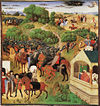
“At the start of its campaign, the Church manufactured for propaganda purposes both the threat and evilness of the enemy. The Church had spent many years developing a Western hatred of Muslims so that it could take Muslim lands. This too, is a lesson: a propaganda machine for hate always has a war waiting. This was why during the Cold War, the U.S. government became infuriated at any suggestion that the Soviets were their "moral equivalent." Eleventh-century chroniclers drastically revised early medieval history to demonize Muslims. A famous example is the beautiful eleventh-century poem Le Chanson de Roland, which depicts a 778 engagement in the Pyrenees between Charlemagne and the evil Saracens, describing an ambush by the deceitful Muslims in which the Christians valiantly defended themselves. Like Muslims, the Christians, too, could write poetic war propaganda. In truth, Charlemagne had already made a deal with competing Muslim leaders and easily took Spanish cities by a prearranged collaboration. But then, having not fought any real battles, on his way back to France he sacked Pamplona, a Basque city. It was the Basques and not the Muslims who attacked his rear column in the mountain pass. In reality there were not two all-powerful forces, the Christians and the Muslims, but many warring groups. Urban II unified the Christians by creating this myth of a single, all-powerful Saracen, which for a time was a great Christian advantage since there was no unity among Muslims.”
Mark Kurlansky on Anti-war movement
“The expressions peace movement and antiwar movement were largely American and even in the United States were fast becoming old-fashioned in some leftist circles. European radicals were not as interested in an end to the war as in a North Vietnamese victory. They tended to see the Tet Offensive not as a tragic loss of life, but as a triumph for an oppressed people. The British radical Tariq Ali, using language that was also heard in Berlin, Rome, and Paris, said of Tet, “A wave of joy and energy rebounds around the world and millions more are suddenly, exhilaratingly, ceasing to believe in the strength of their oppressor.” We all carry our own history on our backs. The American activists wanted a stop to the aggression. The Europeans wanted a defeat of colonialism—they wanted the United States to be crushed just as the European colonial powers had been. This was particularly apparent in the French insistence that the marines in Khe Sanh might suffer the same humiliating defeat as had the French in Dien Bien Phu. The constant articles in the French press asking, “Is Khe Sanh another Dien Bien Phu?” had a barely concealed wishfulness to them. There was a touch of self-loathing to the European Left, especially the Germans, and all sins were compared to those of their own countries. To the French and British Left, the Americans were colonialists, to the Germans they were Nazis. Peter Weiss’s 1968 Vietnam Discourse argued that the Americans in Vietnam were a Nazi-like evil.”

Mark Kurlansky on LSD
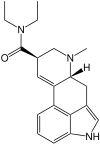
“LSD, lysergic acid diethylamid, or acid, was invented by accident in a Swiss laboratory in the 1930s by a doctor, Albert Hofmann, when a small amount of the compound on his fingertips resulted in "an altered state of awareness of the world." After the war, Hofmann's laboratory sold small amounts in the United States, where saxophonist John Coltrane, celebrated for his introspective brilliance, jazz trumpeter Dizzy Gilespie, and pianist Thelonious Monk experimented with the new drug, though not nearly as much as the CIA. The substance was hard to detect because it had neither odor, taste, nor color. An enemy surreptitiously exposed to LSD might reveal secrets or become confused and surrender. This was the origin of the idea of slipping acid into the water cooler. Plans under consideration included slipping acid to Egypt's Gamal Abdel Nasser and Cuba's Fidel Castro so that they would babble foolishly and lose their followings. But Castro's popularity among the young would probably have been enormously magnified once Allen Ginsberg and others learned that Fidel, too, was an acid head. Agents experimented on themselves, causing one to run outside to discover that cars were "bloodthirsty monsters." They also, in conjunction with the army, experimented on unknowing victims, including prisoners and prostitutes. The tests resulted in a number of suicides and psychotic patients and left the CIA convinced that it was almost impossible to usefully interrogate someone while under the influence of LSD. Acid experiments were encouraged by Richard Helms, who later, between 1967 and 1973, served as CIA director.”
Mark Kurlansky on Black Panther Party
“If the truth be told, which it rarely was except in private, most of the white Left found the Black Panthers a little bit scary. While most of the New Left whites were from the comfortable middle class, and most of the civil rights blacks such as Bob Moses and Martin Luther King were well educated, the Black Panthers were mostly street people from tough neighborhoods, often with prison records. Dressing in black with black berets and posing for photos with weapons, they intended to be scary. They preached violence and urged blacks to arm themselves for a coming violent revolution. They might have gotten little sympathy and few admirers except for two things. By 1968 it was becoming clear that the political establishment, especially in certain fiefdoms such as Mayor Richard Daley’s Chicago and Governor Ronald Reagan’s California, was prepared to use armed warfare against unarmed demonstrators. In April Daley announced that he had given his police force orders to “shoot to kill” any arsonist or anyone with a Molotov cocktail and “shoot to maim” any looters, a license to open fire on any civil disturbance. Once Reagan became governor in 1967, along with cutting the state budget for medical care and education, he initiated a policy of brutalizing demonstrators. Following an October 16, 1967, attack on antiwar demonstrators in Oakland that was so barbarous it was dubbed “bloody Tuesday,” he commended the Oakland Police Department for “their exceptional ability and great professional skill.” Young, privileged white people were starting to be treated by police the way black people had been for a long time.”

Mark Kurlansky on Vietnam War
“The American war in Vietnam was not unique and certainly no more reprehensible than numerous other wars, including the earlier French war in Vietnam. But this time it was being pursued by a nation with unprecedented global power. At a time when colonies were struggling to re-create themselves as nations, when the “anticolonial struggle” had touched the idealism of people all over the world, here was a weak and fragile land struggling for independence while this new type of entity known as a “superpower” dropped more non-nuclear bombs on its small territory than had been dropped on all of Asia and Europe in World War II. At the height of 1968 fighting, the U.S. military was killing every week the same number of people or more as died in the September 11, 2001, World Trade Center attack. While within the movements in the United States, France, Germany, and Mexico there was tremendous splintering and factionalism, everyone could agree—because of the power and prestige of the United States and the brutal and clearly unfair nature of the American war in Vietnam—that they opposed the Vietnam War. When the American civil rights movement became split in 1968 between the advocates of nonviolence and the advocates of Black Power, the two sides could come together in agreement on opposition to the Vietnam War. Dissident movements around the world could be built up simply by coming out against the war. When they wanted to protest, they knew how to do it; they knew about marches and sit-ins because of the American civil rights movement. They had seen it all on television from Mississippi, and they were eager to be freedom marchers themselves.”
Mark Kurlansky on Youth
“Youth around the globe saw the world being squeezed by two equal and unsavory forces. American youth had learned that it was important to stand up to both the communists and the anticommunists. The Port Huron Statement recognized that communism should be opposed: “The Soviet Union, as a system, rests on the total repression of organized opposition, as well as a vision of the future in the name of which much human life had been sacrificed, and numerous small and large denials of human dignity rationalized.” But according to the Port Huron Statement, anticommunist forces in America were more harmful than helpful. The statement cautions that “an unreasoning anti-Communism has become a major social problem.” This first started to be expressed in the 1950s with the film characters portrayed by James Dean, Marlon Brando, and Elvis Presley, and the beat generation writings of Ginsberg and Jack Kerouac. But the feeling grew in the 1960s. The young invested hope in John Kennedy, largely because he too was relatively young—the second youngest president in history replacing Eisenhower, who at the time was the oldest. The inauguration of Kennedy in 1961 was the largest change of age ever at the White House, with almost thirty years’ difference between the exiting and entering presidents. But even under Kennedy, young Americans experienced the Cuban missile crisis as a terrifying experience and one that taught that people in power play with human life even if they are young and have a good sense of humor. Most of the people who arrived at college campuses in the mid-1960s had a deep resentment and distrust of any kind of authority. People in positions of authority anywhere on the political spectrum were not to be trusted. That is why there were no absolute leaders. The moment a Savio or Hayden declared himself leader, he would have lost all credibility.”

Mark Kurlansky on Aftermath of World War II
“People born during and directly after World War II grew up in a world transformed by horror, and this made them see the world in a completely different way. The great lesson of Nazi genocide for the postwar generation was that everyone has an obligation to speak up in the face of wrong and that any excuse for silence will, in the merciless hindsight of history, appear as pathetic and culpable as the Germans in the war crimes trials, pleading that they were obeying orders. This was a generation that as children learned of Auschwitz and Bergen-Belsen, of Hiroshima and Nagasaki. Children who were told constantly throughout their childhood that at any moment the adults might decide to have a war that would end life on earth. While an older generation justified the nuclear bombing of Japan because it had shortened the war, the new generation once again, as children, had seen the pictures and they viewed it very differently. They had also seen the mushroom clouds of nuclear explosions on television because the United States still did aboveground testing. Americans and Europeans, both Eastern and Western, grew up with the knowledge that the United States, which was continuing to build bigger and better bombs, was the only country that had ever actually used one. And it talked about doing it again, all the time—in Korea, in Cuba, in Vietnam. The children born in the 1940s in both superpower blocs grew up practicing covering themselves up in the face of nuclear attack. Savio recalled being ordered under his desk at school: “I ultimately took degrees in physics so even then I asked myself questions like ‘Will this actually do the job?’ ” Growing up during the cold war had the same effect on most of the children of the world. It made them fearful of both blocs. This was one of the reasons European, Latin American, African, and Asian youth were so quick and so resolute in their condemnation of U.S. military action in Vietnam. By and large, theirs was not a support of communists, but a distaste for either bloc imposing its power. To American youth, the execution of the Rosenbergs, the lives ruined by Senator Joseph McCarthy’s hearings, taught them to distrust the U.S. government.”

Mark Kurlansky on Universities
“Being a student in the late sixties was a different experience than being one in the early sixties. For one thing, there was the draft. Neither Abbie Hoffman nor Tom Hayden nor Mario Savio had been subjected to a draft—a draft that threatened to pull students into a war in which Americans were killing and dying by the thousands. Perhaps more important, the war itself, with its cruel and pointless violence, was seen on television every night, and no matter how much they reviled it, these students were powerless to stop it. They could not even vote if they were under the age of twenty-one, though they could be drafted at eighteen. Despite all these differences, one thing, unfortunately, had not changed—the university itself. If the American university has in recent years been thought of as a sanctuary for leftist thought and activism, that is a legacy of the late sixties graduates. In 1968, universities were still very conservative institutions. Academia had enthusiastically supported World War II, moved seamlessly to full support of the Cold War, and, though starting to squirm a bit, tended to support the war in Vietnam. This was why the universities imagined their campuses to be suitable and desirable places for such activities as recruitment of executives by Dow Chemical, not to mention recruitment of officers by the military. And while universities were famous for their intellectuals like Herbert Marcuse or C. Wright Mills, a more typical product was Harvard's Henry Kissinger. The Ivy League in particular was well known as a bastion of conservative northeast elitism. Columbia University had Dwight Eisenhower as an emeritus member of its board of directors. Active members included CBS founder William S. Paley; Arthur H. Sulzberger, the septuagenarian publisher of The New York Times; his son Arthur O. Sulzberger, who would take over after his father's death later in the year; Manhattan district attorney Frank S. Hogan; William A. M. Burden, director of Lockheed, a major Vietnam War weapons contractor; Walter Thayer of the Whitney Corporation, a Republican fund-raiser who worked for Nixon in 1968; a Lawrence A. Wein, film producer, advisor to Lyndon Johnson, and trustee of Consolidated Edison. Later in the year students would produce a paper alleging connections between Columbia trustees and the CIA. Columbia and other Ivy League schools produced leaders in industry, publishing, and finance—the people behind politics, the people behind war, the very people C. Wright Mills identified in his book as "the power elite."”

What Mark Kurlansky Said About Others
Discover personal opinions Mark Kurlansky shared regarding contemporaries.
Mark Kurlansky on Christiaan Barnard 2 quotes
“In theory, the operation involves two doomed patients. One gives up his heart and dies but would have died in any event; the other is saved. But some doctors and laymen wondered if doctors should be deciding who is doomed. Shouldn’t everyone hope for a miracle? And how is it decided who receives a new heart? Were doctors now making godlike decisions? The controversy was not helped by Barnard, who said in an interview in Paris Match, “Obviously, if I had to choose between two patients in the same need and one was a congenital idiot and one a mathematics genius, I would pick the latter.” Controversy was also fueled by the fact that Barnard came from South Africa, the increasingly stigmatized land of apartheid, and that he had saved a white man by removing a black man’s heart and implanting it in him. Such an irony was not likely to be overlooked in a year like this.”
Mark Kurlansky on Eldridge Cleaver 2 quotes
“Eldridge Cleaver became a sixties icon largely through his literary ability. Cleaver first went to prison at the age of eighteen for smoking marijuana. He later went back for rape. Released from prison in 1966, he joined the staff of the counterculture magazine Ramparts—famous for being charged with a crime for its 1968 cover of burning draft cards. The magazine staff encouraged him to publish the essays he had written while in prison, essays that expressed harsh self-criticism along with harsh criticism of the world that created him. Cleaver was virtually unknown until 1968, when his book of essays, Soul on Ice, was published and he was credited by critics, including in The New York Times Book Review, with a brash but articulate voice. His timing was perfect: In 1968, what was wrong with American society was a leading question in America. A June Gallup poll showed that white people by a ratio of three to two did not believe America was “sick,” but black people by a ratio of eight to seven did. Soul on Ice was published at almost the exact same moment as the Kerner Report on racial violence and, as The New York Times review pointed out, confirmed its findings. “Look into a mirror,” wrote Cleaver. “The cause is you, Mr. and Mrs. Yesterday, you, with your forked tongues.””

Mark Kurlansky on Herbert Marcuse 2 quotes
“By 1968 there was another intellectual it seemed everybody wanted to quote: Marxist-Hegelian revisionist revolutionary Herbert Marcuse. His most appealing idea was what he called "the great refusal," the time to say "No, this is not acceptable"—another idea that was expressed in Savio's "odious machine" speech. Marcuse, a naturalized American citizen who had fled the Nazis, was on the faculty of Brandeis when Abbie Hoffman was a student there, and Hoffman was enormously influenced by him, especially by his book Eros and Civilization, which talked about guilt-free physical pleasure and learned about "false fathers, teachers, and heroes." The most talked about Marcuse book of the late sixties, One-Dimensional Man, was published in 1964. It denounced technological society as shallow and conformist and put into the carefully orchestrated discipline of German philosophy all of the sentiments of the 1950s James Dean-style rebels and the 1960s student revolutionaries. The New York Times called Marcuse "the most important philosopher alive." In 1968, at the age of seventy, Marcuse taught at San Diego State, where he could be seen fussing over his rust-colored cat and enjoying the hippos at the zoo, an avuncular white-haired figure whose impact was felt across the globe. The students who forced the University of Rome to close in March of that year carried a banner with three Ms that stood for Marx, Mao, and Marcuse.”
Mark Kurlansky on Robert F. Kennedy 2 quotes
“First was the political question, could he win? It was often said that he would be shot if it looked as if he would win. On June 4 he won the California primary, defeating McCarthy 45 to 42 percent, with Humphrey drawing only 12 percent of the vote. At that moment he had finally overcome McCarthy's considerable lead. He had only to outmaneuver Hubert Humphrey at the Chicago convention. "And now it's on to Chicago, and let's win there," he said. Minutes later he was shot in the head, strangely while taking an unplanned shortcut through the kitchen because admirers had blocked the planned exit path. And there in the kitchen, on the unplanned route, was a man waiting with a handgun. He had been shot by someone named Sirhan Sirhan, an odd appellation that made no sense to American ears. Unsatisfactory answers started coming. A Jordanian, an Arab from occupied Jordan, a Palestinian, but not in the old sense of a militant. Not an Arab with an agenda—no agenda. A displaced person who seemed mentally unstable. We learned who killed him, but we never found out why. Now that Kennedy was gone, who would be the next front-runner, and would he too be killed? "There is no God but death," Ferlinghetti wrote in a poem to Kennedy that he read the day he was buried. All the candidates, Democrats and Republicans, none so much as McCarthy, who seemed to have withdrawn from the race, knew that they could be next. Norman Mailer, who attended both party conventions, observed that all of the candidates had become uneasy-looking when in crowds. The most likely victim was already dead, the federal government decided it had to do more to protect the other seven. Robert Kennedy's assassination would have failed if the Secret Service had been guarding him, because they would have cleared the kitchen before he entered. One hundred and fifty Secret Service agents were attached to the remaining candidates, which had little impact on Hubert Humphrey or George Wallace because they were already heavily guarded. But it was a huge change for Eugene McCarthy, who had never even had a bodyguard.”

Mark Kurlansky on Alexander Dubček
“Dubcek, the bureaucrat with a pleasant smile, was a confusing blend of contradictions. He spent his entire career as the cog in a totalitarian machine and then, when he emerged on top, declared himself a democrat. He was a pragmatist and a dreamer. He could be a skilled maneuverer in the baroque labyrinth of communist politics. But in the end even he admitted that he could be incredibly naïve.”
Mark Kurlansky on Black people
“1968 would be the year in which "Negroes" became "blacks." In 1965, Stokely Carmichael, an organizer for the remarkably energetic and creative civil rights group the Student Nonviolent Coordinating Committee, or SNCC, invented the name Black Panthers, soon followed by the phrase Black Power. At the time black, in this sense, was a rarely used poetic turn of phrase. The word started out in 1968 as a term for black militants, and by the end of the year it became the preferred term for the people. Negro became a pejorative applied to those who would not stand up for themselves.”

Mark Kurlansky on Amiri Baraka
“LeRoi Jones was also one of the popular poets of the 1968 generation. His most famous line was fast becoming “Up against the wall motherfucker this is a stick-up.” A 1967 East Village “affinity group” named themselves “the Motherfuckers” after the Jones poem. An affinity group used intense intellectual debates as an underpinning for carrying out the kind of media-grabbing street theater that Abbie Hoffman could do so well. During the New York City garbage strike, the Motherfuckers hauled garbage by subway from the redolent mountains of it left on the sidewalks to the newly opened Lincoln Center.”

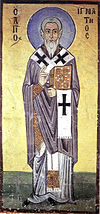
Mark Kurlansky on Ignatius of Antioch
“The first-century Christian writer Ignatius called for an abolition of warfare. This would happen, according to him and other Christian writers, once the world embraced the teachings of Jesus Christ—to love one's enemies, to do good even to those who do evil, to respond to evil with goodness. Such determined love and goodness was not meant to be pacifistic but a program for actively fighting evil. Given their stance against soldiers and soldiering, even against police work, it is striking that Christians sought and got converts among the Roman Legion. Some historians believe that it was converted Roman soldiers who first brought Christianity to Britain.”
Mark Kurlansky on Spiro Agnew
“Given Rockefeller's popularity, Nixon-Rockefeller would have been a dream ticket. Even if Rockefeller wouldn't accept the number-two spot, New York major John Lindsay, a handsome, well-liked liberal who had helped right the Kerner Commission report on racial violence, had made it clear that he was eager to run as Nixon's vice president. Conservative Nixon with liberal Lindsay would have brought to the Republican Party the full spectrum of American politics. Instead Nixon turned to the Right, picking a little-known and not much loved archconservative, with views, especially on race and law and order, that were so reactionary that to many he seemed an outright bigot.”

Mark Kurlansky on William Penn
“War burdens the working class, and that was traditionally the source of antiwar sentiments. Quaker founder George Fox was a shoemaker. But William Penn, a convert to Quakerism in 1667, at the age of twenty-three, was the son of a British admiral and an aristocrat with a personal acquaintanceship with King James II. Even after his conversion, he was reluctant at first to drop the aristocratic fashion of wearing a sword. Penn wrote of the power of love and the unchristian, warlike nature of Christians whom he termed—in the ultimate seventeenth-century European insult—to be worse than the Turks. It was Penn who offered the simplest formula for ending war, that it starts with an individual refusing to fight. According to Penn, "Somebody must begin it."”

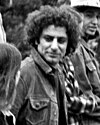
Mark Kurlansky on Abbie Hoffman
“Abbie Hoffman was one of the first Americans to fully appreciate the possibilities and the importance of living in what was becoming a media age. He was the New Left’s clown, not because he was clownish, but because in a very calculated way he understood that the New Left was in need of a clown, that a clown could publicize their issues, that a clown was not ignored. Above all, Abbie Hoffman did not want to be ignored. And like all good clowns, he was very funny. He was a master of the put-on, and those who understood put-ons laughed while the others joined the television cameras waiting when he promised to spin and levitate the Pentagon, not understanding why he was not in the least bit embarrassed, or the slightest bit disappointed, when he failed to do so.”
Mark Kurlansky on Yevgeny Yevtushenko
“Politics had much to do with tastes in poetry. Russian poets, especially if they were politically outspoken, were garnering huge followings among college students in the West. Yevgeny Yevtushenko was having a big year in 1968, both in political controversy at home and in artistic recognition abroad. Born in 1933, he belonged to a new school of Russian lyric poetry. Critics frequently suggested that others from the new school, such as Boris Pasternak’s protégé Andrey Voznesensky, also born in 1933, were better poets. But in the 1960s Yevtushenko was the most famous working Russian poet in the world. In 1962 he published four poems highly critical of the Soviet Union, including “Babi Yar,” about a massacre of Jews unsuccessfully covered up by the Soviets.”

About Mark Kurlansky
Mark Kurlansky (born December 7, 1948 in Hartford, Connecticut) is an American journalist and writer of general interest non-fiction. He is especially known for titles on eclectic topics, such as cod or salt.