Link Copied!
Mark Kac Quotes (1914-1984)
Mathematician
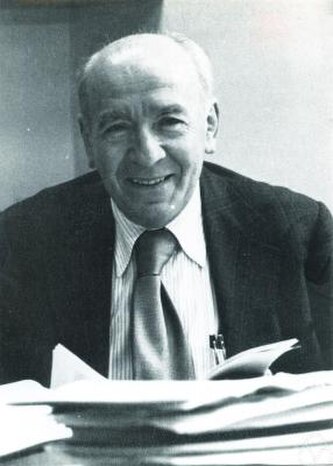
About Mark Kac
Mark Kac (pronounced kahts, Polish: Marek Kac, b. 3 August 1914, Krzemieniec, Russian Empire, now in Ukraine; d. 26 October 1984, California, USA) was a Polish mathematician. Kac completed his Ph.D. in mathematics at the Polish University of Lwów in 1937 under the direction of Hugo Steinhaus.
Best Mark Kac Quotes
Shortest
Earliest
Explore our curated collection of the most famous and impactful Mark Kac quotes.
“Where there is independence there must be the normal law.”

“I prefer concrete things and I don't like to learn more about abstract stuff than I absolutely have to.”

“Independence is the central concept of probability theory and few would believe today that understanding what it meant was ever a problem.”

“I then reached for a time honored tactic used by mathematicians: if you can't solve the real problem, change it into one you can solve.”

“Unrestricted abstraction tends to divert attention from whole areas of application whose very discovery depends of the features that the abstract point of view rules out as being accidental.”

“In the summer of 1930 my academic future, however, was not uppermost in my mind. I had been stricken by an acute attack of a disease which at regular intervals afflicts all mathematicians and, for that matter, all scientists: I became obsessed by a problem.”
“There are, roughly speaking, two kinds of mathematical creativity. One, akin to conquering a mountain peak, consists of solving a problem which has remained unsolved for a long time and has commanded the attention of many mathematicians. The other is exploring new territory.”
“As an introduction to America, my ten months in Baltimore were superb. I find it difficult to find words to convey the feeling of decompression, of freedom, of being caught in a sweep of unimagined and unimaginable grandeur. It was a life on a different scale with more of everything - more air to breathe, more things to see, more people to know.”

“There are two kinds of geniuses: the ‘ordinary’ and the ‘magicians.’ an ordinary genius is a fellow whom you and I would be just as good as, if we were only many times better. There is no mystery as to how his mind works. Once we understand what they’ve done, we feel certain that we, too, could have done it. It is different with the magicians... Feynman is a magician of the highest caliber.”
“Mathematics is an ancient discipline. For as long as we can reliably reach into the past, we find its development intimately connected with the development of the whole of our civilization. For as long as we have a record of man's curiosity and his quest for understanding, we find mathematics cultivated and cherished, practiced and taught. Throughout the ages it has stood as an ultimate in rational thought and as a monument to man's desire to probe the workings of his own mind.”
“In science, as well as in other fields of human endeavor, there are two kinds of geniuses: the “ordinary” and the “magicians.’’ An ordinary genius is a fellow that you and I would be just as good as, if we were only many times better. There is no mystery as to how his mind works. Once we understand what he has done, we feel certain that we, too, could have done it. It is different with the magicians. They are, to use mathematical jargon, in the orthogonal complement of where we are and the working of their minds is for all intents and purposes incomprehensible. Even after we understand what they have done, the process by which they have done it is completely dark. They seldom, if ever, have students because they cannot be emulated and it must be terribly frustrating for a brilliant young mind to cope with the mysterious ways in which the magician’s mind works. Richard Feynman is a magician of the highest caliber. Hans Bethe, whom Dyson considers to be his teacher, is an “‘ordinary genius’’; so much so that one may gain the erroneous impression that he is not a genius at all. But it was Feynman, only slightly older than Dyson, who captured the young man’s imagination. To be a physicist must have meant to him to be like Feynman and this, alas, was impossible. And so Dyson fell back on the source of strength he always had in reserve: the mastery of mathematical technique.”
What Mark Kac Said About Others
Discover personal opinions Mark Kac shared regarding contemporaries.
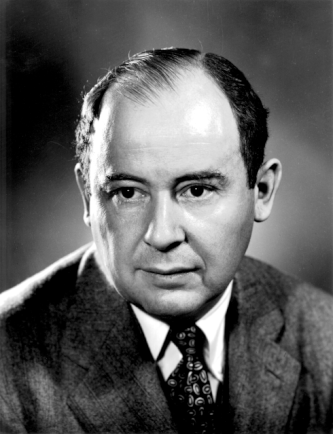
Mark Kac on John von Neumann
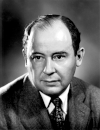
“As a mathematician, Steinhaus’s main strengths were his intelligence and an unerring instinct and taste in the choice of problems. In this respect he reminded me of John von Neumann, a mathematician whom he greatly liked and admired.”
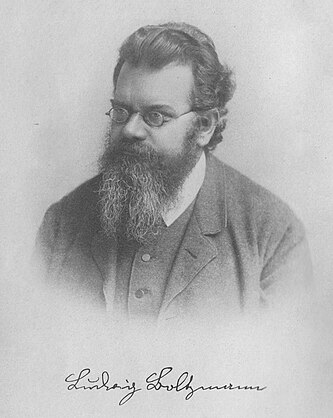
Mark Kac on Ludwig Boltzmann
“Boltzmann summarized most (but not all) of his work in a two volume treatise Vorlesungen Uber Gastheorie [1896, 1898]. This is one of the greatest books in the history of exact sciences and the reader is strongly advised to consult it. It is tough going but the rewards are great.”

About Mark Kac
Mark Kac (pronounced kahts, Polish: Marek Kac, b. 3 August 1914, Krzemieniec, Russian Empire, now in Ukraine; d. 26 October 1984, California, USA) was a Polish mathematician. Kac completed his Ph.D. in mathematics at the Polish University of Lwów in 1937 under the direction of Hugo Steinhaus.