Link Copied!
Mario Vargas Llosa Quotes (1936-2025)
Writer, Politician, Novelist
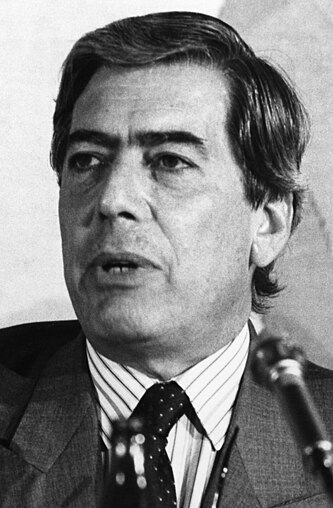

About Mario Vargas Llosa
Jorge Mario Pedro Vargas Llosa, 1st Marquis of Vargas Llosa (28 March 1936 – 13 April 2025) was a Peruvian-Spanish writer, politician, journalist, essayist, college professor, and recipient of the 2010 Nobel Prize in Literature. Vargas Llosa is one of Latin America's most significant novelists and essayists, and one of the leading writers of his generation.
Best Mario Vargas Llosa Quotes
Shortest
Earliest
Explore our curated collection of the most famous and impactful Mario Vargas Llosa quotes.

“[C]ommon sense is the most valuable of political virtues.”
“It is easy to know what you want to say, but not to say it.”
“Every thing is done halfway in Peru, and that is why everything goes wrong.”
“We all believe in the regulations, but you have to know how to interpret them.”
“He is always furious, on account of what he finds out or what he doesn't find out.”
“A clean conscience might help you to get into heaven. but it won't help your career.”

“¿Tienen algo que ver con los intereses de los humildes las querellas retóricas de los partidos burgueses?”
“Political correctness is the enemy of freedom because it rejects honesty and authenticity. We have to tackle it as the distortion of the truth.”

“Literature creates a fraternity within human diversity and eclipses the frontiers erected among men and women by ignorance, ideologies, religions, languages, and stupidity.”


“Ahora tenemos un peronismo que es todo: es la extrema derecha, es el centro, es el centro izquierda, es la extrema izquierda, es la democracia y es el terrorismo, es la demagogia y es la insensatez... Todo es el peronismo...”
“[I]t is normal for outsiders to have a better understanding of what is happening inside dictatorial regimes, because censorship prevents those suffering under dictatorship from being fully aware of the situation in which they are living.”

“Like writing, reading is a protest against the insufficiencies of life. When we look in fiction for what is missing in life, we are saying, with no need to say it or even to know it, that life as it is does not satisfy our thirst for the absolute – the foundation of the human condition – and should be better. We invent fictions in order to live somehow the many lives we would like to lead when we barely have one at our disposal.”

“[L]iberalism is above all an attitude toward life and society based on tolerance and respect, a love for culture, a desire to coexist with others and a firm defense of freedom as a supreme value. A freedom that is, at the same time, the driving force of material progress, of science, arts, and letters, and of a civilization that has produced sovereign individuals, with their independence, their rights, and their responsibilities that are always held in balance with those of other individuals, protected by a legal system that guarantees coexistence within diversity. Economic freedom is a key element of liberal doctrine but certainly not the only one.”

“We live in the civilization of the spectacle and the intellectuals and writers who are the most popular are almost never popular because of the originality of their ideas or the beauty of their creations, or, in any event, not just for intellectual, artistic, or literary reasons. They are popular above all else for their histrionic ability, the way in which they project their public image, their exhibitionism, their rudeness, their insolence, all that farcical and noisy dimension of public life that passes itself off as rebellion (but which, in fact, masks a complete conformism).”
“At the dawn of human society there were no individuals, only the tribe, the closed society. The sovereign individual freed from this collective body that jealously closed in on itself in order to defend itself from wild animals, lightning bolts, evil spirits, and innumerable other fears of the primitive world, is a late creation of humanity. It takes shape with the appearance of the critical spirit—with the discovery that the world and life are problems that can and must be solved—that is, with the development of rationalism and the right to exercise this rationalism independent of religious and political authorities.”
“There are certain disciplines—linguistics, philosophy, and literary and art criticism, for example—that seem particularly suited to performing the con of converting the pretentious verbiage of certain modish arrivistes into fashionable human science. To confront this type of deception requires not only the courage to swim against the tide but also having a solid cultural background in many areas of knowledge. The genuine humanist tradition […] is the only thing that can stop, or at least temper, the harmful effects on the cultural life of a country of these deformations—lack of science, pseudo-knowledge, artifice that passes itself off as creative thought—that are the unequivocal signs of its decline.”

“True progress, which has forced back or overthrown barbarous practices and institutions that were the source of infinite suffering for men and women, and has established more civilized relations and styles of life, has always been achieved through a partial, heterodox, distorted application of social theories. Social theories, in the plural, which means that different and even irreconcilable ideological systems have brought about identical or similar forms of progress. The prerequisite was always that these systems should be flexible and could be amended or reformed when they moved from the abstract to the concrete and came up against the daily experience of human beings. The filter at work that separates what is desirable from what is not desirable in these systems is the criterion of practical reason.”

“The only way to progress is by stumbling, falling, and getting up, time and again. Error will always be there because the best decisions are always, to some extent, bound up in error. In the great challenge of separating truth from lies—a goal, perhaps the most human of all goals, that is perfectly possible to achieve—it is essential to bear in mind that in this task there can never be definitive achievements that cannot be challenged later, and no knowledge that cannot be revised. In the great forest of misperceptions and deceptions, mistakes and mirages, through which we roam, the only way that truth can clear a path is by rational and systematic criticism of what is—or passes for—knowledge. Without this privileged expression of freedom, the right to criticize, we are condemned to oppression, brutality, and also obscurantism.”
“In May 1968 in France there was student unrest at the University of Nanterre, which then spread to the Sorbonne, to the remaining universities in the country, and to colleges and schools. This is how the "student revolution" began, and it sparked similar movements in different parts, which is why it became so important the world over. Nearly sixty years on, such a reaction seems excessive when one considers its real significance: it led to a certain freedom in behavior, especially sexual freedom, the disappearance of standards of polite behavior, the multiplication of swear words in communication, and not much more.”
Mario Vargas Llosa Quotes by Topic
Find exactly what you are looking for by browsing this categorized list of Mario Vargas Llosa quotes by topic.
Mario Vargas Llosa on Ephemerality
Mario Vargas Llosa on Peru
“Do the rhetorical quarrels of bourgeois political parties have anything to do with the interests of the humble and downtrodden?”

Mario Vargas Llosa on Political correctness
“Political correctness is the enemy of freedom because it rejects honesty and authenticity. We have to tackle it as the distortion of the truth.”

Mario Vargas Llosa on Egalitarianism
“Prosperity or egalitarianism you have to choose. I favor freedom you never achieve real equality anyway: you simply sacrifice prosperity for an illusion.”

Mario Vargas Llosa on Dexterity
“Writing stories was not easy. When they were turned into words, projects withered on the paper and ideas and images failed. How to reanimate them? Fortunately, the masters were there, teachers to learn from and examples to follow. Flaubert taught me that talent is unyielding discipline and long patience. Faulkner, that form – writing and structure – elevates or impoverishes subjects. Martorell, Cervantes, Dickens, Balzac, Tolstoy, Conrad, Thomas Mann, that scope and ambition are as important in a novel as stylistic dexterity and narrative strategy.”

Mario Vargas Llosa on Liberalism
“Liberalism is above all an attitude toward life and society based on tolerance and respect, a love for culture, a desire to coexist with others and a firm defense of freedom as a supreme value. A freedom that is, at the same time, the driving force of material progress, of science, arts, and letters, and of a civilization that has produced sovereign individuals, with their independence, their rights, and their responsibilities that are always held in balance with those of other individuals, protected by a legal system that guarantees coexistence within diversity. Economic freedom is a key element of liberal doctrine but certainly not the only one.”

What Mario Vargas Llosa Said About Others
Discover personal opinions Mario Vargas Llosa shared regarding contemporaries.
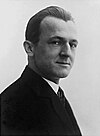
Mario Vargas Llosa on George Grosz 2 quotes
“But while he [Grosz] painted all this violence, we can see from his first drawings onward that he had an ambivalent attitude towards it: he rejected it, and at the same time was fascinated by it. In this respect, he has had some influence on what I do. Grosz's ambivalence is something that I have in myself.. .This is a great paradox of art and literature – what is despicable in life can be very attractive and appealing in art. You nourish yourself with everything that you hate.”
Mario Vargas Llosa on Aleksandr Solzhenitsyn
“The extraordinary political and intellectual feat of Solzhenitsyn was to emerge from the hell of concentration camp to tell the story... in books whose moral and documentary force has no parallel in modern history.”

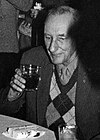
Mario Vargas Llosa on William S. Burroughs
“Burroughs doesn't interest me at all as a novelist; his experimental, psychedelic stories have always bored me, so much that I don't think I've ever been able to read one. But Junky, the first book he wrote, a factual and autobiographical account of how he became a drug addict and how his addiction to drugs -- free choice augmenting what was already doubtless a certain proclivity -- made him a willing slave, furnishes an accurate description of what I believe to be the literary vocation, of the utter interdependence of the writer and his work and the way the latter feeds on the former, on all he is and all he does or does not do.”
Mario Vargas Llosa on Pablo Neruda
“Neruda adored life. He was wild about everything - painting, art in general, books, rare editions, food, drink. Eating and drinking were almost a mystical experience for him. A wonderfully likeable man, full of vitality-if you forget his poems in praise of Stalin, of course. He lived in a near-feudal world, where everything led to his rejoicing, his sweet-toothed exuberance for life. I had the good fortune to spend a weekend on Isla Negra. It was wonderful! A kind of social machinery worked around him: hordes of people who cooked and worked-and always quantities of guests. It was a very funny society, extraordinarily alive, without the slightest trace of intellectualism. Neruda was exactly the opposite of Borges, the man who appeared never to drink, smoke, or eat, who one would have said had never made love, for whom all these things seemed completely secondary, and if he had done them it was out of politeness and nothing more. That's because ideas, reading, reflection, and creation were his life, the purely cerebral life. Neruda comes out of the Jorge Amado and Rafael Alberti tradition that says literature is generated by a sensual experience of life.”

Quotes About Mario Vargas Llosa
Gain deeper perspective through quotes about Mario Vargas Llosa from others.
Isabel Allende on Mario Vargas Llosa
“I belong to the first generation of Latin American writers brought up reading other Latin American writers. Before my time the work of Latin American writers was not well distributed, even on our continent. In Chile it was very hard to read other writers from Latin America. My greatest influences have been all the great writers of the Latin American Boom in literature: García Márquez, Vargas Llosa, Cortázar, Borges, Paz, Rulfo, Amado, etc.”

About Mario Vargas Llosa
Jorge Mario Pedro Vargas Llosa, 1st Marquis of Vargas Llosa (28 March 1936 – 13 April 2025) was a Peruvian-Spanish writer, politician, journalist, essayist, college professor, and recipient of the 2010 Nobel Prize in Literature. Vargas Llosa is one of Latin America's most significant novelists and essayists, and one of the leading writers of his generation.