Link Copied!
Maria Callas Quotes (1923-1977)
Singer

About Maria Callas
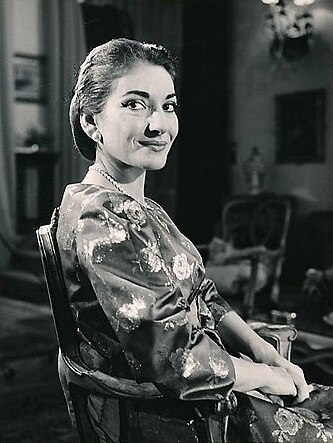
Maria Callas Μαρία Κάλλας (born 2 December 1923 – 16 September 1977) was an American-born Greek soprano opera singer.
Best Maria Callas Quotes
Shortest
Earliest
Explore our curated collection of the most famous and impactful Maria Callas quotes.
“What a lovely voice, but who cares?”
Unsourced — Primary work/page citation not yet verified in the QuotesCosmos archive. Per our Unnamed Sources & Verification Policy, quotes without confirmed primary editions are explicitly marked Unsourced while under editorial review.
“Don't talk to me about rules, dear. Wherever I stay I make the goddamn rules.”
Unsourced — Primary work/page citation not yet verified in the QuotesCosmos archive. Per our Unnamed Sources & Verification Policy, quotes without confirmed primary editions are explicitly marked Unsourced while under editorial review.
“I would not kill my enemies, but I will make them get down on their knees. I will, I can, I must.”

Unsourced — Primary work/page citation not yet verified in the QuotesCosmos archive. Per our Unnamed Sources & Verification Policy, quotes without confirmed primary editions are explicitly marked Unsourced while under editorial review.
“I admire Tebaldi's tone; it's beautiful — also some beautiful phrasing. Sometimes, I actually wish I had her voice.”
Unsourced — Primary work/page citation not yet verified in the QuotesCosmos archive. Per our Unnamed Sources & Verification Policy, quotes without confirmed primary editions are explicitly marked Unsourced while under editorial review.
“Some say I have a beautiful voice, some say I have not. It is a matter of opinion. All I can say, those who don't like it shouldn't come to hear me.”

Unsourced — Primary work/page citation not yet verified in the QuotesCosmos archive. Per our Unnamed Sources & Verification Policy, quotes without confirmed primary editions are explicitly marked Unsourced while under editorial review.
“It takes a little more time to get into the role, but not very much more. In making a record you don't have the sense of projection over a distance as in an opera house. We have this microphone and this magnifies all details of a performance, all exaggerations. In the theater, you can get away with a very large, very grand phrase. For the microphone, you have to tone it down. It's the same as making a film, your gestures will be seen in close-up, so they cannot be exaggerated as they would be in a theater.”

Unsourced — Primary work/page citation not yet verified in the QuotesCosmos archive. Per our Unnamed Sources & Verification Policy, quotes without confirmed primary editions are explicitly marked Unsourced while under editorial review.
“What [ Tullio Serafin] said that impressed me was: "When one wants to find a gesture, when you want to find how to act on stage, all you have to do is listen to the music. The composer has already seen to that." If you take the trouble to really listen with your soul and with your ears — and I say soul and ears because the mind must work, but not too much also — you will find every gesture there. And it is all true, you know.”
Unsourced — Primary work/page citation not yet verified in the QuotesCosmos archive. Per our Unnamed Sources & Verification Policy, quotes without confirmed primary editions are explicitly marked Unsourced while under editorial review.
“[ Serafin was] an extraordinary coach, sharp as a vecchio lupo [old wolfe]. He opened a world to me, showed me there was a reason for everything, that even fiorature and trills ... have a reason in the composer's mind, that they are the expression of the stato d'animo [state of mind] of the character — that is, the way he feels at the moment, the passing emotions that take hold of him. He would coach us for every little detail, every movement, every word, every breath. One of the things he told me — and this is the basis of bel canto — is never to attack a note from underneath or from above, but always to prepare it in the face. He taught me that pauses are often more important than the music. He explained that there was a rhythm — these are the things you get only from that man! — a measure for the human ear, and that if a note was too long, it was no good after a while. A fermata always must be measured, and if there are two fermate close to one another in the score, you ignore one of them. He taught me the proportions of recitative — how it is elastic, the proportions altering so slightly that only you can understand it. ... But in performance he left you on your own. "When I am in the pit, I am there to serve you, because I have to save my performance." he would say. We would look down and feel we had a friend there. He was helping you all the way. He would mouth all the words. If you were not well, he would speed up the tempo, and if you were in top form, he would slow it down to let you breathe, to give you room. He was breathing with you, living the music with you, loving it with you. It was elastic, growing, living.”
Unsourced — Primary work/page citation not yet verified in the QuotesCosmos archive. Per our Unnamed Sources & Verification Policy, quotes without confirmed primary editions are explicitly marked Unsourced while under editorial review.
“Bel canto does not mean beautiful singing alone. It is, rather, the technique demanded by the composers of this style — Donizetti, Rossini, and Bellini. It is the same attitudes and demands of Mozart and Beethoven, for example, the same approach and the same technical difficulties faced by instrumentalists. You see, a musician is a musician. A singer is no different from an instrumentalist except that we have words. You don't excuse things in a singer you would not dream of excusing in a violinist or pianist. There is no excuse for not having a trill, for not doing the acciaccatura, for not having good scales. Look at your scores! There are technical things written there to be performed, and they must be performed whether you like it or not. How will you get out of a trill? How will you get out of scales when they are written there, staring you in the face? It is not enough to have a beautiful voice. What does that mean? When you interpret a role, you have to have a thousand colors to portray happiness, joy, sorrow, fear. How can you do this with only a beautiful voice? Even if you sing harshly sometimes, as I have frequently done, it is a necessity of expression. You have to do it, even if people will not understand. But in the long run they will, because you must persuade them of what you're doing.”
Unsourced — Primary work/page citation not yet verified in the QuotesCosmos archive. Per our Unnamed Sources & Verification Policy, quotes without confirmed primary editions are explicitly marked Unsourced while under editorial review.
Maria Callas Quotes by Topic
Find exactly what you are looking for by browsing this categorized list of Maria Callas quotes by topic.
Maria Callas on Fashion
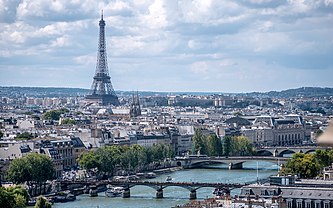
“Paris dictates fashion to the whole world.”

Unsourced — Primary work/page citation not yet verified in the QuotesCosmos archive. Per our Unnamed Sources & Verification Policy, quotes without confirmed primary editions are explicitly marked Unsourced while under editorial review.
Maria Callas on Paris
“Paris dictates fashion to the whole world.”

Unsourced — Primary work/page citation not yet verified in the QuotesCosmos archive. Per our Unnamed Sources & Verification Policy, quotes without confirmed primary editions are explicitly marked Unsourced while under editorial review.
Quotes About Maria Callas
Gain deeper perspective through quotes about Maria Callas from others.
Source on Maria Callas 15 quotes
“I happen to think that Callas was the greatest singer of the 20th century. I feel that so many people have learned the wrong things from her, rather than the right things. She was a fabulous musician. When you listened to her, you could almost take dictation. All the dots were there. Anything that was wrong was because of the deterioration of the instrument over time. But usually musical things were not wrong. She has pitch problems and wobbles that came in later.”
Unsourced — Primary work/page citation not yet verified in the QuotesCosmos archive. Per our Unnamed Sources & Verification Policy, quotes without confirmed primary editions are explicitly marked Unsourced while under editorial review.
John Ardoin on Maria Callas
“I once said to her “It must be a very enviable thing to be Maria Callas.” And she said, “No, it’s a very terrible thing to be Maria Callas, because it’s a question of trying to understand something you can never really understand.” She couldn’t really explain what she did. It was all done by instinct. It was something embedded deep within her.”
Unsourced — Primary work/page citation not yet verified in the QuotesCosmos archive. Per our Unnamed Sources & Verification Policy, quotes without confirmed primary editions are explicitly marked Unsourced while under editorial review.
Martina Arroyo on Maria Callas
“I adored this lady, and I respected her work ethic. She always wanted to improve her understanding of a piece. "Casta Diva", [for instance] — what interested me most was how she gave the runs and the cadenzas words. That always floored me. I always felt I heard her saying something — it was never just singing notes. That alone is an art. It’s an art that you can try to achieve, but you can’t copy, because that’s just imitating without delving into [how she felt] about that particular fioritura. ... how many other artists since Callas have you heard and thought, "She sang gorgeously, but I never cried?"”
Unsourced — Primary work/page citation not yet verified in the QuotesCosmos archive. Per our Unnamed Sources & Verification Policy, quotes without confirmed primary editions are explicitly marked Unsourced while under editorial review.
Cecilia Bartoli on Maria Callas
“Maria Callas remains an icon with an instantly recognizable voice. But she was also the first opera singer to be equipped with the ingredients of international celebrity: charisma, glamour, wealth, she had it all, together with the touches of scandal and tragedy that made her story so compelling. Since her time, every female opera singer has been measured against this powerful role model. ... Callas modernized our metier. Her life was a tireless creative search. She was one of the first to recognize the importance of being an actress as well as a singer, and was uncompromising in her belief that, in order to achieve a complete dramatic performance, all aspects of the operatic genre require equal attention. She was a pioneer in restoring forgotten repertoire and in exploring new ways of musical interpretation. To this day, I find that many of her exemplary recordings are astounding.”
Unsourced — Primary work/page citation not yet verified in the QuotesCosmos archive. Per our Unnamed Sources & Verification Policy, quotes without confirmed primary editions are explicitly marked Unsourced while under editorial review.
Carlo Bergonzi on Maria Callas
“Callas studied the text, the meaning of the words, and as a result, she became a diva. She became the Great Callas. Because she studied the character, she entered the mind of the character, and she brought the character to life onstage. Today, young singers don’t have this mindset. They don’t have the kind of technique that Callas had. ...Price, Milanov and Tebaldi had stupendous voices and great careers. [But] Callas, as a performer, as someone who expressed the real meaning of the words, was the best. The best. There is no doubt about this — not only for her sound, but because she studied so much. Callas is the diva. She is important to young singers, because she was a serious singer onstage, and she left a great legacy. I don’t know, though, if they can listen and learn from what she left on her recordings.”
Unsourced — Primary work/page citation not yet verified in the QuotesCosmos archive. Per our Unnamed Sources & Verification Policy, quotes without confirmed primary editions are explicitly marked Unsourced while under editorial review.
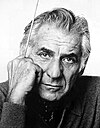


About Maria Callas
Maria Callas Μαρία Κάλλας (born 2 December 1923 – 16 September 1977) was an American-born Greek soprano opera singer.