Link Copied!
Marcus Garvey Quotes (1887-1940)


About Marcus Garvey
Marcus Mosiah Garvey, Jr., National Hero of Jamaica (17 August 1887 – 10 June 1940) was a publisher, journalist, entrepreneur, Black nationalist, orator, and founder of the Universal Negro Improvement Association and African Communities League (UNIA-ACL).
Best Marcus Garvey Quotes
Shortest
Earliest
Explore our curated collection of the most famous and impactful Marcus Garvey quotes.

“Our union must know no clime, boundary, or nationality… let us hold together under all climes and in every country…”
“If you have no confidence in self you are twice defeated in the race of life. With confidence you have won even before you have started.”

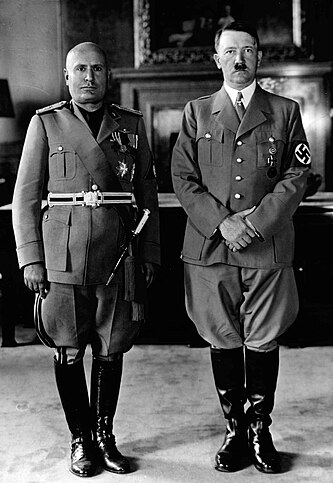
“We were the first Fascists, when we had 100,000 disciplined men, and were training children, Mussolini was still an unknown. Mussolini copied our Fascism.”
“I read "Up From Slavery," by Booker T. Washington, and then my doom--if I may so call it--of being a race leader dawned upon me in London after I had traveled through almost half of Europe.”

“I asked, "Where is the black man's Government?" "Where is his King and his kingdom?" "Where is his President, his country, and his ambassador, his army, his navy, his men of big affairs?" I could not find them, and then I declared, "I will help to make them."”

“Look for me in the whirlwind or the storm, look for me all around you, for, with God's grace, I shall come and bring with me countless millions of black slaves who have died in America and the West Indies and the millions in Africa to aid you in the fight for Liberty, Freedom and Life.”
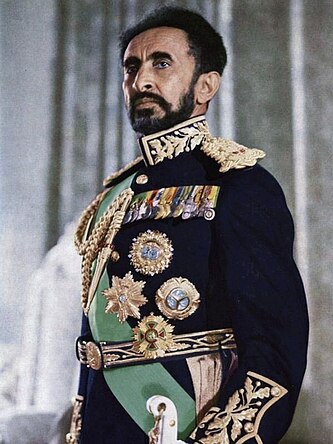
“When the facts of history are written Haile Selassie of Abyssinia will go down as a great coward who ran away from his country to save his skin and left the millions of his countrymen to struggle through a terrible war that he brought upon them because of his political ignorance and his racial disloyalty.”
“We are going to emancipate ourselves from mental slavery because whilst others might free the body, none but ourselves can free the mind. Mind is your only ruler, sovereign. The man who is not able to develop and use his mind is bound to be the slave of the other man who uses his mind, because man is related to man under all circumstances for good or for ill.”

“The Universal Negro Improvement Association and African Communities' League is a social, friendly, humanitarian, charitable, educational, institutional, constructive, and expansive society and is founded by persons, desiring to the utmost, to work for the general up lift of the Negro peoples of the world. And the members pledge themselves to do all in their power to conserve the rights of their noble race and to respect the rights of all mankind believing always in the Brotherhood of Man and the Fatherhood of God. The motto of the organization is: One God! One Aim! One Destiny! Therefore, let justice be done to all man kind, realizing that if the strong oppresses the weak confusion and discontent will ever mark the path of man, but with love, faith and charity toward all the reign of peace and plenty will be heralded into the world and the generations of men shall be called Blessed.”

“When the war started in Abyssinia all Negro nationalists looked with hope to Haile Selassie. They spoke for him, they prayed for him, they sung for him, they did everything to hold up his hands, as Aaron did for Moses; but whilst the Negro peoples of the world were praying for the success of Abyssinia this little Emperor was undermining the fabric of his own kingdom by playing the fool with white men, having them advising him[,] having them telling him what to do, how to surrender, how to call off the successful thrusts of his [Race] against the Italian invaders. Yes, they were telling him how to prepare his flight, and like an imbecilic child he followed every advice and then ultimately ran away from his country to England, leaving his people to be massacred by the Italians, and leaving the serious white world to laugh at every Negro and repeat the charge and snare - "he is incompetent," "we told you so." Indeed Haile Selassie has proved the incompetence of the Negro for political authority, but thank God there are Negroes who realise that Haile Selassie did not represent the truest qualities of the Negro race. How could he, when he wanted to play white? How could he, when he surrounded himself with white influence? How could he, when in a modern world, and in a progressive civilization, he preferred a slave State of black men than a free democratic country where the black citizens could rise to the same opportunities as white citizens in their democracies?”

Marcus Garvey Quotes by Topic
Find exactly what you are looking for by browsing this categorized list of Marcus Garvey quotes by topic.
Marcus Garvey on Crime

Marcus Garvey on Fascism
“Fascism is the cult of organised murder, invented by the arch-enemies of society. It tends to destroy civilization and revert man to his most barbarous state. Mussolini and Hitler might well be called the devils of an age, for they are playing hell with civilization.”

What Marcus Garvey Said About Others
Discover personal opinions Marcus Garvey shared regarding contemporaries.
Marcus Garvey on Haile Selassie 2 quotes
“Ras Tafari has travelled to Europe and America and is therefore no stranger to European hypocrisy and methods; he, therefore, must be regarded as a kind of a modern Emperor, and from what we understand and know of him, he intends to introduce modern methods and systems into his country.”
Quotes About Marcus Garvey
Gain deeper perspective through quotes about Marcus Garvey from others.
Amy Ashwood Garvey on Marcus Garvey
“Marcus ... maintained forcibly that although the Afro-American people were legally "free" as a people, something of the slave mentality was still characteristic of them. Mentally they were still in chains on account of the crippling effect of an inferiority complex. Somehow the sunlight must be allowed to flood the dark corners of their minds, so that they could be truly free and truly men, confident of holding their own with men of other races.”
Shirley Chisholm: The Last Interview: And Other Conversations on Marcus Garvey
“Marcus Garvey believed that blacks should return to Africa and build up and accept Africa as their home. And he led a movement, here, in the United States, and he got caught up in a lot of scandal, and, eventually, it collapsed, and that was that...I read everything I could about Marcus Garvey, and my father was such an ardent Garveyite that he would talk about him all the time.”
The Autobiography of W.E.B. Du Bois: A Soliloquy on Viewing My Life from the Last Decade of Its First Century on Marcus Garvey
“there arose early in this decade the case of Marcus Garvey. I heard of him first when I was in Jamaica in 1915 when he sent a letter "presenting his compliments" and giving me "a hearty welcome to Jamaica, on the part of the United Improvement and Conservation Association." Later he came to the United States. In his case, as in the case of others, I have repeatedly been accused of enmity and jealousy, which have been so far from my thought that the accusations have been a rather bitter experience. In 1920 when his movement was beginning to grow in America I said in The Crisis that he was "an extraordinary leader of men" and declared that he had "with singular success capitalized and made vocal the great and long suffering grievances and spirit of protest among the West Indian peasantry." On the other hand, I noted his difficulties of temperament and training, inability to get on with his fellow workers, and denied categorically that I had ever interfered in any way with his work. Later when he began to collect money for his steamship line I characterized him as a sincere and hard-working idealist but called his methods bombastic, wasteful, illogical and almost illegal and begged his friends not to allow him foolishly to overwhelm with bankruptcy and disaster one of the most interesting spiritual movements of the modern world. But he went ahead, wasted his money, got into trouble with the authorities and was deported. As I said at the time: "When Garvey was sent to Atlanta, no word or action of Ours accomplished the result. His release and deportation were a matter of law which no deed or wish of ours influenced in the slightest degree. We have today, no enmity against Marcus Garvey. He has a great and worthy dream. We wish him well. He is free; he has a following; he still has a chance to carry on his work in his own home and among his own people and to accomplish some of his ideas. Let him do it. We will be the first to applaud any success that he may have."”
Crusade for Justice: The Autobiography of Ida B. Wells on Marcus Garvey
“In the course of his conversation Marcus Garvey said that ninety thousand of the people on the island of Jamaica were colored, and only fifteen thousand of them were white; yet the fifteen thousand white people possessed all the land, ruled the island, and kept the Negroes in subjection. I asked him what those ninety thousand Negroes were thinking about to be dominated in this way, and he said it was because they had no educational facilities outside of grammar-school work. He wanted to return to his native home to see if he could not help to change the situation there. Instead he went to New York, began to hold street meetings, and got many of his fellow countrymen as well as American Negroes interested in his program of worldwide Negro unity. For a time it seemed as if his program would go through. Undoubtedly Mr. Garvey made an impression on this country as no Negro before him had ever done. He has been able to solidify the masses of our people and endow them with racial consciousness and racial solidarity. Had Garvey had the support which his wonderful movement deserved, had he not become drunk with power too soon, there is no telling what the result would have been. Already the countries of the world were beginning to worry very much about the influence of his propaganda in Africa, in the West Indies, and in the United States. His month-long conference in New York City every August, bringing the dusky sons and daughters of Ham from all corners of the earth, attracted a great deal of attention... It may be that even though he has been banished to Jamaica the seed planted here will yet spring up and bring forth fruit which will mean the deliverance of the black race-that cause which was so dear to his heart.”
Dr. C. Eric Lincoln on Marcus Garvey
“For the Negroes in America, the death of Malcolm X is the most portentous event since the deportation of Marcus Garvey in the 1920s.”
Misattributed Quotes
Quotes mistakenly credited to Marcus Garvey
About Marcus Garvey
Marcus Mosiah Garvey, Jr., National Hero of Jamaica (17 August 1887 – 10 June 1940) was a publisher, journalist, entrepreneur, Black nationalist, orator, and founder of the Universal Negro Improvement Association and African Communities League (UNIA-ACL).