Link Copied!
Marc Chagall Quotes (1887-1985)
Painter, King
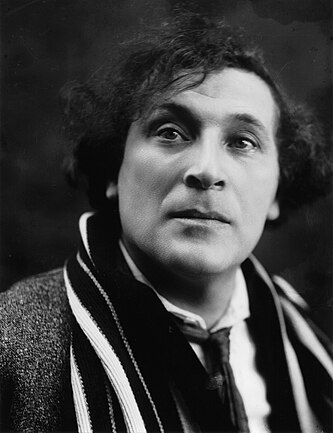
About Marc Chagall
Marc Chagall (July 7 1887 – 28 March 1985) was a Russian-Jewish painter who was born in Belarus, then part of the Russian Empire. He worked in Paris from 1910 till 1914, and after his Russian years (1914–1922) he returned to Paris. Among the celebrated painters of the 20th century, he is associated with the modern movements after Impressionism, but found the motifs of his painting in his religious Russian background.
Best Marc Chagall Quotes
Shortest
Earliest
Explore our curated collection of the most famous and impactful Marc Chagall quotes.
“If I weren't a Jew (in the sense in which I use the word) then I wouldn't be an artist, or at least not the one I am now.”
“If I weren't a Jew (in the sense in which I use the word) then I wouldn't be an artist, or at least not the one I am now.”
“When I painted Christ's parents I was thinking of my own parents. The bearded man is the Child's father. He is my father. [Chagall stated this in 1950]”
“In response I am sending you some pictures which I painted in Paris out of homesickness for Russia. They are not very typical of me; I have selected the most modest ones for the Russian exhibition.”

“If a symbol should be discovered in a painting of mine, it was not my intention. It is a result I did not seek. It is something that may be found afterwards, and which can be interpreted according to taste.”


“I am working in Paris. I cannot for a single day get the thought out of my head that there probably exists something essential, some immutable reality, and now that I have lost everything else (thank God, it gets lost all on its own) I am trying to preserve this and, what is more, not to be content. In a word: I am working.”
“In exasperation, I furiously attacked the floors and walls of the Moscow Theater. My mural paintings sight there, in obscurity. Have you seen them? Rant and rave, my contemporaries! In one way or another, my first theatrical alphabet gave you a belly-ache. Not modest? I'll leave that to my grandmother: it bores me. Despise me, if you like. (ca. 1921)”
“For me, Christ has always symbolized the true type of the Jewish martyr. That is how I understood him in 1908 when I used this figure for the first time.. .It was under the influence of the pogroms. Then I painted and drew him in pictures about ghettos, surrounded by Jewish troubles, by Jewish mothers, running terrified with little children in their arms.”
“..In spite of everything, there is still no more wonderful vocation than to continue to tolerate events and to work on in the name of our mission, in the name of that spirit which lives on in our teaching and in our vision of humanity and art, the spirit which can lead us Jews down the true and just path. But along the way, peoples will spill our blood, and that of others.”
“The sun has only ever shone for me in France (it certainly did that!). I have got used to beating the streets of Paris, happy beyond words dreaming of a life 125 years long - with the Louvre radiant in the distance. (Chagall couldn't go back to Paris because of the outbreak of the first World War in 1914). Having ended up in the Russian provinces, << I have decided to die >>.”
“My works are dear to me, each in its own way, I shall have to answer for them on the Day of Judgement. God alone knows whether I shall ever see them again. Quite apart from the money which I was going to receive for their sale there (exhibition in Gallery Der Sturm, Berlin June-July, 1914) and it is no small sum..”
“Or is all this fuss actually important for << art history >>? Oh, no, never. If things only ever originated as a result of such competition (between subject- and subjectless art) , it wouldn't be worth living among them, like an accidental, capricious toy. Clearly there is a greater, a more serene and more modest power, but we are either too lazy to live by its laws, or we have no time, or it "hurts too much".”

“* But my knowledge of Marxism was limited to knowing that Marx was a Jew, and that he had a long white beard. I said to Lunatcharsky [the political communist commissar for Education, ca. 1918] 'Whatever you do, don't ask me why I painted in blue or green, and why you can see a calf inside the cow's belly, etc. On the other hand you're welcome: if Marx is so wise, let him come back to life and explain it himself'. I showed him my canvases.”
“It's only my town (Chagall was born in Vitebsk), mine, which I have rediscovered. I come back to it with emotion. It was at that time that I painted my Vitebsk series of 1914. (Chagall couldn't go back to Paris because of the outbreak of the first World War in 1914) I painted everything that met my eyes. I painted at my window; I never walked down the street without my box of paint.”
“..No academy could have given me all I discovered by getting my teeth into the exhibitions, the shop windows, and the museums of Paris. Beginning with the market – where, for lack of money, I bought only a piece of a long cucumber – the workman in his blue overall, the most ardent followers of Cubism, everything showed a definite feeling for proportion, clarity, an accurate sense of form, of a more painterly kind of painting, even in the canvases of second-rate artists.”
“Two or three o'clock in the morning. The sky is blue. Dawn is breaking. Down there, a little way off, they slaughtered cattle, cows bellowed, and I painted them. I used to sit up like that all night long. It's already a week since the studio was cleaned out. Frames, eggshells, empty two-sou soup tins lie about higgledy-piggledy.. .On the shelves, reproductions of El Greco and Cézanne lay next tot the remains of a herring I had cut in two, the head for the first day, the tail for the next, and Thank God, a few crusts of bread.”
“Now at least 'artists have the upper hand' in the town (Vitebsk). They get totally engrossed in their disputes about art (between constructivists and suprematists), I am utterly exhausted and 'dream' of 'abroad'.. .After all, there is no more suitable place for artists to be (for me, at least) than at the easel, and I dream of being able to devote myself exclusively to my pictures. Of course, little by little one paints something, but it's not the real thing. (Chagall was director of the Art School of Vitebsk, including many conflicts)”
“I set to work. I pointed a mural for the main wall: Introduction to the New National Theatre. The other interior walls, the ceiling and the friezes depicted the forerunners of the contemporary actor – a popular musician, a wedding jester, a good woman dancing, a copyist of the Torah, the first poet dreamer, and finally a modern couple flying over the stage. The friezes were decorated with dishes and food, beigels and fruits spread out on well-laid tables. I looked forward to meeting the actors who passed me: 'Let us agree. Let's join forces and throw out all this old rubbish. Let's work a miracle!' (c. 1921)”
“The Jews might well, were they of such a mind (as I am, lament the disappearance of all those who painted the wooden synagogues in the small towns and villages - oh why haven't I gone to my grave with them!), and the carvers of the wooden 'school mallets' – 'quiet boy!' (and if you should see them in Ansky’s collection, you’ll get a shock!). But is there really any difference between my ancestor from Mohiliev, who painted the synagogue there, and myself, who painted the Jewish theatre in Moscow (and a good theater it is at that)?.. .I am convinced that, were I to stop shaving, you would see in me a deceptive likeness.”
“The Jews might well, were they of such a mind (as I am, lament the disappearance of all those who painted the wooden synagogues in the small towns and villages (oh why haven't I gone to my grave with them!), and the carvers of the wooden 'school mallets' – 'quiet boy!' (and if you should see them in Ansky's collection, you’ll get a shock!). But is there really any difference between my ancestor from Mohiliev, who painted the synagogue there, and myself, who painted the Jewish theater in Moscow (and a good theater it is at that)?.. .I am convinced that, were I to stop shaving, you would see in me a deceptive likeness.”
“Listen what happened to me when I was in the fifth form (ca. 1904), in the drawing lesson. An old-timer in the front row, the one who pinched me the most often, suddenly showed me a sketch on tissue paper, copied from the magazine "Niva": The Smoker. In this pandemonium! Leave me alone. I don't remember very well but this drawing, done not by me but by that fathead, immediately threw me into a rage. It roused a hyena in me. I ran to the library, grabbed that big volume of "Niva" and began to copy the portrait of the composer Rubinstein, fascinated by his crow's-feet and his wrinkles, or by a Greek woman and other illustrations; maybe I improvised some too, I hung them all up in my bedroom..”
“Only the great distance that separates Paris from my native town prevented me from going back.. .It was the Louvre that put end to all these hesitations. When I walked around the circular Veronese room and the rooms that the works of Manet, Delacroix and Courbet are in, I desired nothing more. In my imagination Russia [where Chagall was born] took the form of a basket suspended from a parachute. The deflated pear of the balloon was hanging down, growing cold and descending slowly in the course of the years. This was how Russian art appeared to me, or something of the sort.. .It was as if Russian art had been fatally condemned to remain in the wake of the West. (a later quote on his first arrival in Paris, 1910)”
Marc Chagall Quotes by Topic
Find exactly what you are looking for by browsing this categorized list of Marc Chagall quotes by topic.
Marc Chagall on Paris 2 quotes
“I am working in Paris. I cannot for a single day get the thought out of my head that there probably exists something essential, some immutable reality, and now that I have lost everything else (thank God, it gets lost all on its own) I am trying to preserve this and, what is more, not to be content. In a word: I am working.”
Marc Chagall on Life
“In our lives there is a simple colour, as on an artist's palette, which provides the meaning of life and art. It is the colour of love.”

Marc Chagall on Meaning of life
“In our lives there is a simple colour, as on an artist's palette, which provides the meaning of life and art. It is the colour of love.”

Marc Chagall on Symbolism (arts)
“If a symbol should be discovered in a painting of mine, it was not my intention. It is a result I did not seek. It is something that may be found afterwards, and which can be interpreted according to taste.”
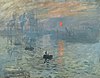
Marc Chagall on Impressionism
“The most authentic Russian Impressionism leaves one perplexed if one compares it with Monet and Pissarro. Here, in the Louvre, before the canvases of Manet, Millet and others, I understood why my alliance with Russia and Russian art did not take root.”
What Marc Chagall Said About Others
Discover personal opinions Marc Chagall shared regarding contemporaries.
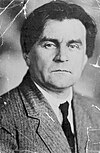
Marc Chagall on Kazimir Malevich
“At present there is an extremely exaggerated formation of groups [students on the 'School of Art' in Vitebsk, founded by Chagall around 'trend'; there are 1. young people following Malevich and 2. young people following me. We both belong to the left-wing artistic movement, although we have different ideas about ends and means.”
Quotes About Marc Chagall
Gain deeper perspective through quotes about Marc Chagall from others.
Isabel Allende on Marc Chagall

Matthew Baigell on Marc Chagall
“Jacques Lipchitz and Marc Chagall were among the European artists who settled in New York City during the war...Chagall, after his arrival in 1941, also continued to explore imagery he had developed earlier, including that of the Wandering Jew and the crucified Jesus as well as the inhabitants of East European shtetls or villages.”
André Breton on Marc Chagall
“Under his [Chagall's] sole impulse metaphor [comparison of images] made its triumphal entry into modern painting.”

Bella Chagall on Marc Chagall
Quote of Chagall on Marc Chagall
“He prepared his charcoal pencils, holding them in his hand like a little bouquet. Then he would sit in a large straw chair and look at the blank canvas or cardboard or sheet of paper, waiting for the idea to come. Suddenly he would raise the charcoal with his thumb and, very fast, start tracing straight lines, ovals, lozenges, finding an aesthetic structure in the incoherence. A clown would appear, a juggler, a horse, a violinist, spectators, as if by magic. When the outline was in place, he would back off and sit down, exhausted like a boxer at the end of a round.”
Jean-Michel Foray on Marc Chagall
“Some art historians have sought to decrypt his symbols, but there's no consensus on what they mean. We cannot interpret them because they are simply part of his world, like figures from a dream.”
Pablo Picasso on Marc Chagall 2 quotes
“When Henri Matisse dies, Chagall will be the only painter left who understands what color really is. I'm not crazy about those cocks and asses and flying violinists and all the folklore, but his canvasses are really painted, not just thrown together. Some of the last thing's he's done in Venice [where Matisse painted his late frescoes in the chapel] convince me that there's never been anybody since Renoir who has the feeling for light that Chagall has. [Picasso is reacting to Chagall's daughter Ida, 1952]”

About Marc Chagall
Marc Chagall (July 7 1887 – 28 March 1985) was a Russian-Jewish painter who was born in Belarus, then part of the Russian Empire. He worked in Paris from 1910 till 1914, and after his Russian years (1914–1922) he returned to Paris. Among the celebrated painters of the 20th century, he is associated with the modern movements after Impressionism, but found the motifs of his painting in his religious Russian background.