Link Copied!
Mancur Olson Quotes (1932-1998)
King, Scientist


About Mancur Olson
Mancur Lloyd Olson, Jr. (January 22, 1932 – February 19, 1998) was an American economist and social scientist.
Best Mancur Olson Quotes
Shortest
Earliest
Explore our curated collection of the most famous and impactful Mancur Olson quotes.

“No analysis of the limits of economic freedom or the uses of coercion by government, labor unions, or organizations of any kind can do justice to the complexity of the subject without taking account of the distinction between collective and noncollective goods.”
“The spontaneous individual optimization that drives the theories with which I began is important, but it is not enough by itself. If spontaneous Coase‐style bargains, whether through laissez-faire or political bargaining and government, eliminated socially wasteful predation and obtained the institutions that are needed for a thriving market economy, then there would not be so many grossly inefficient and poverty-stricken societies.”
Mancur Olson Quotes by Topic
Find exactly what you are looking for by browsing this categorized list of Mancur Olson quotes by topic.
Mancur Olson on Governability
“The concern about ungovernability in the United States often takes the form of complaints about “single-issue” politics and the limited influence and discipline of American political parties.”
Mancur Olson on Cultural Revolution
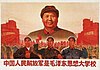
“One communist country went through a destruction of collusions for collective action that was equivalent to the organizational destruction in Germany and Japan. This was China during the cultural revolution. For whatever reasons, Mao started a revolution against his own upper-level and middle- level subordinates—the red mandarins. He decimated the very administrators and managers on which his economy depended. Only the military was spared. The immediate result was extreme instability and administrative chaos: the economic performance of the Chinese economy during the cultural revolution was much worse than in other communist countries. A longer-run result was that, when Mao died, there were not nearly as many well-entrenched coteries of administrators as in the Soviet Union and the European communist states. So when Deng and the other pragmatists defeated Mao's widow and the rest of the "gang of four" shortly after Mao's death, there were few industries, enterprises, or coteries of administrators whose insider lobbying could undermine Deng's market-oriented reforms. Deng was presumably also helped because virtually everyone was glad to see the end of the chaos. The encompassing interest of Deng, the new pragmatic autocrat, prevailed, largely because the cultural revolution had destroyed the narrowly entrenched interests with a stake in the status quo. Deng could do what Gorbachev and the other European communist reformers could not do: win out over the countless cliques engaged in covert collective action and other insider lobbies. The lion's share of the then-poor Chinese economy—agriculture—was promptly put under an individual responsibility market system. Other market-oriented reforms followed. The result, as we know, was rapid economic growth: output has often increased at 10 percent or more per year. This difference between China and the European countries that were communist, but had no cultural revolution, is precisely consistent with the argument offered here.”
What Mancur Olson Said About Others
Discover personal opinions Mancur Olson shared regarding contemporaries.
Mancur Olson on Mao Zedong
“One communist country went through a destruction of collusions for collective action that was equivalent to the organizational destruction in Germany and Japan. This was China during the cultural revolution. For whatever reasons, Mao started a revolution against his own upper-level and middle- level subordinates—the red mandarins. He decimated the very administrators and managers on which his economy depended. Only the military was spared. The immediate result was extreme instability and administrative chaos: the economic performance of the Chinese economy during the cultural revolution was much worse than in other communist countries. A longer-run result was that, when Mao died, there were not nearly as many well-entrenched coteries of administrators as in the Soviet Union and the European communist states. So when Deng and the other pragmatists defeated Mao's widow and the rest of the "gang of four" shortly after Mao's death, there were few industries, enterprises, or coteries of administrators whose insider lobbying could undermine Deng's market-oriented reforms. Deng was presumably also helped because virtually everyone was glad to see the end of the chaos. The encompassing interest of Deng, the new pragmatic autocrat, prevailed, largely because the cultural revolution had destroyed the narrowly entrenched interests with a stake in the status quo. Deng could do what Gorbachev and the other European communist reformers could not do: win out over the countless cliques engaged in covert collective action and other insider lobbies. The lion's share of the then-poor Chinese economy—agriculture—was promptly put under an individual responsibility market system. Other market-oriented reforms followed. The result, as we know, was rapid economic growth: output has often increased at 10 percent or more per year. This difference between China and the European countries that were communist, but had no cultural revolution, is precisely consistent with the argument offered here.”

Quotes About Mancur Olson
Gain deeper perspective through quotes about Mancur Olson from others.
James M. Buchanan on Mancur Olson
“If you take the story I've given you, if you recognize that the traditional way we looked at politics had a lot of romance in it, then Public Choice comes along and removes the romance. I think the natural outcome of that is you're going to be more skeptical about government than you would have been otherwise. Mancur Olson, a good friend of mine, has been influential in Public Choice and objects very strongly to this argument that there is this conservative bias. There is no bias in it as such. But Mancur himself has necessarily had to look at politics differently because of that, despite the fact that his natural proclivity would be more left than mine. There's nothing inherently biased about it. It's just that the fact that if you start looking at the political sector or politics from a non-romantic view, you come to a different view on what has been traditional.”

About Mancur Olson
Mancur Lloyd Olson, Jr. (January 22, 1932 – February 19, 1998) was an American economist and social scientist.