Link Copied!
Malcolm Lowry Quotes (1909-1957)
Poet, Novelist
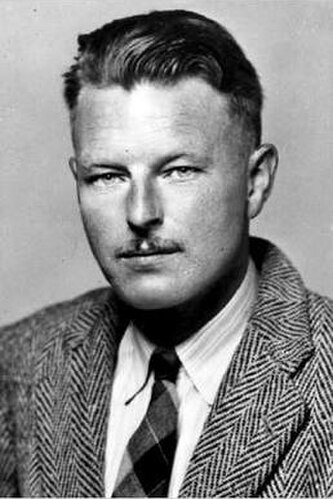



About Malcolm Lowry
Malcolm Lowry (28 July 1909 – 26 June 1957) was an English poet and novelist best known for his novel Under the Volcano.
Best Malcolm Lowry Quotes
Shortest
Earliest
Explore our curated collection of the most famous and impactful Malcolm Lowry quotes.
“What is man but a little soul holding up a corpse?”
“How alike are the groans of love, to those of the dying.”


“For a time they confronted each other like two mute unspeaking forts.”
“How shall the murdered man convince his assassin he will not haunt him.”
“And how could he know whether it was a good omen or not without another drink?”
“But my lord, Yvonne, surely you know by this time I can’t get drunk however much I drink.”
“Nothing in the world was more terrible than an empty bottle! Unless it was an empty glass.”
“No se puede vivir sin amar.
• Translation: You can´t live without loving.”
• Translation: You can´t live without loving.”



“In the war to come correspondents would assume unheard of importance, plunging through flame to feed the public its little gobbets of dehydrated excrement.”

“Though tragedy was in the process of becoming unreal and meaningless it seemed one was still permitted to remember the days when an individual life held some value and was not a mere misprint in a communiqué.”

“God, how pointless and empty the world is! Days filled with cheap and tarnished moments succeed each other, restless and haunted nights follow in bitter routine: the sun shines without brightness, and the moon rises without light.”
“I wake to a darkness in which I must follow myself endlessly, hating the I who so eternally pursues and confronts me. If we could rise from our misery, seek each other once more, and find again the solace of each other’s lips and eyes.”
“The howling pariah dogs, the cocks that herald dawn all night, the drumming, the moaning that will be found later white plumage huddled on telegraph wires in back gardens or fowl roosting in apple trees, the eternal sorrow that never sleeps of great Mexico.”
“There was no mistaking, even in the uncertain light, the hand, half crabbed, half generous, and wholly drunken, of the Consul himself, the Greek e’s, the flying buttresses of d’s, the t’s like lonely wayside crosses save where they crucified an entire word.”
“Yes, I do love you, I have all the love in the world left for you, only that love seems so far away from me and so strange too, for it is as though I could almost hear it, a droning or weeping, but far, far away, and a sad lost sound, it might be either approaching or receding, I can’t tell which.”

“The poor old creature seemed now indeed like someone being drawn, lured, into events of which he has no real comprehension, by people with whom he wishes to be friendly, even to play, who entice him by encouraging that wish and by whom, because they really despise and desire to humilate him, he is finally entangled.”
“"What for you lie?" the Chief of Rostrums repeated in a glowering voice. "You say your name is Black. No es Black." He shoved him backwards toward the door. "You say you are a wrider." He shoved him again. "You no are a wrider." He pushed the Consul more violently, but the Consul stood his ground. "You are no a de wrider, you are de espider, and we shoota de espiders in Méjico."”
“There was something in the wild strength of this landscape, once a battlefield, that seemed to be shouting at him, a presence born of that strength whose cry his whole being recognized as familiar, caught and threw back into the wind, some youthful passage of courage and pride — the passionate, yet so nearly always hypocritical, affirmation of one’s soul perhaps, he thought, of the desire to be, to do, good, what was right.”
“There was no callousness in their faces, no cruelty. Death they knew, better than the law, and their memories were long. They sat ranked now, motionless, frozen, discussing nothing, without a word, turned to stone. It was natural to have left the matter to the men. And yet, in these old women it was as if, through the various tragedies of Mexican history, pity, the impulse to approach, and terror, the impulse to escape (as one had learned at college), having replaced it, had finally been reconciled by prudence, the conviction it is better to stay where you are.”
Malcolm Lowry Quotes by Topic
Find exactly what you are looking for by browsing this categorized list of Malcolm Lowry quotes by topic.
Malcolm Lowry on Human sexual activity
“How alike are the groans of love to those of the dying.”

Malcolm Lowry on Mexico
“Juarez had lived and died. Yet was it a country with free speech, and the guarantee of life, liberty, and the pursuit of happiness? A country of brilliantly muralled schools, and where even each little cold mountain village had its stone open-air stage, and the land was owned by its people free to express their native genius? A country of model farms: of hope? It was a country of slavery, where human beings were sold like cattle, and its native peoples, the Yaquis, the Papagos, the Tomasachics, exterminated through deportation, or reduced to worse than peonage, their lands in thrall or the hands of foreigners. ... All this spelt Porfirio Diaz: rurales everywhere, jefes politicos, and murder, the extirpation of liberal political institutions, the army an engine of massacre, and instrument of exile. ... Yet the banality stood: that the past was irrevocably past. And conscience had been given man to regret it only in so far as that might change the future. For man, every man, even as Mexico, must ceaselessly struggle up-ward.”

Malcolm Lowry on Alcoholism
“Suddenly he saw them, the bottles of aguardiente, of anís, of jerez, of Highland Queen, the glasses, a babel of glasses—towering, like the smoke from the train that day—built to the sky, then falling, the glasses toppling and crashing, falling downhill from the Generalife Gardens, the bottles breaking, bottles of Oporto, tinto, blanco, bottles of Pernod, Oxygènée, absinthe, bottles smashing, bottles cast aside, falling with a thud on the ground in parks, under benches, beds, cinema seats, hidden in drawers at Consulates, bottles of Calvados dropped and broken, or bursting into smithereens, tossed into garbage heaps, flung into the sea, the Mediterranean, the Caspian, the Caribbean, bottles floating in the ocean, dead Scotchmen on the Atlantic highlands—and now he saw them, smelt them, all, from the very beginning—bottles, bottles, bottles, and glasses, glasses, glasses, of bitter, of Dubonnet, of Falstaff, Rye, Johnny Walker, Vieux Whiskey blanc Canadien, the apéritifs, the digestifs, the demis, the dobles, the noch ein Herr Obers, the et glas Araks, the tusen taks, the bottles, the bottles, the beautiful bottles of tequila, and the gourds, gourds, gourds, the millions of gourds of beautiful mescal . . .”

About Malcolm Lowry
Malcolm Lowry (28 July 1909 – 26 June 1957) was an English poet and novelist best known for his novel Under the Volcano.