Link Copied!
M. C. Escher Quotes (1898-1972)
Artist
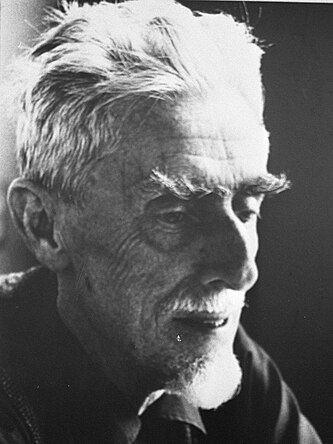

About M. C. Escher
Maurits Cornelis Escher (17 June 1898 – 27 March 1972) was a Dutch graphic artist who made mathematically inspired woodcuts, lithographs, and mezzotints. His work features mathematical objects and operations including impossible objects, explorations of infinity, reflection, symmetry, perspective, truncated and stellated polyhedra, hyperbolic geometry, and tessellations.
Best M. C. Escher Quotes
Shortest
Earliest
Explore our curated collection of the most famous and impactful M. C. Escher quotes.
“The things I want to express are so beautiful and pure.”
“I could fill an entire second life with working on my prints.”

“I am a graphic artist heart and soul, though I find the term "artist" rather embarrassing.”


“At moments of great enthusiasm it seems to me that no one in the world has ever made something this beautiful and important.”

“To have peace with this peculiar life; to accept what we do not understand; to wait calmly for what awaits us, you have to be wiser than I am.”

“As long as there have been men.. ..upon this globe.. ..we have held firmly to the notion of.. ..all of which must continue to be everlasting in time and infinite in space.”
“lf l am not mistaken, the words "art" and "artist" did not exist during the Renaissance and before: there were simply architects, sculptors, and painters, practicing a trade.”
“It's pleasing to realize that quite a few people enjoy this sort of playfulness and that they are not afraid to look at the relative nature of rock-hard reality.”
“After the first proof [of 'Sphere Spirals'] my high expectations were, as always, greatly disappointed. I am now struggling on - with some feeling of despair - so that I at least achieve a passable result.”

“When someone forgets himself, this by no means makes him altruistic; when a thinking person forgets himself, he immediately also forgets his fellowman, he loses himself and his humanity by becoming engrossed in his subject. Thus he is in a sense more contemplative than a feeling person.”
“The ideas that are basic to [my work] often bear witness to my amazement and wonder at the laws of nature which operate in the world around us. He who wonders discovers that this is in itself a wonder. By keenly confronting the enigmas that surround us, and by considering and analyzing the observations that I had made, I ended up in the domain of mathematics.”
“The result of the struggle between the thought and the ability to express it, between dream and reality, is seldom more than a compromise or an approximation. Thus there is little chance that we will succeed in getting through to a large audience, and on the whole we are quite satisfied if we are understood and appreciated by a small number of sensitive, receptive people.”
“In mathematical quarters, the regular division of the plane has been considered theoretically.. .Does this mean that it is an exclusively mathematical question? In my opinion, it does not. [Mathematicians] have opened the gate leading to an extensive domain, but they have not entered this domain themselves. By their very nature they are more interested in the way in which the gate is opened than in the garden lying behind it.”
“But to get back to the point: did you ever imagine that your dad, who lives so far away from the bustle and intrigue of the world, working on his prints day after day like a hermit, would some day be drawn into the sickening scene of vain officialdom, despite himself?.. .But what on earth can I do about it? Luckily I can swear by God and all his angels that I never moved a finger to get the decoration or licked the boots of any bigwigs.”
“I am always wandering around in enigmas. There are young people who constantly come to tell me: you, too, are making Op Art. I haven't the slightest idea what that is, Op Art. I've been doing this work for thirty years now.
• Variant: I walk around in mysteries. Each time, youngsters say: you make Op-art too. I don't know what that is, Op-art. This work I have been making for the past thirty years.”
• Variant: I walk around in mysteries. Each time, youngsters say: you make Op-art too. I don't know what that is, Op-art. This work I have been making for the past thirty years.”
“To tell you the truth, I am rather perplexed about the concept of "art]. What one person considers to be "art" is often not "art" to another. "Beautiful" and "ugly" are old-fashioned concepts that are seldom applied these days; perhaps justifiably, who knows? Something repulsive, which gives you a moral hangover, and hurts your ears or eyes, may well be art. Only "kitsch" is not art — we're all agreed about that. Indeed, but what is "kitsch"? If only I knew!”
“The fact that, from 1938 onwards, I concentrated more on the interpretation of personal ideas was primarily the result of my departure from Italy. In Switzerland, Belgium, and Holland where I successively established myself, I found the outward appearance of landscapes and architecture to be less striking than those which are particularly to be seen in the southern part of Italy. Thus I felt compelled to withdraw from the more or less direct and true-to-life illustrating of my surroundings.”

“As far as I know, there is no proof whatever of the existence of an objective reality apart from our senses, and I do not see why we should accept the outside world as such solely by virtue of our senses. These reality enthusiasts are possibly playing at hide-and-seek; at any rate they like to hide themselves, though they are not usually aware of it. They simply do it because they happen to have been born with a sense of reality, that is, with a great interest in so-called reality, and because man likes to forget himself.”
“The unknown mountain nests in the inhospitable interior of southern Calabria are usually connected only by a mule track with the railway that runs close to the coast: whoever wants to go there has to walk on foot if he has no donkey at his disposal. I think back to that warm afternoon in the month of May when we the four of us, after a long, tiring ride in the harsh sun, packed with the heavy burden of our backpacks, sweat-dripping and a little gasping, entered the city gate of Palizzi..”
“..and to think now that great mathematicians find my work interesting because I am able to illustrate their theories. They can not imagine that I was such a bad pupil in mathematics. I don't understand it myself neither. I never could understand why it was necessary to prove something that everyone already sees. I saw it, I knew it, so it is how it is… But yes, you had to prove it. I did overcome it when I realized I can make something else - I thought I was a good-for-nothing. In my family there were no other artists to find.. .I was just a weird duck, right?”
“In my prints I try to show that we live in a beautiful and orderly world and not in a chaos without norms, as we sometimes seem to. My subjects are also often playful. I cannot help mocking all our unwavering certainties. It is, for example, great fun deliberately to confuse two and three dimensions, the plane and space, or to poke fun at gravity. Are you sure that a floor cannot also be a ceiling? Are you absolutely certain that you go up when you walk up a staircase? Can you be definite that it is impossible to eat your cake and have it?”

“My work has nothing to do with people, nothing to do with psychology. I am much more cerebral than Willink. I do not wish to be deep at all. I know that I don't hide anything at all in this work. When Carel Willink paints a naked lady in a street, I think: what is that lady doing there?. ..the house facades give me a lugubrious impression. So it is a lugubrious street. My work is not lugubrious. If you ask Willink: 'Why are those naked mistresses there', you do not receive an answer. With me you always get an answer when you ask: why..”
M. C. Escher Quotes by Topic
Find exactly what you are looking for by browsing this categorized list of M. C. Escher quotes by topic.
M. C. Escher on Businessperson
“It may seem paradoxical to say that there are similarities between a poetical and a commercial mind, but it is a fact that both a poet and a businessman are constantly dealing with problems that are directly related to people and for which sensitivity is of prime importance. The business-like mind is sometimes described as being cold, sober, calculating, hard; but perhaps these are simply qualities that are necessary for dealing with people if one wants to achieve anything. One is always concerned with the mysterious, incalculable, dark, hidden aspects for which there is no easy formula, but which form essentially the same human element as that which inspires the poet.”

Quotes About M. C. Escher
Gain deeper perspective through quotes about M. C. Escher from others.
Source on M. C. Escher
“(1) What are the possible shapes for a tile that can produce a regular division of the plane, that is, a tile that can fill the plane with its congruent images such that every tile is surrounded in the same manner?”
Doris Schattschneider on M. C. Escher
“(2) Moreover, in what ways are the edges of such a tile related to each other by isometries?”
Steven Poole on M. C. Escher
“It is a neat depiction of one of Escher's enduring fascinations: the contrast between the two-dimensional flatness of a sheet of paper and the illusion of three-dimensional volume that can be created with certain marks. In 'Drawing Hands', space and the flat plane coexist, each born from and returning to the other, the black magic of the artistic illusion made creepily manifest.”
Disputed Quotes
Quotes attributed to M. C. Escher that are questionable.
About M. C. Escher
Maurits Cornelis Escher (17 June 1898 – 27 March 1972) was a Dutch graphic artist who made mathematically inspired woodcuts, lithographs, and mezzotints. His work features mathematical objects and operations including impossible objects, explorations of infinity, reflection, symmetry, perspective, truncated and stellated polyhedra, hyperbolic geometry, and tessellations.