Link Copied!
Ludwig Klages Quotes (1872-1956)
Philosopher, Writer, Poet
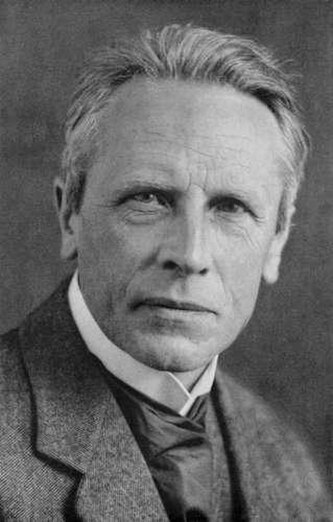

About Ludwig Klages
Friedrich Konrad Eduard Wilhelm Ludwig Klages (10 December 1872 – 29 July 1956) was a German philosopher, psychologist, graphologist, poet, writer, and lecturer, who was a two-time nominee for the Nobel Prize in Literature.
Best Ludwig Klages Quotes
Shortest
Earliest
Explore our curated collection of the most famous and impactful Ludwig Klages quotes.
“Christianity is the war against sleep and dream.”


“A man who cannot climb a tree will boast of never having fallen out of one.”
“Everything purposeful is meaningless, and everything meaningful is purposeless.”
“The profundity of truth varies with the seeing power of the spirit which seeks it.”
“Whereas the Americans thought that they were fighting for such high-minded slogans as "liberty" and "justice," they were actually fighting to stuff the money bags of the big bankers. These "free citizens" are, in fact, mere marionettes; their freedom is imaginary, and a brief glance at American work-methods and leisure-time entertainments is enough to prove conclusively that l’homme machine is not merely imminent: it is already the American reality.”

“The great masses, who have never been, in the history of mankind, more subject to hypnotic suggestion than they are right now, have become the puppets of the “public opinion” that is engineered by the newspapers in the service, it need hardly be emphasized, of the reigning powers of finance. What is printed in the morning editions of the big city newspapers is the opinion of nine out of ten readers by nightfall. The United States of America, whose more rapid “progress” enables us to predict the future on a daily basis, has pulled far ahead of the pack when it comes to standardizing thought, work, entertainment, etc.”
Ludwig Klages Quotes by Topic
Find exactly what you are looking for by browsing this categorized list of Ludwig Klages quotes by topic.
Ludwig Klages on Boasting
“A man who cannot climb a tree will boast of never having fallen out of one.”
Ludwig Klages on Ambition
“For the modern psychologist, … industry has remained as the only virtue—with its satellites, ambition and success—a conception of virtue which the Ancients would never have hesitated to relegate to the lowest of men, to pariahs and to slaves.”
Ludwig Klages on Psychology
“[Modern psychology] appears as the sickly offspring of average common sense when it is taken as what it professes to be—a science of the inner life. The entire achievements of the so-called science in this respect is outweighed by a single page of Goethe’s or of Jean Paul’s psychology; and it is impossible to evade the bitter truth which Novalis already has summed up, when he says that so-called psychology is one of those idols which have usurped the place in the sanctuary where true images of the gods should stand.”

Ludwig Klages on Modernity
“[Modern psychology] appears as the sickly offspring of average common sense when it is taken as what it professes to be—a science of the inner life. The entire achievements of the so-called science in this respect is [sic] outweighed by a single page of Goethe’s or of Jean Paul’s psychology; and it is impossible to evade the bitter truth which Novalis already has summed up, when he says that so-called psychology is one of those idols which have usurped the place in the sanctuary where true images of the gods should stand.”

Ludwig Klages on Industry
“A Renaissance busied with psychology might perhaps have considered man’s faculty of action as worthy of investigation; a mediæval period, the strength of his faith, a classical period—in part at least—his capacity for happiness. Such traits have lost their value for the modern psychologist; they are not even regarded at all, and industry has remained as the only virtue—with its satellites, ambition and success—a conception of virtue which the Ancients would never have hesitated to relegate to the lowest of men, to pariahs and to slaves.”

About Ludwig Klages
Friedrich Konrad Eduard Wilhelm Ludwig Klages (10 December 1872 – 29 July 1956) was a German philosopher, psychologist, graphologist, poet, writer, and lecturer, who was a two-time nominee for the Nobel Prize in Literature.