Link Copied!
Linus Pauling Quotes (1901-1994)
Author, Activist, Scientist
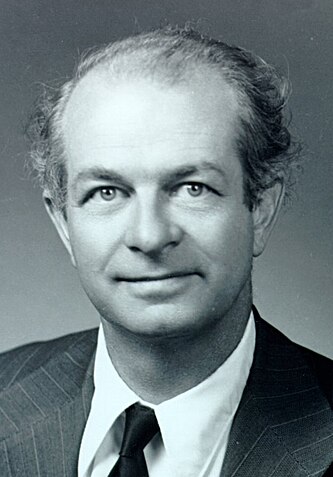

About Linus Pauling
Linus Carl Pauling (February 28 1901 – August 19 1994) was an American chemist, biochemist, chemical engineer, peace activist, author, and educator. He published more than 1,200 papers and books, of which about 850 dealt with scientific topics. New Scientist called him one of the 20 greatest scientists of all time. For his scientific work, Pauling was awarded the Nobel Prize in Chemistry in 1954. For his peace activism, he was awarded the Nobel Peace Prize in 1962. He is one of five people to have won more than one Nobel Prize (the others being Marie Curie, John Bardeen, Frederick Sanger, and Karl Barry Sharpless) and one of two people to be awarded Nobel Prizes in different fields, the other being Marie Curie.
Best Linus Pauling Quotes
Shortest
Earliest
Explore our curated collection of the most famous and impactful Linus Pauling quotes.

“I have always wanted to know as much as possible about the world.”
“Only when I began studying chemical engineering at Oregon Agricultural College did I realize that I myself might discover something new about the nature of the world.”
“A substance showing resonance between two or more valence-bond structures does not contain molecules with the configurations and properties usually associated with these structures.”
“I have something that I call my Golden Rule. It goes something like this: "Do unto others twenty-five percent better than you expect them to do unto you." … The twenty-five percent is for error.”
“What astonished me was the very low toxicity of a substance that has such very great physiological power. A little pinch, 5 mg, every day, is enough to keep a person from dying of pellagra, but it is so lacking in toxicity that ten thousand times as much can be taken without harm.'''”
“Planck’s constant and the quantum theory that is built around it are of extreme importance for chemistry—we may well be justified in saying that quantum theory is of greater importance to chemistry than to physics ... there is no part of chemistry that does not depend, in its fundamental theory, upon quantum principles.”

“The power to destroy the world by the use of nuclear weapons is a power that cannot be used - we cannot accept the idea of such monstrous immorality.
The time has now come for morality to take its proper place in the conduct of world affairs; the time has now come for the nations of the world to submit to the just regulation of their conduct by international law.”

“As far as women are concerned, I am old-fashioned enough to like the idea of a woman's managing the household. This is an important activity. A woman does not have to be a bank vice-president to find happiness. I should think routine work like sitting at a desk writing letters, making reports, or punching data into computers would be much less interesting and satisfying than running a home.”
“We must not have a Nuclear war. We must begin to solve international disputes by the application of man's power of reason in a way that is worthy of the dignity of man. We must solve them by arbitration, negotiation, and the development of international law, the making of international agreements that will do justice to all nations and to all peoples and will benefit all nations and to all people. Now is the time to start.”

“Everyone should know that the "war on cancer" is largely a fraud, and that the National Cancer Institute and American Cancer Society are derelict in their duties to the people who support them.”

“Science cannot be stopped. Man will gather knowledge no matter what the consequences – and we cannot predict what they will be. Science will go on — whether we are pessimistic, or are optimistic, as I am. I know that great, interesting, and valuable discoveries can be made and will be made… But I know also that still more interesting discoveries will be made that I have not the imagination to describe — and I am awaiting them, full of curiosity and enthusiasm.”
“When an old and distinguished person speaks to you, listen to him carefully and with respect — but do not believe him. Never put your trust into anything but your own intellect. Your elder, no matter whether he has gray hair or has lost his hair, no matter whether he is a Nobel laureate — may be wrong. The world progresses, year by year, century by century, as the members of the younger generation find out what was wrong among the things that their elders said. So you must always be skeptical — always think for yourself.”

“Just think of the differences today. A young person gets interested in chemistry and is given a chemical set. But it doesn't contain potassium cyanide. It doesn't even contain copper sulfate or anything else interesting because all the interesting chemicals are considered dangerous substances. Therefore, these budding young chemists don't get a chance to do anything engrossing with their chemistry sets. As I look back, I think it is pretty remarkable that Mr. Ziegler, this friend of the family, would have so easily turned over one-third of an ounce of potassium cyanide to me, an eleven-year-old boy.”

“I've been asked from time to time, "How does it happen that you have made so many discoveries? Are you smarter than other scientists?" And my answer has been that I am sure that I am not smarter than other scientists. I don't have any precise evaluation of my IQ, but to the extent that psychologists have said that my IQ is about 160, I recognize that there are one hundred thousand or more people in the United States that have IQs higher than that. So I have said that I think I think harder, think more than other people do, than other scientists. That is, for years, almost all of my thinking was about science and scientific problems that I was interested in.”

“We may, I believe, anticipate that the chemist of the future who is interested in the structure of proteins, nucleic acids, polysaccharides, and other complex substances with high molecular weight will come to rely upon a new structural chemistry, involving precise geometrical relationships among the atoms in the molecules and the rigorous application of the new structural principles, and that great progress will be made, through this technique, in the attack, by chemical methods, on the problems of biology and medicine.”
“I realized that more and more I was saying, "It seems to me that we have come to the time war ought to be given up. It no longer makes sense to kill 20 million or 40 million people because of a dispute between two nations who are running things, or decisions made by the people who really are running things. It no longer makes sense. Nobody wins. Nobody benefits from destructive war of this sort and there is all of this human suffering." And Einstein was saying the same thing of course. So that is when we decided — my wife and I — that first, I was pretty effective as a speaker. Second, I better start boning up, studying these other fields so that nobody could stand up and say, "Well, the authorities say such and such "”

Linus Pauling Quotes by Topic
Find exactly what you are looking for by browsing this categorized list of Linus Pauling quotes by topic.
Linus Pauling on Redox 2 quotes
“Although different kinds of chemical reactions are thus easily recognized, it has not been found very useful in general to attempt to classify reactions in a rigorous way. Nevertheless, there is one very important class of chemical reactions that deserves special study. These reactions are oxidation-reduction reactions, to which we now turn our attention.”

Linus Pauling on Ideas
Linus Pauling on Resonance (chemistry)
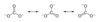
“A substance showing resonance between two or more valence-bond structures does not contain molecules with the configurations and properties usually associated with these structures.”
Linus Pauling on Addition reaction
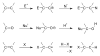
“An addition reaction is a reaction in which a molecule adds to a molecule containing a double bond, converting the double bond into a single bond. Because of this property of readily combining with other substances such as the halogens, ethylene and related hydrocarbons are said to be unsaturated. Ethylene is the first member of a homologous series of hydrocarbons, called the ethylene series.”
Linus Pauling on Arbitration
“We must not have a Nuclear war. We must begin to solve international disputes by the application of man's power of reason in a way that is worthy of the dignity of man. We must solve them by arbitration, negotiation, and the development of international law, the making of international agreements that will do justice to all nations and to all peoples and will benefit all nations and to all people. Now is the time to start.”

Linus Pauling on Entropy (thermodynamics)
“Investigations of the entropy of substances at low temperatures have produced very important information regarding the structure of crystals, the work of Giauque and his collaborators being particularly noteworthy. For example, the observed entropy of crystalline hydrogen shows that even at very low temperatures the molecules of orthohydrogen in the crystal are rotating about as freely as in the gas; ... subsequent to this discovery the phenomenon of rotation of molecules in crystals was found to be not uncommon.”

Linus Pauling on Chemistry
“We may, I believe, anticipate that the chemist of the future who is interested in the structure of proteins, nucleic acids, polysaccharides, and other complex substances with high molecular weight will come to rely upon a new structural chemistry, involving precise geometrical relationships among the atoms in the molecules and the rigorous application of the new structural principles, and that great progress will be made, through this technique, in the attack, by chemical methods, on the problems of biology and medicine.”
Quotes About Linus Pauling
Gain deeper perspective through quotes about Linus Pauling from others.
Jeremy Bernstein on Linus Pauling
“He combined scientific brilliance, political courage, and a stubborn, quirky single-mindedness in ways that... will probably always resist simple explanation.”
Francis Crick on Linus Pauling
“Linus Pauling was not always right in his ideas. But my belief is that, in most cases, if somebody is always right in his ideas you find that he does not have much to say. It is an expression of somebody's fertility that he does produce quite a number of ideas, and I think Linus Pauling's score is pretty high... I do not think, as I said earlier, that it is right to discuss the impact of Linus Pauling on molecular biology. Rather, he was one of the founders of molecular biology. It was not that it existed in some way, and he simply made a contribution. He was one of the founders who got the whole discipline going.”

Derek A. Davenport on Linus Pauling
“Whatever the context and whatever the audience, he was clear, he was committed, he was compassionate, and, far more often than most, he was right — or if not, at least on the side of the angels.”
Ted on Linus Pauling 7 quotes
“If there is a need for a universal hero, it is easy to see why Linus Pauling would be nominated for the role. In many ways he seemed larger than life.”
Zelek S. Herman on Linus Pauling
“Linus Pauling undoubtedly stands as one of the most influential scientists of the twentieth century.”
Harden M. McConnell on Linus Pauling
“Although Pauling was often controversial and was sometimes criticized in both scientific and political arenas, it is incontrovertible that he had a major impact on science, education, and international peace.”
John Allen Paulos on Linus Pauling
“From time to time throughout his long life, scientists and commentators dismissed him as a showman. Would that we had a whole troupe of such scientific showmen.”
Alexander Rich on Linus Pauling
“The esteem with which he was regarded was vividly illustrated to me in 1951 when, as a postdoctoral fellow of Pauling's, I visited Albert Einstein in Princeton. Einstein's comment to me was "Ah, that man is a real genius!"”
John D. Roberts on Linus Pauling
“An extraordinary person — a scientist, educator, humanist, and statesman with worldwide impact in each of these roles.”
Nassim Nicholas Taleb on Linus Pauling
“In spite of our advances... there is no scientific evidence that can convince... more potently than a sincere and emotional testimonial. Such... does not always come from the regular guy... Linus Pauling... was said to believe in vitamin C's medicinal properties, himself ingesting massive doses. With his bully pulpit, he contributed to the common belief in vitamin C's curative properties. Many medical studies, unable to replicate Pauling's claims, fell on dear ears as it was difficult to undo the testimonial by a "Nobel Prize winner," even if he was not qualified to discuss matters related to medicine.”

Edward Teller on Linus Pauling 2 quotes
“If we stay strong, then I believe we can stabilize the world and have peace based on force. Now, peace based on force is not as good as peace based on agreement, but in the terrible world in which we live, in the world where the Russians have enslaved many millions of human beings, in the world where they have killed men, I think that for the time being the only peace we can have is the peace based on force. Furthermore, I do not think that this peace based on force is, can be, or should be, an ultimate end. Our ultimate end must be precisely what Dr. Pauling says, peace based on agreement, on understanding, on universally agreed and enforced law. I think this is a wonderful idea, but peace based on force buys the necessary time, and in this time we can work for better understanding, for closer collaboration, first with the countries which are closest to us, which we understand better, our allies, the western countries, the NATO countries, which believe in human liberties as we do. Then, as soon as possible, with the rest of the free world, and eventually, I hope, with the whole world, including Russia, even though it may take many years to come.”
James D. Watson on Linus Pauling
“... Particularly important were the exact arguments needed to understand how Linus Pauling had discovered the α-helix. I soon was taught that Pauling's accomplishment was a product of common sense, not the result of complicated mathematical reasoning. Equations occasionally crept into his argument, but in most cases words would have sufficed. The key to Linus' success was his reliance on the simple laws of structural chemistry. The α-helix had not been found by only staring at X-ray pictures; the essential trick, instead, was to ask which atoms like to sit next to each other. In place of pencil and paper, the main working tools were a set of molecular models superficially resembling the toys of preschool children.”
About Linus Pauling
Linus Carl Pauling (February 28 1901 – August 19 1994) was an American chemist, biochemist, chemical engineer, peace activist, author, and educator. He published more than 1,200 papers and books, of which about 850 dealt with scientific topics. New Scientist called him one of the 20 greatest scientists of all time. For his scientific work, Pauling was awarded the Nobel Prize in Chemistry in 1954. For his peace activism, he was awarded the Nobel Peace Prize in 1962. He is one of five people to have won more than one Nobel Prize (the others being Marie Curie, John Bardeen, Frederick Sanger, and Karl Barry Sharpless) and one of two people to be awarded Nobel Prizes in different fields, the other being Marie Curie.