Link Copied!
Leymah Gbowee Quotes (1972-)
President, Activist
About Leymah Gbowee
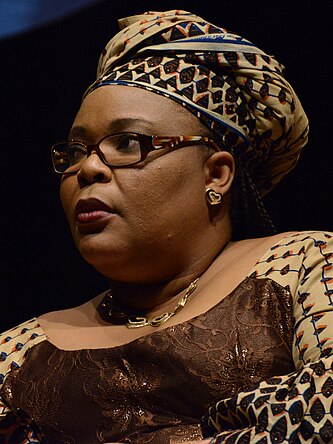
Leymah Roberta Gbowee (born 1 February 1972) is a Liberian peace activist responsible for leading a women's peace movement that helped bring an end to the Second Liberian Civil War in 2003 that led to the election of Ellen Johnson Sirleaf in Liberia, the first African nation with a female president. In 2011, she was one of three women awarded the Nobel Peace Prize.
Best Leymah Gbowee Quotes
Shortest
Earliest
Explore our curated collection of the most famous and impactful Leymah Gbowee quotes.

“Women are the ones that bear the greatest burden. We are also the ones who nurture societies.”

“"All across Africa, even in the midst of the deepest and darkest civil war, women are still proving that we can hold communities together."”

“We have a saying: “A single straw of a broom can be broken easily, but the straws together are not easily broken.” So here are three things African women can do to support their sisters and daughters:
1. Join the support network even if your own community is not plagued with conflict or violence. Most women only take action ::when their own communities are threatened. This must stop if we are to tackle the ills that are plaguing our African ::society. We must ignite the spirit of “Ubuntu”—“I am what I am because of who we all are.”
2. Develop a solid and consistent leadership base. The leadership of most African women’s initiatives functions very well ::during times of crisis, but tends to disintegrate after a huge success is scored. Movement leaders, even myself, made our ::own plans for self-advancement. It is time that the leadership of African women’s initiatives plans for succession.
3. Reach out to the un-converted. My final point comes from my 12-year-old daughter. For her, the feminist message is not ::filtering very well to potential victims, perpetrators, and government leaders. She believes—and I agree—that we speak ::loudest at women’s conferences and other spaces already filled with the converted. But we must speak to everyone, ::everywhere, about the struggles of African”
About Leymah Gbowee
Leymah Roberta Gbowee (born 1 February 1972) is a Liberian peace activist responsible for leading a women's peace movement that helped bring an end to the Second Liberian Civil War in 2003 that led to the election of Ellen Johnson Sirleaf in Liberia, the first African nation with a female president. In 2011, she was one of three women awarded the Nobel Peace Prize.