Lewis Mumford on Middle Ages
← Back to Lewis Mumford Profile
“Because of the separation of time and space, things could appear and disappear suddenly, unaccountably: the dropping of a ship below the horizon no more needed an explanation than the dropping of a demon down the chimney. There was no mystery about the past from which they had emerged, no speculation about the future toward which they were bound: objects swam into vision and sank out of it with something of the same mystery in which the coming and going of adults affect the experience of young children, whose first graphic efforts so much resemble in their organization the world of the medieval artist. In this symbolic world of space and time everything was either a mystery or a miracle.”
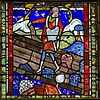
“One... characteristic of medieval space must be noted: space and time form two relatively independent systems. First: the medieval artist introduced other times within his own spatial world, as when he projected the events of Christ's life within a contemporary Italian city, without the slightest feeling that the passage of time has made a difference, just as in Chaucer the classical legend of Troilus and Cressida is related as if it were a contemporary story. When a medieval chronicler mentions the King... it is sometimes difficult to find out whether he is talking about Caeser or Alexander the Great or his own monarch: each is equally near to him. ...the word anachronism is meaningless when applied to medieval art... in Botticelli's The Three Miracles of St. Zenobius, three different times are presented upon a single stage.”