Link Copied!
Leonard Susskind Quotes (1940-)
Physicist, Director

About Leonard Susskind
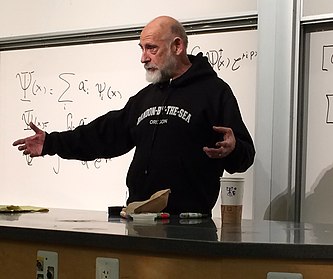
Leonard Susskind (born January 1, 1940) is an American physicist, who is a professor of theoretical physics at Stanford University, and founding director of the Stanford Institute for Theoretical Physics. His research interests include string theory, quantum field theory, quantum statistical mechanics and quantum cosmology. He is a member of the US National Academy of Sciences, and the American Academy of Arts and Sciences, an associate member of the faculty of Canada's Perimeter Institute for Theoretical Physics, and a distinguished professor of the Korea Institute for Advanced Study.
Best Leonard Susskind Quotes
Shortest
Earliest
Explore our curated collection of the most famous and impactful Leonard Susskind quotes.
“(Jokingly) Sex in ten dimensions is impossible... topologically.”
“A straight line is a special case of a curve. It's a curve which is uncurved.”
“The problem with general relativity is that the principles are pretty simple and the computations are always ugly.”

“The standard SU(3)×SU(2)×U(1) theory of strong, electromagnetic, and weak interactions appears to correctly describe physics down to the smallest distance scales yet probed.”
“Most constants are adjusted with a deviation of one percent, which means that if the value differs by one percent everything collapses. Physicists can certainly claim that this is a fluke, but it must be acknowledged that this cosmological constant is adjusted to an accuracy of 1/10120. No one thinks that this is solely a fluke. It is the most extreme example of hyperfine regulation...”
“Elegance requires that the number of defining equations be small. Five is better than ten, and one is better than five. On this score, one might facetiously say that String Theory is the ultimate epitome of elegance. With all the years that String Theory has been studied, no one has found even a single defining equation! The number at present count is zero. We know neither what the fundamental equations of the theory are nor even if it has any.”

Leonard Susskind Quotes by Topic
Find exactly what you are looking for by browsing this categorized list of Leonard Susskind quotes by topic.
Leonard Susskind on Cosmological constant 3 quotes
“The cosmological constant['s]... most important consequence: the repulsive force, acting at cosmological distances, causes space to expand exponentially. There is nothing new about the universe expanding, but without a cosmological constant, the rate of expansion would gradually slow down. Indeed, it could even reverse itself and begin to contract, eventually imploding in a giant cosmic crunch. Instead, as a consequence of the cosmological constant, the universe appears to be doubling in size about every fifteen billion years, and all indications are that it will do so indefinitely.”

Leonard Susskind on Black hole 2 quotes
“[A]round 1967, Wheeler became very interested in the gravitationally collapsed objects that Karl Schwarzschild had described in 1917. At the time they were called black stars or dark stars. ...Wheeler began calling them black holes. At first the name was blackballed by the... Physical Review. ...the term ...was deemed obscene! But John fought it... Amusingly, John's next coinage was the saying "Black holes have no hair." ...he was making a very serious point about black hole horizons. ...[Each a] smooth ...perfectly regular, featureless sphere. Apart from their mass and rotational speed, every black hole was exactly like every other. Or so it was thought.”

Leonard Susskind on Fine-tuned universe
“Most constants are adjusted with a deviation of one percent, which means that if the value differs by one percent everything collapses. Physicists can certainly claim that this is a fluke, but it must be acknowledged that this cosmological constant is adjusted to an accuracy of 1/10120. No one thinks that this is solely a fluke. It is the most extreme example of hyperfine regulation...”

Leonard Susskind on Measurement in quantum mechanics
“This strange fact—that the system evolves one way between measurements and another way during a measurement—has been a source of contention and confusion for decades. It raises a question: Shouldn’t the act of measurement itself be described by the laws of quantum mechanics? The answer is yes. The laws of quantum mechanics are not suspended during measurement. However, to examine the measurement process itself as a quantum mechanical evolution, we must consider the entire experimental setup, including the apparatus, as part of a single quantum system.”
Leonard Susskind on Expansion of the universe
“The cosmological constant['s]... most important consequence: the repulsive force, acting at cosmological distances, causes space to expand exponentially. There is nothing new about the universe expanding, but without a cosmological constant, the rate of expansion would gradually slow down. Indeed, it could even reverse itself and begin to contract, eventually imploding in a giant cosmic crunch. Instead, as a consequence of the cosmological constant, the universe appears to be doubling in size about every fifteen billion years, and all indications are that it will do so indefinitely.”

Leonard Susskind on Thermodynamics
“My own introduction to entropy was as an undergraduate mechanical engineering student. Neither I nor any of the other students knew anything about the molecular theory of heat, and I bet that the professor didn't either. The course... was so confusing that I...couldn't make any sense of it. Worst of all was the concept of entropy. We were told that if you heat something a small amount, the change in thermal energy, divided by the temperature, is the change of its entropy. Everyone copied it down but no one understood what it meant. It was as incomprehensible to me as "The change in the number of sausages divided by the onionization is called floogelweiss."”

Leonard Susskind on Anthropic principle
“By inclination, Weinberg is an extreme reductionist. But he is also a realist and acknowledges when something is not working the way he might want it to. In 1987 the arch-reductionist concluded that certain facts seemed to be inconsistent with any explanation based on the usual kind of mathematical reasoning. Instead, it seemed they might be true only because if they were not, we observers could not be here to observe them. Weinberg undoubtedly disliked such anthropic-principle explanations. But when, to his disappointment, he found that the anthropic principle might explain the apparent vanishing of the cosmological constant, he said so loudly and clearly, despite the great hostility of the physics community toward the principle.”
Leonard Susskind on Theory of everything
“Our particular laws are not at all unique. ...they could change from place to place and from time to time. The Laws of Physics are much like the weather... controlled by invisible influences in space almost the same way as that temperature, humidity, air pressure, and wind velocity control how rain and snow and hail form. ...The Landscape... is the space of possibilities... all the possible environments permitted by the theory. ...[T]heoretical physicists ...have always believed that the laws of nature are the unique, inevitable consequence of some elegant mathematical principle. ...the empirical evidence points much more convincingly to the opposite conclusion. The universe has more in common with a Rube Goldberg machine than with a unique consequence of mathematical symmetry. ...Two key discoveries are driving the paradigm shift—the success of inflationary cosmology and the existence of a small cosmological constant.”

Leonard Susskind on Bohr–Einstein debates
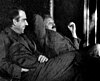
“Albert Einstein, who was in many ways the father of quantum mechanics, had a notorious love-hate relation with the subject. His debates with Niels Bohr—Bohr completely accepting of quantum mechanics and Einstein deeply skeptical— are famous in the history of science. It was generally accepted by most physicists that Bohr won and Einstein lost. My own feeling, I think shared by a growing number of physicists, is that this attitude does not do justice to Einstein’s views. Both Bohr and Einstein were subtle men. Einstein tried very hard to show that quantum mechanics was inconsistent; Bohr, however, was always able to counter his arguments. But in his final attack Einstein pointed to something so deep, so counterintuitive, so troubling, and yet so exciting, that at the beginning of the twenty-first century it has returned to fascinate theoretical physicists. Bohr’s only answer to Einstein’s last great discovery—the discovery of entanglement—was to ignore it.”
Leonard Susskind on Quantum entanglement
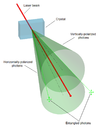
“The phenomenon of entanglement is the essential fact of quantum mechanics, the fact that makes it so different from classical physics. It brings into question our entire understanding about what is real in the physical world. Our ordinary intuition about physical systems is that if we know everything about a system, that is, everything that can in principle be known, then we know everything about its parts. If we have complete knowledge of the condition of an automobile, then we know everything about its wheels, its engine, its transmission, right down to the screws that hold the upholstery in place. It would not make sense for a mechanic to say, “I know everything about your car but unfortunately I can’t tell you anything about any of its parts.” But that’s exactly what Einstein explained to Bohr — in quantum mechanics, one can know everything about a system and nothing about its individual parts — but Bohr failed to appreciate this fact. I might add that generations of quantum textbooks blithely ignored it.”
Leonard Susskind on Gravity
“According to Newton's law of gravity, every object in the universe attracts every other object... with a gravitational force... F = frac{m M G}{R^2}... almost as famous as E = mc^2... On the left side is the force, F, between two masses... On the right side, the bigger mass is M and the smaller mass is m. ...The last symbol... G, is a numerical constant called Newton's constant. ...Ironically, Newton never knew the value of his own constant. ...G was too small to measure until the end of the eighteenth century. ...Cavendish found that the force between a pair of one-kilogram masses separated by one meter is approximately 6.6 x 10⁻¹¹ newtons. (The Newton is... about one-fifth of a pound.) ...Newton had one lucky break... the special mathematical properties of the inverse square law. ...[B]y the miracle of mathematics, you can pretend that the entire mass is located at a single point. This... allowed Newton to calculate the escape velocity... Escape ; velocity = sqrt{2MG/R} ... the bigger the mass [M] and the smaller the radius R, the larger the escape velocity.”

Leonard Susskind on Weak interaction
“Antoine-Henri Becquerel discovered radioactivity. Becquerel's discovery preceded J. J. Thomson's... electron by one year. Radioactivity comes in three kinds, called alpha, beta, and gamma. ...only one ...(beta) has to do with the weak interactions. Today we know that the beta rays were actually electrons emitted by neutrons in the uranium nucleus. ...Nothing in QED or QCD explains how a neutron can emit an electron and become a proton. ...Becquerel didn't know ...that another particle flew off... the antiparticle of the ghostly neutrino. ...The neutrino ...doesn't emit photons. It doesn't emit gluons. This means it [does not experience the respective electromagnetic or strong forces] that electrically charged particles or quarks experience. The W-boson is key to the neutrino's activities. Not only can the electrons and quarks emit W-bosons—so too can the neutrino. ...[O]ne of the two d-quarks in a neutron can emit a W-boson and become a u-quark, thus turning a neutron into a proton. ...the W-boson is exchanged, where in a QED diagram, the photon would be exchanged. ...weak interactions are very closely related to the electric forces due to photons. ...The W-boson... splits into two particles: an electron and a neutrino "moving backward in time,"... an antineutrino. That's what Becquerel would have seen... had he had a powerful enough microscope.”

What Leonard Susskind Said About Others
Discover personal opinions Leonard Susskind shared regarding contemporaries.
Leonard Susskind on John Archibald Wheeler 2 quotes
View all 2 quotes on John Archibald Wheeler →Leonard Susskind on Richard Feynman 2 quotes
“He hated the fact that he participated in the invention of nuclear weapons, and he doubly hated the fact that he had so much fun doing it.”

Leonard Susskind on Werner Erhard
““I met Hawking and Gerard’t Hooft in the attic of Werner Erhard’s house where Erhard’s office was located in San Francisco. … Dick Feynman, myself, and David Finkelstein were Erhard’s gurus. … He was very, very smart.””

Leonard Susskind on Gerardus 't Hooft
“Gerard is a Dutchman. The Dutch are the tallest people in Europe, but Gerard is short and solidly built, with a mustache and the look of a burgher. Like Feynman, 't Hooft has a strong competitive streak, but I am sure that I never got the better of him. Unlike Feynman, he is a product of old Europe — the last great European physicist, inheritor of the mantle of Einstein and Bohr. Although he is six years younger than I am, I was in awe of him in 1981, and rightfully so. In 1999 he was awarded the Nobel Prize for his work leading to the Standard Model of elementary particles.”
Leonard Susskind on Steven Weinberg
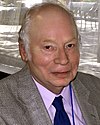
“By inclination, Weinberg is an extreme reductionist. But he is also a realist and acknowledges when something is not working the way he might want it to. In 1987 the arch-reductionist concluded that certain facts seemed to be inconsistent with any explanation based on the usual kind of mathematical reasoning. Instead, it seemed they might be true only because if they were not, we observers could not be here to observe them. Weinberg undoubtedly disliked such anthropic-principle explanations. But when, to his disappointment, he found that the anthropic principle might explain the apparent vanishing of the cosmological constant, he said so loudly and clearly, despite the great hostility of the physics community toward the principle.”
Leonard Susskind on Thomas Kuhn
“I’m one of the few physicists I know who likes Thomas Kuhn. He was partly a historian of science, partly a sociologist. He got the basic idea right of what happens when the scientific paradigm shifts. A radical change of perspective suddenly occurs. Wholly new ideas, concepts, abstractions and pictures become relevant. Relativity was a big paradigm shift. Quantum mechanics was a big paradigm shift. So we keep on inventing new realisms. They never completely replace the old ideas, but they do largely replace them with concepts that work better, that describe nature better, that are often very unfamiliar, that make people question what is meant by “reality.” Then the next thing comes along and turns that on its head. And we are always surprised that the old ways of thinking, the wiring that we have or the mathematical wiring that we may have created, simply fail us.”

Quotes About Leonard Susskind
Gain deeper perspective through quotes about Leonard Susskind from others.
Sean M. Carroll on Leonard Susskind
“... Lenny Susskind ... is very well known for his technical work, for his popular work, for his semi-technical books, The Theoretical Minimum, and, within the physics community, as a storyteller, a mentor, and a guiding visionary of the field.”

Chad Orzel on Leonard Susskind
“Dozens of other popular authors have written about black holes and string theory, but Gefter’s excitement makes even such overdone subjects seem fresh. And through the whole process, she and her father remain awed by the physicists whose work they’re studying—late in the book, her father even asks Susskind for an autograph.”
About Leonard Susskind
Leonard Susskind (born January 1, 1940) is an American physicist, who is a professor of theoretical physics at Stanford University, and founding director of the Stanford Institute for Theoretical Physics. His research interests include string theory, quantum field theory, quantum statistical mechanics and quantum cosmology. He is a member of the US National Academy of Sciences, and the American Academy of Arts and Sciences, an associate member of the faculty of Canada's Perimeter Institute for Theoretical Physics, and a distinguished professor of the Korea Institute for Advanced Study.