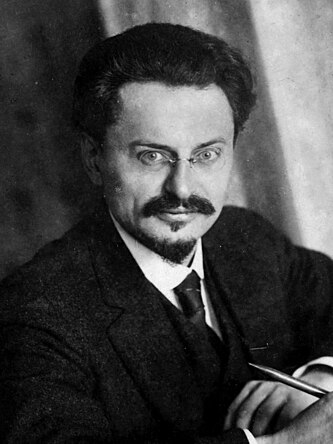
Leon Trotsky Quotes (0-)



















About Leon Trotsky
Best Leon Trotsky Quotes
Explore our curated collection of the most famous and impactful Leon Trotsky quotes.
























However, I consider myself justified in making an exception in the case of my companion, Natalia Ivanovna Sedova. In addition to the happiness of being a fighter for the cause of socialism, fate gave me the happiness of being her husband. During the almost forty years of our life together she remained an inexhaustible source of love, magnanimity, and tenderness. She underwent great sufferings, especially in the last period of our lives. But I find some comfort in the fact that she also knew days of happiness.”



Objectivity is not the pretended indifference with which confirmed hypocrisy, in speaking of friends and enemies, suggests indirectly to the reader what it finds inconvenient to state directly. Objectivity of this sort is nothing but a conventional trick. I do not need it. Since I have submitted to the necessity of writing about myself — nobody has as yet succeeded in writing an autobiography without writing about himself — I can have no reason to hide my sympathies or antipathies, my loves or my hates.”

Since my exile, I have more than once read musings in the newspapers on the subject of the "tragedy" that has befallen me. I know no personal tragedy. I know the change of two chapters of the revolution. One American paper which published an article of mine accompanied it with a profound note to the effect that in spite of the blows the author had suffered, he had, as evidenced by his article, preserved his clarity of reason. I can only express my astonishment at the philistine attempt to establish a connection between the power of reasoning and a government post, between mental balance and the present situation. I do not know, and I never have, of any such connection. In prison, with a book or a pen in my hand, I experienced the same sense of deep satisfaction that I did at the mass-meetings of the revolution. I felt the mechanics of power as an inescapable burden, rather than as a spiritual satisfaction.”


The Jews of different countries have created their press and developed the Yiddish language as an instrument adapted to modern culture. One must therefore reckon with the fact that the Jewish nation will maintain itself for an entire epoch to come. […]
We must bear in mind that the Jewish people will exist a long time. The nation cannot normally exist without common territory. Zionism springs from this very idea. But the facts of every passing day demonstrate to us that Zionism is incapable of resolving the Jewish question. The conflict between the Jews and Arabs in Palestine acquires a more and more tragic and more and more menacing character. I do not at all believe that the Jewish question can be resolved within the framework of rotting capitalism and under the control of British imperialism.[…]
Socialism will open the possibility of great migrations on the basis of the most developed technique and culture. It goes without saying that what is here involved is not compulsory displacements, that is, the creation of new ghettos for certain nationalities, but displacements freely consented to, or rather demanded, by certain nationalities or parts of nationalities. The dispersed Jews who would want to be reassembled in the same community will find a sufficiently extensive and rich spot under the sun. The same possibility will be opened for the Arabs, as for all other scattered nations. National topography will become a part of the planned economy. This is the great historic perspective as I see it. To work for international Socialism means to work also for the solution of the Jewish question.”
This was attributed to Trotsky in an epigraph in Night Soldiers: A Novel (1988) by Alan Furst but it may actually be a revision of a statement earlier attributed to Trotsky: "You may not be interested in the dialectic, but the dialectic is interested in you." Only a very loose translation of "the dialectic" would produce "war."
Such translation is possible via an intermediate Greek translation, or simply for someone with a knowledge of Greek, where the word πόλεμος carries a dual connotation of both dialectic and war (evident in the adjective form πολεμικός). Compare translations of Heraclitus's Πόλεμος πάντων μὲν πατήρ ἐστι ("War is the father of all") by David MyattDavid Myatt, "Heraclitus – translations of some fragments". Quote: Polemos our genesis, governing us all to bring forth some gods, some mortal beings with some unfettered yet others kept bound.David Myatt, "Heraclitus – translations of some fragments". Quote: I have deliberately transliterated (instead of translated) πόλεμος, and left δίκη as δίκη – because both πόλεμος and δίκη should be regarded like ψυχή (psyche/Psyche) as terms or as principles in their own right (hence the capitalization), and thus imply, suggest, and require, interpretation and explanation, something especially true, in my opinion, regarding δίκη. To render such Greek terms blandly by English terms such as ‘war’ and ‘justice’ – which have their own now particular meaning(s) – is in my view erroneous and somewhat lackadaisical. and by Martin Heidegger.Steven Burik, "The end of comparative philosophy and task of comparative thinking. Heidegger, Derrida, and Daoism" (State University of New York, 2009), page 30. Quote: Heraclitus is well known for having allegedly said in fragment 53 that "war is the father of all things." Heidegger thinks again that this interpretation is mistaken or at least one-sided. There is again a more originary way of looking at the fragment, which starts with πόλεμος πάντων μὲ ν πατήρ ἐστι. Heidegger translates "Confrontation (Auseinandersetzung) is indeed the begetter of all (that comes to presence) . . ." This is already a huge difference from normal translations, but even more important is the continuing sentence which isusually left out: . . . πάντων δὲ βασιλεύς, which Heidegger translates as ". . . but (also) the dominant preserver of all." So[,] far from trying to say that war is the father of all things, Heidegger says that confrontation, as Auseinandersetzung, is the begetter and keeper of all things.Heidegger, Martin (1953). "Einführung in die Metaphysik." Quote: Auseinandersetzung is allem (Anwesendem) zwar Erzeuger, allem aber (auch) waltender Bewahrer. Also see translation in German Wikipedia.Wikipedia:DE:Liste griechischer Phrasen/Pi#Πόλεμος πάντων μὲν πατήρ ἐστι. Quote: Auseinandersetzung ist aller Dinge Vater, aller Dinge König, die einen erweist er als Götter, die andern als Menschen, die einen macht er zu Sklaven, die anderen zu Freien. The notability of the Greek connection (between "war" and "the dialectic") is further augmented by the fact that the Heraclitean logic of war underpins Hegelian dialectics,Georg Hegel, Lectures on the History of Philosophy: Volume I ← via Lars Aagaard-Mogensen, Translator (1998), An Introduction to Hegel's Logic pages: 16–17, publisher: Hackett Publishing, ISBN: 0-87220-424-3 ← via Wikipedia:Hegel#Heraclitus. Quote: There is no proposition of Heraclitus which I have not adopted in my logic. a modern precursor to dialectical materialism and, consequently, Trotsky's doctrine.
In a later work, Just and Unjust Wars: A Moral Argument with Historical Illustrations (2000) by Michael Walzer, the author states: War is most often a form of tyranny. It is best described by paraphrasing Trotsky's aphorism about the dialectic: "You may not be interested in war, but war is interested in you."
This statement on dialectic itself seems to be a paraphrase, with the original in In Defense of Marxism Part VII : "Petty-Bourgeois Moralists and the Proletarian Party" (1942) — where Trotsky publishes a letter to Albert Goldman (5 June 1940) has been translated as "Burnham doesn't recognize dialectics but dialectics does not permit him to escape from its net." More discussion on the origins of this quotation can be found at The Semi-Daily Journal of Economist Brad DeLong: Fair and Balanced Almost Every Day.
”
Leon Trotsky Quotes by Topic
Find exactly what you are looking for by browsing this categorized list of Leon Trotsky quotes by topic.
Leon Trotsky on Fascism 3 quotes
Leon Trotsky on Freemasonry 3 quotes

Leon Trotsky on Dictatorship of the proletariat 2 quotes

Leon Trotsky on Fascism's relationship with other political and economic ideologies 2 quotes
Leon Trotsky on War 2 quotes
What Leon Trotsky Said About Others
Discover personal opinions Leon Trotsky shared regarding contemporaries.
Leon Trotsky on Benito Mussolini 2 quotes

Leon Trotsky on Baruch Spinoza 2 quotes

Leon Trotsky on Joseph Stalin 2 quotes

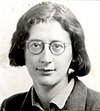
Leon Trotsky on Simone Weil
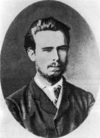
Leon Trotsky on Sergey Nechayev
Quotes About Leon Trotsky
Gain deeper perspective through quotes about Leon Trotsky from others.
Perry Anderson on Leon Trotsky

Martin Amis on Leon Trotsky

Angelica Balabanoff on Leon Trotsky

Tony Benn on Leon Trotsky