Link Copied!
Leah Thomas Quotes (0-)
Activist
About Leah Thomas
Leah Thomas, also known as Green Girl Leah, is an American environmental activist active on Instagram whose work focuses on the application of intersectionality to environmental justice.
Best Leah Thomas Quotes
Shortest
Earliest
Explore our curated collection of the most famous and impactful Leah Thomas quotes.
“We know it’s going to take all of us and not just a select few.”
“Oprah 100%, I’ve always looked up to her and adore her so much.”
“Those least responsible for the climate crisis are bearing the brunt of it.”


“What is the impact of having large-scale environmental movements that mostly exclude the voices of the underrepresented and people of color?”
“For someone who is just getting started, they can start with educating themselves and reading literature about environmental justice and allyship.”

“A mentor of mine once said, "Even the revolution needs accountants." This made me laugh, but it's true! We can each contribute our skills in some way.”


“It is time to dismantle and reflect on what environmentalism means and reclaim the term so that it is inclusive of historically excluded and underrepresented people.”


“it's evident that social justice and environmentalism are deeply intertwined and that addressing this interconnection is crucial for attaining justice for both people and planet.”

“Together, we can transform the future of environmentalism and, with collective action, spread our message across the globe and change enough hearts and minds to positively alter the future.”


“If we combine social justice efforts with environmental awareness efforts, we will harness enough power, representation, and momentum to have a shot at protecting our planet and creating equity at the same time.”
“Environmentalists for Black Lives Matter” “Social justice cannot wait,” the caption stated. “It is not an optional ‘add-on’ to environmentalism.” “It is unfair to opt in and out of caring about racial injustices when many of us cannot.”
“The lack of representation of Black, Brown, Indigenous, Asian, low-income, LGBTQ+, disabled, and other marginalized voices has led to an ineffective form of mainstream environmentalism that doesn't truly stand for the liberation of all people and the planet.”
“We should care about the protection of people as much as we care about the protection of our planet-to me, these fights are the same. As a society, we often forget that humans are a part of our global ecosystem and that we don't exist separately from nature; we coexist with it each and every day.”

“It doesn’t matter if you’re living in a city, you’re still in nature. A lot of white environmentalists still view nature as something that they go to, instead of thinking, nature is all around me. And that means that nature is also all around these different communities of colour, even if they’re living in a city.”

“I was so frustrated during this second wave of the Black Lives Matter movement [in the Spring of 2020] because the environmental community was largely silent. So I posted the Environmentalists for Black Lives Matter graphic, along with my definition of intersectional environmentalism, and also an intersectional environmentalist pledge and I put it out there.”

“it's truly my biggest hope that one day in the future we won't need to preface "environmentalism" with the word "intersectional"; we won't need to create separate safe spaces and curriculums that seek to be inclusive. One day I hope that when people think of an environmentalist, they'll automatically envision a person who cares very deeply about both people and planet.”

“I studied Environmental Science and would much rather focus on urgently addressing the climate crisis, but I cannot when I’m fearful for my life and that of those who look like me. I would much rather dedicate my life to fighting against extractive industries than fight for my right to exist in this world. I wish that was just understood as an inherent principle in society.”

“Unfortunately, as with other animals, some humans are endangered and facing a multitude of social and environmental injustices that impact their ability to not only survive but also thrive in liberation and joy. Why, then, are conservation efforts not extended to the protection of endangered humans and their human rights? This is a question I've struggled with as a Black environmentalist for years, because in my environmental practice, caring for the earth means caring for its people.”
“Social injustice and environmental injustice are fueled by the same flame: the undervaluing, commodification, and exploitation of all forms of life and natural resources, from the smallest blade of grass to those living in poverty and oppressed people worldwide. It's a point that many ecofeminists, environmental justice scholars and leaders, Indigenous rights and land sovereignty advocates, and climate politicians have argued for decades, but it hasn't been embedded deeply enough in modern environmental education.”

What Leah Thomas Said About Others
Discover personal opinions Leah Thomas shared regarding contemporaries.
Leah Thomas on Audre Lorde
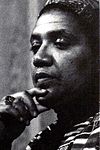
“To Kimberlé Williams Crenshaw, the Combahee River Collective, and Audre Lorde for your lessons on intersectionality and the beauty of Black girl magic. This book would not be possible without you.”
Leah Thomas on Kimberlé Crenshaw
“To Kimberlé Williams Crenshaw, the Combahee River Collective, and Audre Lorde for your lessons on intersectionality and the beauty of Black girl magic. This book would not be possible without you.”

Leah Thomas on Cesar Chavez
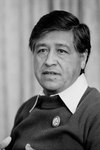
“Activists like Cesar Chavez and Dolores Huerta were also fighting in the 1960s and '70s for Latinx families to have safer environments. Their activism shouldn't have been considered separate from the Earth Day movement, but it was. Not only did their work contribute to the overall movement, but their efforts helped lead to the ban on the use of harmful pesticides that impacted farmworker safety and increased awareness of environmental justice within the Latinx community. However, because of racism, xenophobia (fear of immigrants), and classism, these activists were excluded.”
Leah Thomas on Dolores Huerta
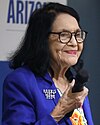
“Activists like Cesar Chavez and Dolores Huerta were also fighting in the 1960s and '70s for Latinx families to have safer environments. Their activism shouldn't have been considered separate from the Earth Day movement, but it was. Not only did their work contribute to the overall movement, but their efforts helped lead to the ban on the use of harmful pesticides that impacted farmworker safety and increased awareness of environmental justice within the Latinx community. However, because of racism, xenophobia (fear of immigrants), and classism, these activists were excluded.”
Leah Thomas on Robert D. Bullard
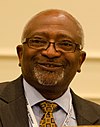
“Hazel M. Johnson's work helped lay the groundwork for climate justice around the world, as well as for an intersectional approach to environmentalism...Another pivotal voice in environmental justice history is its "father," as he's often dubbed, Dr. Robert Bullard... In 1979, Dr. Bullard wrote "Solid Waste Sites and the Black Houston Community," one of the first studies to demonstrate the link between toxic waste locations and race...In his own words, environmental justice can be defined as a concept that "embraces the principles that all communities, all people, are entitled to equal protection of our environmental laws, health laws, housing laws, transportation laws, and civil rights laws."”
Leah Thomas on Greta Thunberg
“a new generation of climate activists are emerging all across the globe. The Youth Strike for Climate, also known as Fridays for Future, began in 2018 after Swedish youth activist Greta Thunberg staged a protest in front of the Swedish parliament holding a sign that read "Skolstrejk för klimatet" (School Strike for Climate). Her actions, along with those of several other brave students, resulted in an international movement of students of various ages that demonstrated and walked out of Friday classes to demand climate action, a transition to renewable energy, and a commitment to stopping the climate crisis. By 2019, over one million demonstrators, primarily students, across 150 countries had participated in the protests.”

About Leah Thomas
Leah Thomas, also known as Green Girl Leah, is an American environmental activist active on Instagram whose work focuses on the application of intersectionality to environmental justice.