Link Copied!
Lawrence M. Krauss Quotes (1954-)
Physicist, Author, Director
About Lawrence M. Krauss
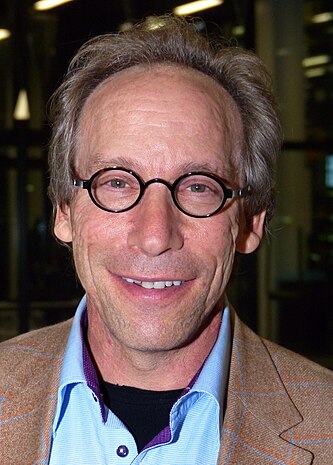
Lawrence Maxwell Krauss (born May 27, 1954) is an American theoretical physicist and cosmologist who is professor of physics, Foundation Professor of the School of Earth and Space Exploration, and director of the Origins Project at the Arizona State University. He is the author of several bestselling books, including The Physics of Star Trek.
Best Lawrence M. Krauss Quotes
Shortest
Earliest
Explore our curated collection of the most famous and impactful Lawrence M. Krauss quotes.
“Theorists always know the answer. They're just sometimes right.”




“There is a maxim about the universe which I always tell my students: That which is not explicitly forbidden is guaranteed to occur.”
“... we're here because of an environmental accident if there is a multiverse and if the laws of physics are different in the different regions ...”


“[O]ne of the great things about science is it forces us to refine our idea of what's common sense. It forces us to have our beliefs conform to the evidence of reality rather than the other way around. The universe may not be like we'd like it to be, but it doesn't really care.”

“[W]hen you apply quantum mechanics to gravity, then even space itself can pop into existence from nothing. Space and time can spontaneously pop into existence... Whole universes can pop into existence and most of them will disappear in a time scale so short you wouldn't know about it. The ones that can survive for a long time have zero total energy...”
“My area of research is something that in all fairness has no practical usability whatsoever and the thing is I'm often asked to apologize for that. It is interesting to me that people ask 'what's the point of doing that if it's not useful?' But they never ask that, or do they very rarely ask that about art or literature or music. Those things are not gonna produce a better toaster.”
“Now, since the time of Newton there had been a debate about whether light was a wave---that is, a traveling disturbance in some background medium---or a particle, which travels regardless of the presence of a background medium. The observation of Maxwell that electromagnetic waves must exist and that their speed was identical to that of light ended the debate: light was an electromagnetic wave.”

“The energy of every galaxy—all the galaxies are moving away from us at, Hubble discovered that in 1929... If you measure their speed and then you work our the attraction the two add up to precisely zero. An amazing discovery that confirms this notion that, not only is the universe flat and mathematically beautiful, but begins to give us an inkling that maybe, maybe, maybe we could come from nothing.”
“But what we've discovered is that, in fact... the total energy of the universe could be zero, which is a first clue that maybe it could come from nothing. ...In physics, ...once you include gravity, there's positive energy and negative energy, and our universe appears as if its total energy could be precisely zero, which is the first hint that maybe it could come from nothing. That, and the great discovery... that namely empty space, you take a region of space, get rid of all the particles and all the radiation ...so there's nothing there. That empty space weighs something, and we don't understand why.”

“[Y]ou... may say, "Well look, we've got no space, no time, no particles, no radiation. That's a pretty good approximation of nothing, but there's still the laws. Who created the laws? And... what we've discovered... in the last ten years or so, and... this is speculative, but it's based on everything we know of in particle physics... It's quite reasonable to suspect that even the laws themselves came into existence when our universe came into existence... There could be many different universes and in each one of them the laws of physics are different. They spontaneously arise when the universe arises.”
“The amazing thing is that every atom in your body came from a star that exploded, and the atoms in your left hand probably came from a different star than your right hand. It really is the most poetic thing I know about physics. You are all stardust. You couldn’t be here if stars hadn’t exploded because the elements—the carbon, nitrogen, oxygen, iron, all the things that matter for evolution—weren’t created at the beginning of time. They were created in the nuclear furnaces of stars, and the only way they could get... into your body is if these stars were kind enough to explode. So, forget Jesus. The stars died so that you could be here today.”

“Now some people say, "Well, if there's virtual particles there it's really not nothing," but there are no real particles. You try and measure things there, there's nothing, but those virtual particles can give space energy and in fact we've discovered to our great surprise—it won the Nobel prize two years ago—that empty space has energy, and if you put energy in empty space, then it's really strange because it's not like the normal energy... it's not gravitationally attractive, it's actually repulsive, and we've discovered the expansion of the universe is not slowing down like any sensible universe should do. It's actually speeding up... because it's dominated by the energy of empty space.”
“[W]e can weigh systems of galaxies. The largest bound objects in the universe are called clusters of galaxies. They're maybe ten million light years across. ...We weigh them using gravity because Einstein told us that mass curves space, and we can... use those large clusters as lenses—if there's a light source behind a cluster the light from it can come around and be lensed... and we've weighed these systems and we've found that there's only 30% of the mass needed to make a flat universe... Theorists like me knew that the universe was flat, because it's the only mathematically beautiful universe... but here these observers kept coming up with only 30% of the stuff needed... But then, what we've discovered... is that the universe actually is flat and the rest of the 70% of the energy of the flat universe comes from the energy of nothing.”

“The Universe must be flat. Why? Well, there is two reasons. There's the one I normally say, which is: it's the only mathematically beautiful universe. Which is true, but there's another reason I don't usually... talk about but I'll talk about here. It turns out that in a flat universe the total energy of the universe is precisely zero because gravity can have negative energy. So the negative energy of gravity balances out the positive energy of matter. What's so beautiful about a universe with total energy zero? Well, only such a universe can begin from nothing, and that is remarkable because the laws of physics allow a universe to begin from nothing. You don't need a Deity. You have nothing: zero total energy, and quantum fluctuations can produce a universe. So, if the Universe isn't flat we're worried, because then you've got energy at... the very beginning of Time.”
“Richard Feynman used to go up to people all the time and he'd say, "You won't believe what happened to me today. You won't believe what happened to me." And people would say "What?" And he'd say, "Absolutely nothing". Because we humans believe that everything that happens to us is special, and significant. And that—and... Carl Sagan wrote beautifully about that in Demon-Haunted World—that is much of the source of religion. OK? Everything that happens is unusual, and I expect that the likelihood that Richard and I ever would've met—if you think about all the variables, the probability that we were in the same place at the same time, ate breakfast at the same... Whatever. It's zero. Every event that happens has small probability... but it happens, and then when it happens; if it's weird, if you dream one million nights and it's nonsense, but one night you dream that your friend is gonna break his leg and the next day he breaks his arm. You think, "ah." ...So the [real] thing that physics tell us about the universe is it's big, rare events happen all the time—including life—and that doesn't mean it's special.”
“What's going to happen in the far future? Remember a hundred years ago we thought we lived into static eternal Universe. What will the future bring? The amazing thing is, for civilizations that live in a far future, what will they see? Well, the Universe is accelerating. That means all the distant galaxies are getting carried away from us, and eventually they'll move away from us faster than the speed of light. It's allowed in General relativity. They will disappear. The longer we wait, the less we will see. In a hundred billion years any observers evolving on stars around [us]... and there will be stars just like our Sun in 100 billion years. Any observers and civilizations... evolving around those stars will see nothing except for our Galaxy, which is exactly the picture they had in 1915. All evidence of the Hubble expansion will disappear. Why? Because we won't see other galaxies moving apart from us. So they will have no evidence, in fact, of Big Bang. They won't see the Hubble expansion. They won't even know about dark energy, and I won't go into that. They won't know about the cosmic microwave background - it will disappear too. It will redshift away, and it turns out for fancy reasons: there is a plasma in our Galaxy and when the Universe is 50 times its present age the microwave background won't able to propagate in our Galaxy. All evidence of the Big Bang will have disappeared, and those scientists will discover quantum mechanics, discover relativity, discover evolution, discover all the basic principles of science that we understand today, use the best observations they can do with the best telescopes they will build and they will derive a picture of the Universe which is completely wrong. They will derive a picture of the Universe as being one Galaxy surrounded by empty space that's static and eternal. Falsifiable science will produce the wrong answer. In fact, I want to end with the good news. We live in a very special time, the only time we can observationally verify that we live in a very special time.”
Lawrence M. Krauss Quotes by Topic
Find exactly what you are looking for by browsing this categorized list of Lawrence M. Krauss quotes by topic.
Lawrence M. Krauss on Xenophobia
“Whatever the evolutionary basis of religion, the xenophobia it now generates is clearly maladaptive.”
Lawrence M. Krauss on Quantum entanglement
Lawrence M. Krauss on Speed of light
“In 5 billion years, the expansion of the universe will have progressed to the point where all other galaxies will have receded beyond detection. Indeed, they will be receding faster than the speed of light, so detection will be impossible. Future civilizations will discover science and all its laws, and never know about other galaxies or the cosmic background radiation. They will inevitably come to the wrong conclusion about the universe......We live in a special time, the only time, where we can observationally verify that we live in a special time.”

Lawrence M. Krauss on Milky Way
“Now, almost one hundred years later [in 1916 when Einstein began to apply his theory to describe the universe as a whole], it is difficult to fully appreciate how much our picture of the universe has changed in the span of a single human lifetime. As far as the scientific community in 1917 was concerned, the universe was static and eternal, and consisted of a one single galaxy, our Milky Way, surrounded by vast, infinite, dark, and empty space This is, after all, what you would guess by looking up at the night sky with your eyes, or with a small telescope, and at the time there was little reason to suspect otherwise.”

Lawrence M. Krauss on Quantum chromodynamics
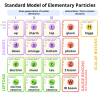
“Will we ever derive the necessary mathematical tools to analytically demonstrate from first principles that confinement is indeed a mathematical property of quantum chromodynamics? This is the million-dollar question, literally. The Clay Mathematics Institute has announced a million-dollar prize for a rigorous mathematical proof that quantum chromodynamics does not allow free quarks or gluons to be produced. While no claimants to the prize have yet come forward, we nevertheless have strong indirect support of this idea, coming not only from experimental observations, but also from numerical simulations that closely approximate the complicated interactions in quantum chromodynamics. This is heartening, if not definitive. We still have to confirm that it is some property of the theory and not of the computer simulation. However, for physicists, if not mathematicians, this seems pretty convincing.”
What Lawrence M. Krauss Said About Others
Discover personal opinions Lawrence M. Krauss shared regarding contemporaries.
Lawrence M. Krauss on Sam Harris
“Reading Sam Harris is like drinking water from a cool stream on a hot day.”

About Lawrence M. Krauss
Lawrence Maxwell Krauss (born May 27, 1954) is an American theoretical physicist and cosmologist who is professor of physics, Foundation Professor of the School of Earth and Space Exploration, and director of the Origins Project at the Arizona State University. He is the author of several bestselling books, including The Physics of Star Trek.